
“Fish don’t break fishing rods. Anglers do.”
Most broken tenkara rod sections happen from handling mistakes, especially with beginners. A tenkara rod is telescopic, and for someone new to tenkara, the most common break is usually the rod tip. [ Read More ]
This often happens while extending the rod. The angler may pull the tip out too quickly, bend it at a sharp angle, or force the sections before they are seated correctly.
The rod tip is solid, while the rest of the sections are hollow. The solid tip is very strong and highly flexible. It is designed to cast a light tenkara line, follow the line during the drift, and protect the tippet when playing a fish. But even a strong tip can break if it is bent sharply or handled carelessly.
The second common reason for a broken tip is overconfidence or being in a hurry. Beginners break tips, but experienced anglers can also break them once in a while. It happens.
To replace a rod tip, please watch this video:
Another common break happens around section two while landing a fish. This can happen when the bend becomes too sharp, putting too much stress on one small area. It can also happen when a bead-head nymph hits the rod section and creates a small nick. That nick may look minor, but it can weaken the carbon wall and later cause the section to fail.
Lower-section breaks are usually caused by applying too much force at the wrong rod angle. A tenkara rod is strong when the bend is spread smoothly through the rod, but it is not designed to be forced into an extreme angle.
Sometimes, a broken rod can even come from being too happy.
One time I received a phone call from a customer. He was very excited to take a photo of his first golden trout. While taking the picture, his knee accidentally rested on the rod. Ouch. One of the middle sections broke.
Jamming the rod during reassembly is also very common.
Another time, I was giving a tenkara demo at an FFI event in Bozeman, Montana. A tenkara angler came up to me and asked if I could help unjam his rod. When I looked closely, I found that several sections had been reassembled in the wrong direction. This caused the rod to jam.
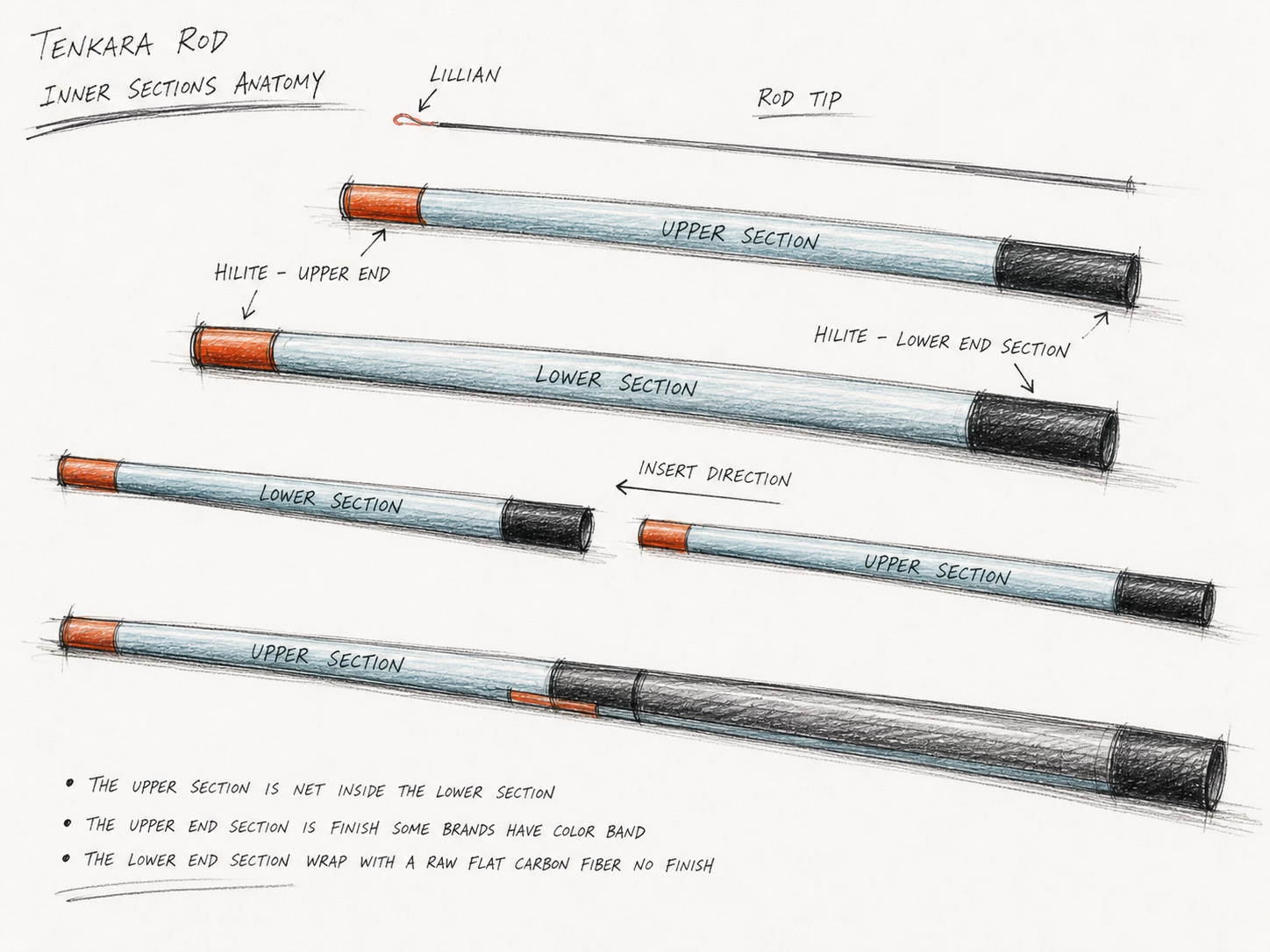
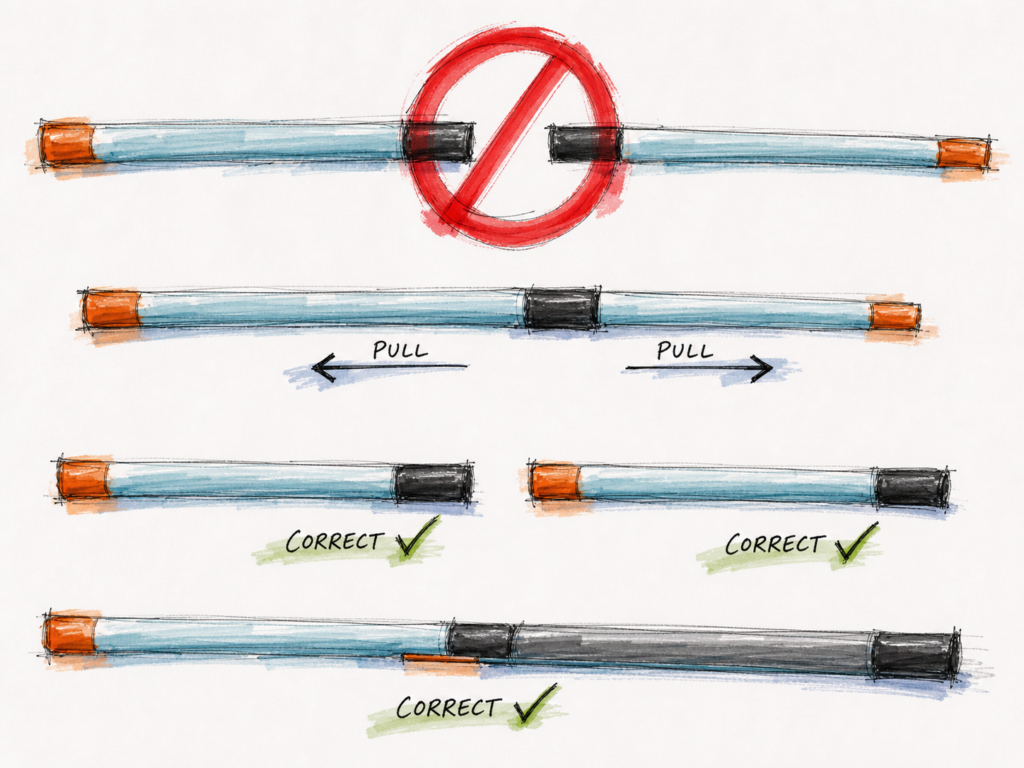
Many Japanese and Chinese telescopic rods have a fine highlight band near the upper end of each section. This band helps show which end goes up. Sometimes, after cleaning or disassembling the rod, an angler accidentally inserts the lower end first. When the section gets stuck, they force it—and that can damage or jam the rod.
Reassembling a tenkara rod is common after cleaning. The important thing is to do it gently, slowly, and correctly.
Do
Extend the rod carefully, one section at a time.
Keep the sections straight when pulling them out.
Make sure each section is seated gently, not forced.
When reassembling the rod, check the direction of each section before inserting it.
Look for the highlight band or finished upper end of the section.
Clean and dry the sections before reassembly.
Use light pressure only.
Don’t
Do not pull the rod tip out at a sharp angle.
Do not force a section if it feels stuck.
Do not insert a rod section from the wrong end.
Do not twist or push hard when reassembling.
Do not rest your knee, foot, or body weight on the rod.
Do not rush when taking photos, cleaning, or packing the rod.
Final Thought
Replacing a tenkara rod section is usually simple, but preventing the break or jam is even better.
A tenkara rod is light, sensitive, and strong when used correctly. Most breaks do not happen because the fish is too big. They happen during setup, cleaning, transport, landing, or photographing fish.
Handle the rod gently, assemble it correctly, and let the rod do the work. That small habit will save many broken sections.