

In tenkara fishing, the line is part of the casting system. It affects casting feel, fly turnover, presentation, sensitivity, and control.
At a high level, tenkara lines can be understood in three ways:
Shape — level or tapered
Construction — single strand, furled, twisted, braided, or coated
Material — fluorocarbon, nylon, PVC, or fiber
These ideas are often mixed together, but they are not the same. Level and tapered describe the shape. Furled, twisted, braided, and coated describe how the line is built. The material describes how the line behaves.
Level Line
A level line has the same diameter from one end to the other.
It is simple, clean, and easy to adjust. Most modern tenkara level lines are made from fluorocarbon. They give a direct feeling and are easier to keep off the water.
The tradeoff is that level line requires better casting timing because it has no taper to help turn over the fly.
Concept: Level line = simple, adjustable, and direct
Tapered Line
A tapered line changes diameter from one end to the other.
Usually, it is thicker near the rod and thinner near the fly. The thicker end carries more mass, while the thinner end helps the fly turn over and land softly.
The tradeoff is that tapered line is less adjustable. If you cut it, you may change how it casts.
Concept: Tapered line = smooth casting and easier turnover.
Furled Line
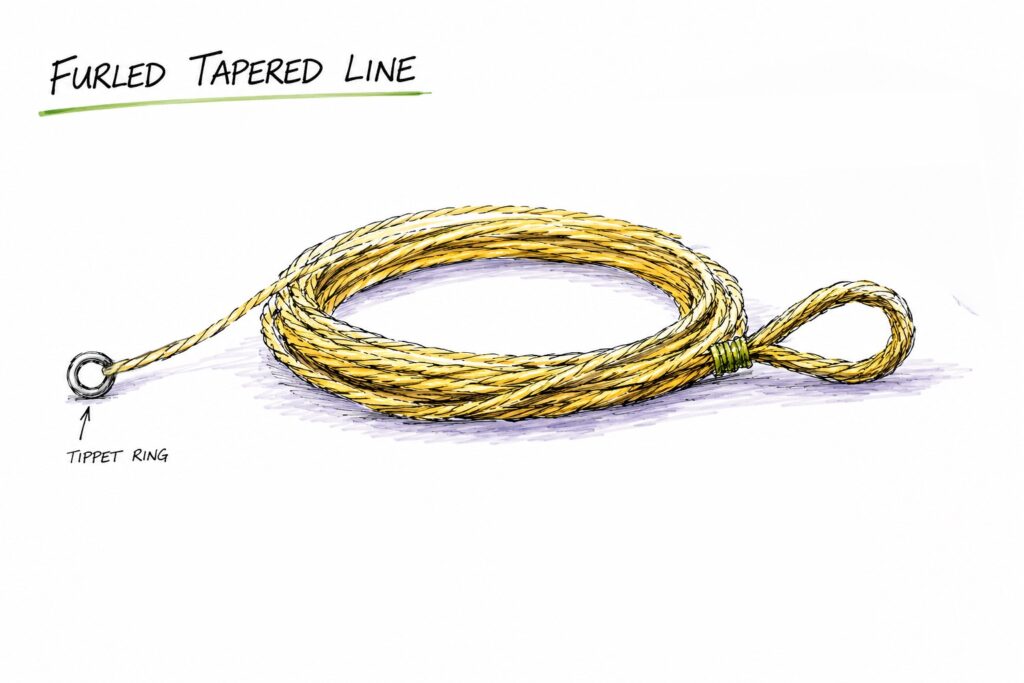
A furled line is made by combining multiple strands in a balanced twist.
Most tenkara furled lines are tapered, but “furled” describes construction, not only shape. Furled lines feel smooth, traditional, and elegant.
The tradeoff is that water, dirt, and silt can enter the small spaces between strands.
Concept: Furled line = smooth, traditional, and elegant.
Twisted Line
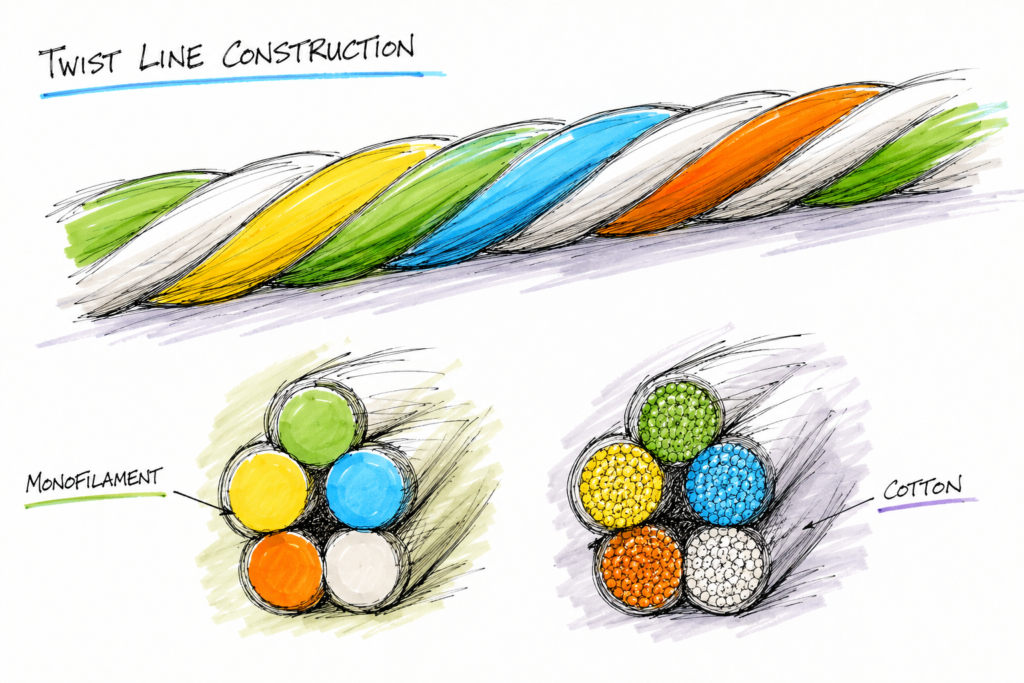
A twisted line is made by twisting strands together, like a small rope.
It can be level if the same number of strands runs from end to end. It can also be tapered if the strand count changes.
Concept: Twisted line = rope-like construction that can be level or tapered.
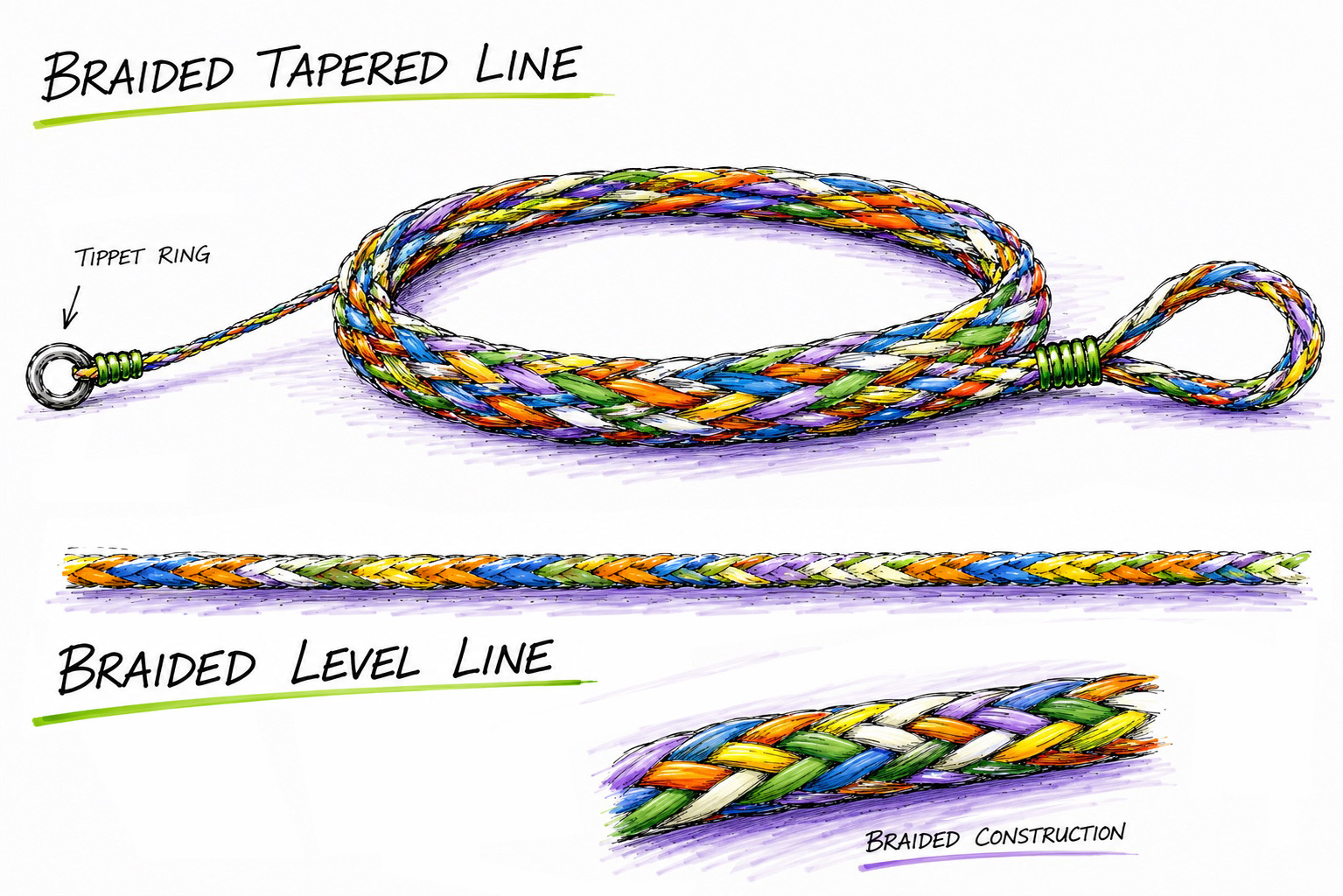
Braided Line
A braided line is made by interlacing many small fibers.
It is strong, durable, and inexpensive. But for tenkara casting, braided line can be too soft and too light. It may not transfer casting energy well unless it gains weight from water.
Concept: Braided line = strong and cheap, but often too soft and light.
PVC-Coated Line
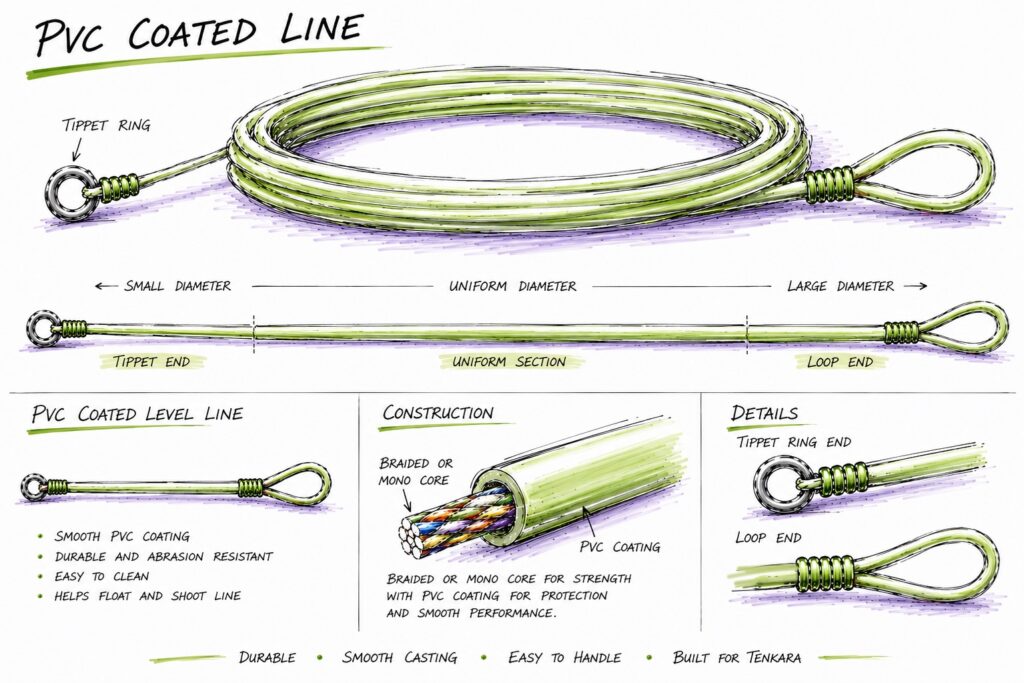
A PVC-coated line has a core inside and a coating outside.
The core can be solid monofilament or braided. The coating controls weight, diameter, and surface. PVC-coated lines can be level or tapered, floating or sinking.
Concept: PVC-coated line = waterproof, consistent, and controllable.
Fluorocarbon Line
Fluorocarbon is one of the most common modern tenkara level line materials.
It is dense, stiff, and sensitive. It transfers casting energy well and gives a direct connection. For nymphing, it helps transmit subtle vibration better than softer lines.
The tradeoff is that it has memory and sinks.
Concept: Fluorocarbon line = direct, sensitive, and good for control.
Simple Comparison
| Line Type | Simple Idea |
| Level Line | Same diameter, simple and adjustable |
| Tapered Line | Thick to thin, smoother turnover |
| Furled Line | Multiple strands, smooth traditional feel |
| Twisted Line | Rope-like construction, can be level or tapered |
| Braided Line | Strong and cheap, but soft and light |
| PVC-Coated Line | Waterproof and consistent, can float or sink |
| Fluorocarbon Line | Stiff, sensitive, direct connection |
Final Thought
There is no single perfect tenkara line. Each line is a different balance of shape, construction, material, weight, stiffness, and feel.
For example, a fluorocarbon level line often performs better when direct contact is important, such as nymphing, pocket water, and stealthy presentations. Its stiffness and sensitivity help transmit subtle movement and keep the angler connected to the fly.
In slower water, or when fishing with an indicator, a PVC-coated tapered line may have an advantage. It can be easier to see, easier to manage on the water, and can be designed to float or sink depending on the fishing style.
A tapered line also has an upper hand when casting bigger, bushier flies or when visibility is important. The extra mass near the rod helps turn the fly over more easily.
In the end, choosing a tenkara line is not about finding the “best” line. It is about choosing the right balance for the water, the fly, the rod, and the way you want to fish.