
Eastern Sierra Field Report
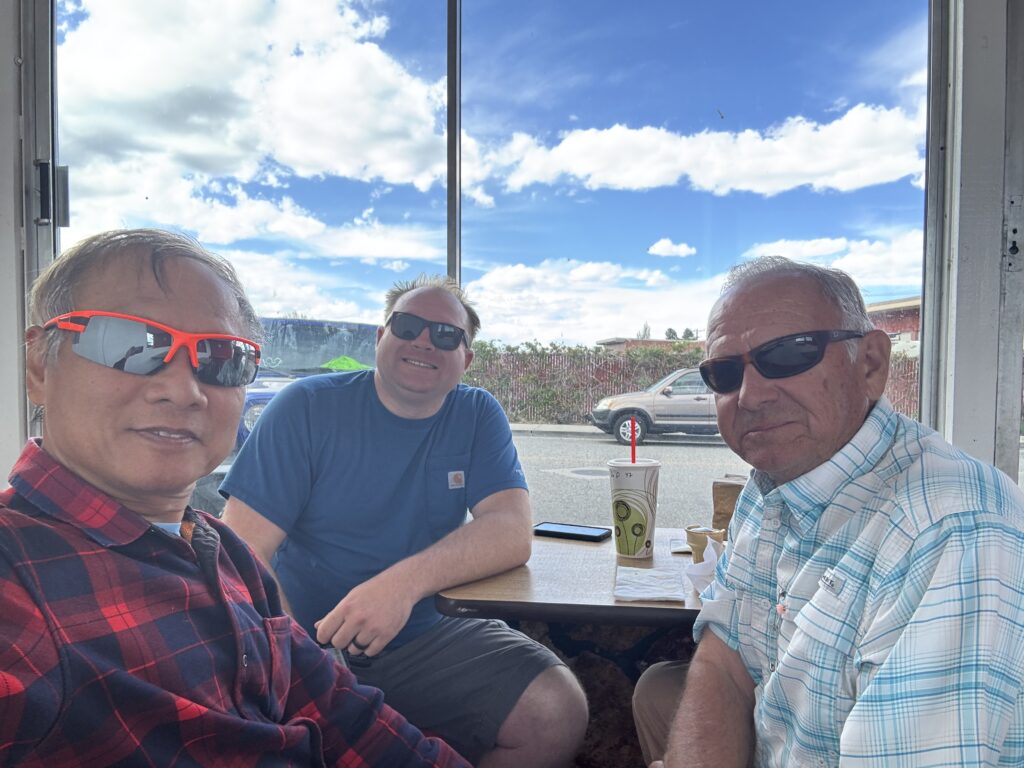
My friend Jon flew all the way from Toledo, Ohio, to join me for this trip.
Thomas Paulson also joined us. Tom is a local angler, a retired DFG warden, and one of those people who seems to know every piece of water in the Eastern Sierra.
Of course, he still says he never catches enough fish. 😂
On my best fishing day with Tom, if I am lucky, I might land about one-third of what he catches.
This trip was part fishing, part rod testing, part training, and part car shakedown. After spending almost $10K repairing my RAV4 and giving it a rebuilt engine that felt “100K miles younger,” I decided the car was ready for a real test drive.
So were the Tanuki Euro nymphing rod prototype and a Tanuki reel prototype.
The Mission
The goals for this trip were clear.
First, I wanted to test the sensitivity and strength of the Tanuki 2-weight Euro nymphing rod prototype and the Tanuki reel prototype. Thomas had told me there might be a cutthroat run from the lake. If we were lucky, it would be a reel test.
To make the sensitivity test more honest, I removed all the sighter material and fished completely by feel.
No Indicator, No Sighter — Just Feel
Just rod, line, hand, and contact with the nymphs.
Second, I wanted more practice landing fish with a reel, especially bigger fish. With tenkara, I am very comfortable landing fish with the rod. But Euro nymphing brings a different challenge: bigger water, stronger runs, reel management, current pressure, and fine tippet protection.
I was also testing some new lines.
The mission was set.
Mono Cone, Pastrami Burger, and 300 Rainbows
On the way out of Yosemite, I met Thomas and Jon at Mono Cone in Lee Vining for a late 4 PM lunch.
If you love ice cream, Mono Cone is hard to beat. The burgers are good too. Tom suggested the pastrami burger, and it was totally awesome.
During lunch, I mentioned that I had seen a pool full of fish just outside the park entrance gate, about 15 minutes away. After lunch, we drove up to check it out.
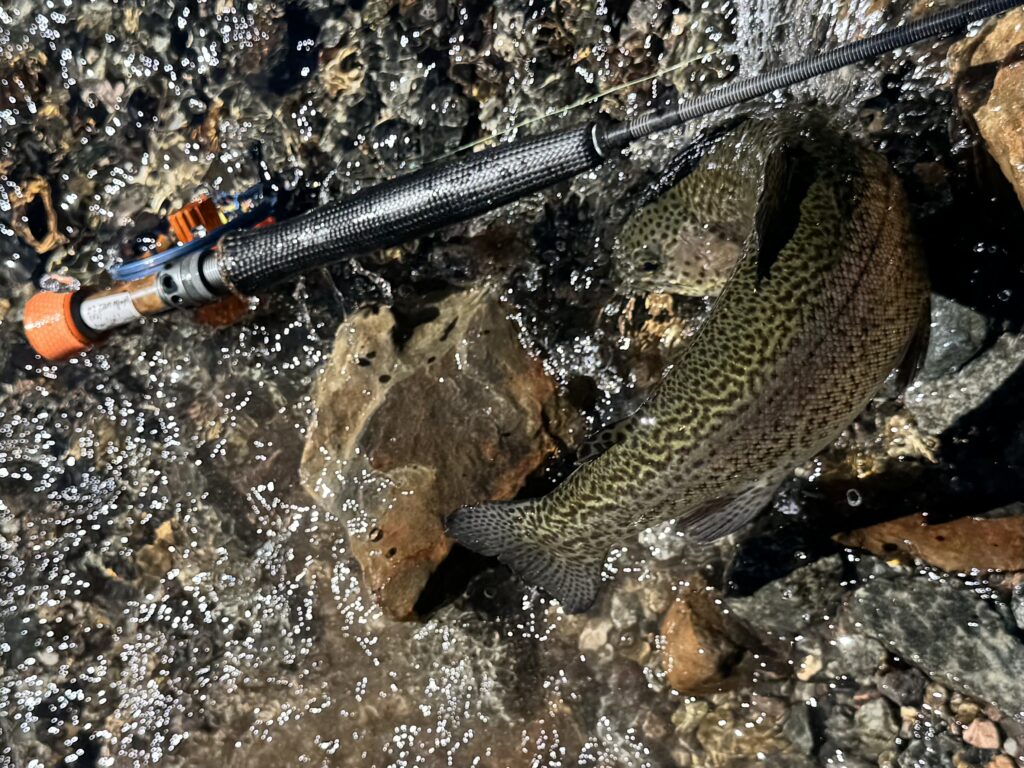
Yes, there were fish.
A lot of fish.
About 300 good-sized rainbows were stacked in one small area, maybe 4 feet by 8 feet. It turned out to be a perfect place to test rod sensitivity.
I used a double-nymph rig. After a few casts, I felt the take.
These fish were about 14 to 16 inches. They were stocked fish, but once hooked, they ran like wild horses in every direction. Some went deep. Some shot downstream.
One fish really knew how to use the current. It ran downstream at least 100 feet, and suddenly the test became very real.
I had to chase it, control the rod angle, manage the reel, and figure out how to get close without breaking off.
That fish gave me exactly the kind of lesson I came for.
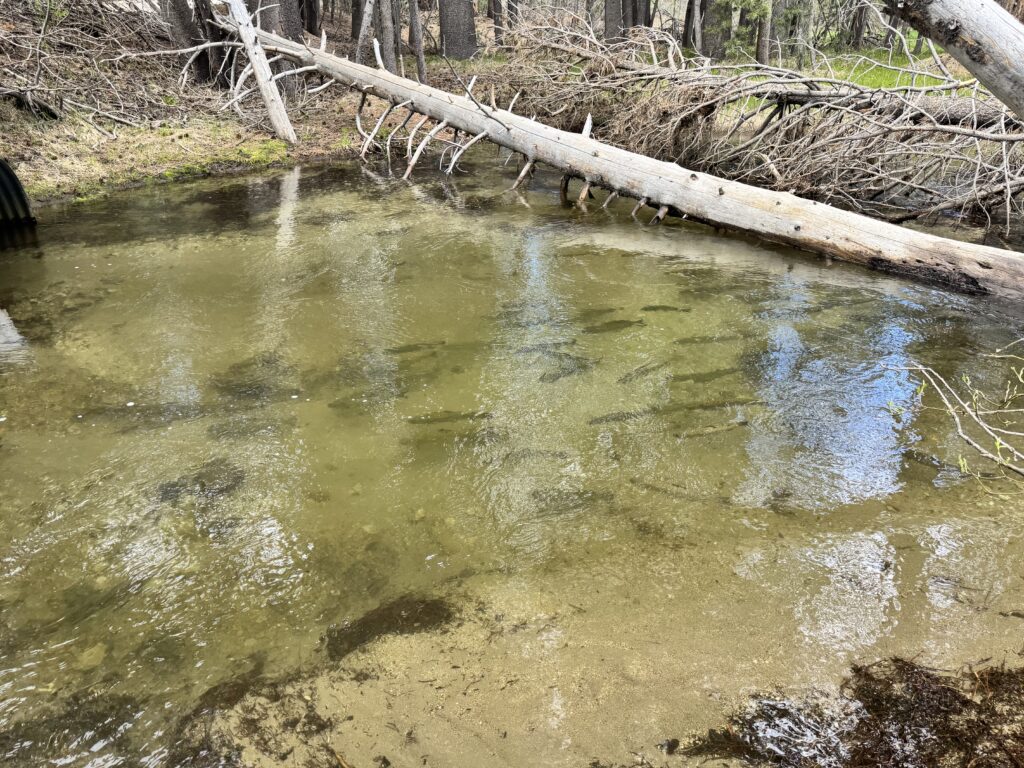
Fishing in an Aquarium — Until the Wind Arrived
The next day, Jon took me to another place that was so full of fish it felt like fishing in an aquarium.
I spent the whole day catching fish after fish.
Then the mountain wind showed up.
When the wind started kicking up close to 60 mph, I felt cold and shaky. Jon went back to the car and realized the temperature had dropped from 51 degrees to 40 degrees in less than two hours.
Luckily, the pine trees gave us some shelter, but it was still time to call it.
On the way back, the wind was still strong, and the power was out at the hotel. I was spacing out while checking my photos, but apparently my hand was still fishing. I could still feel the line vibration from a fish bite. Everyone cracked up. 😂
Classic mountain weather.
The next day was still too windy, so Jon and I decided to extend the stay one more day. We fished again with Thomas and started with a few bluegill. Then we headed back to the “aquarium,” which was more protected from the wind.
Once again, there were too many fish.
A terrible problem to have. 😂
Detour Stream and Big Cutthroat Lessons
Finally, on Tuesday, I started driving home.
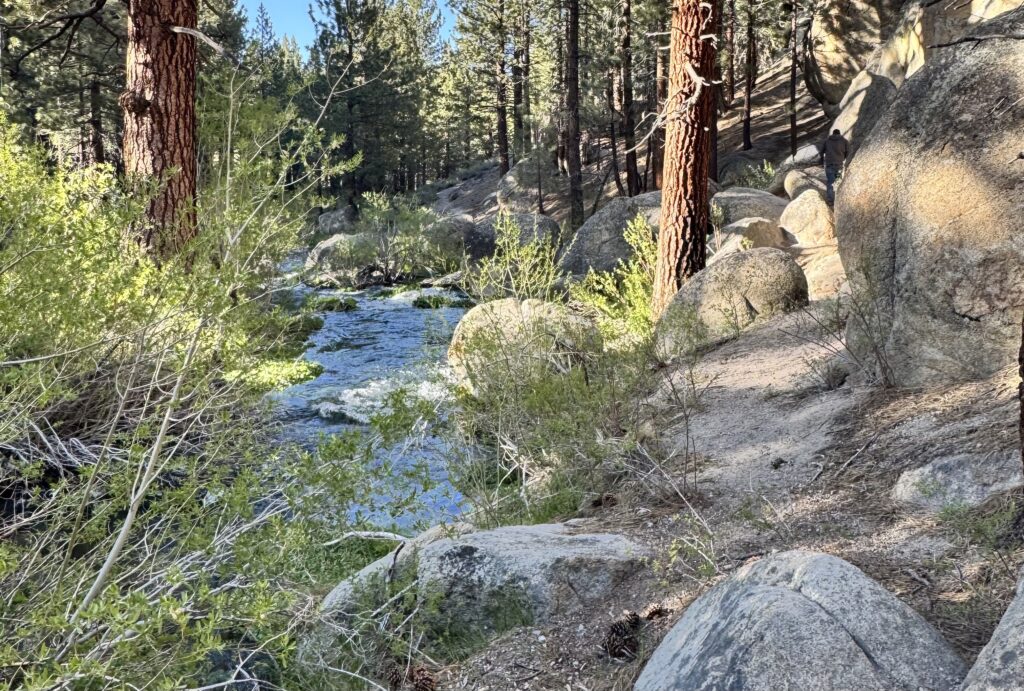
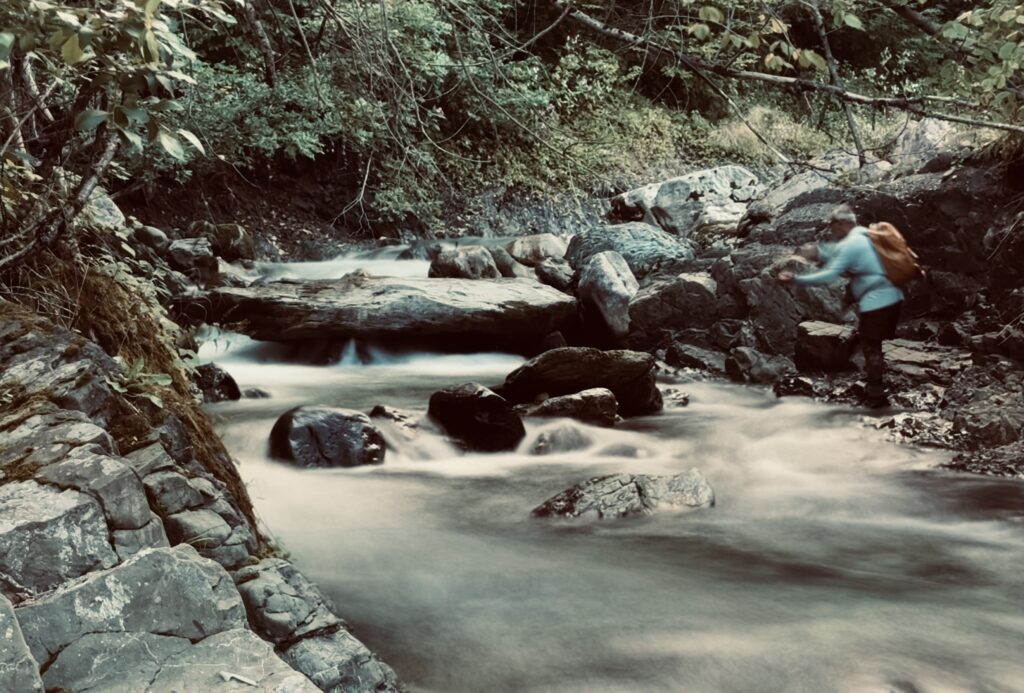
On the way back, there was a car accident, and the police blocked the road. I took a detour onto a back road and found a small stream.
Of course, I had to stop.
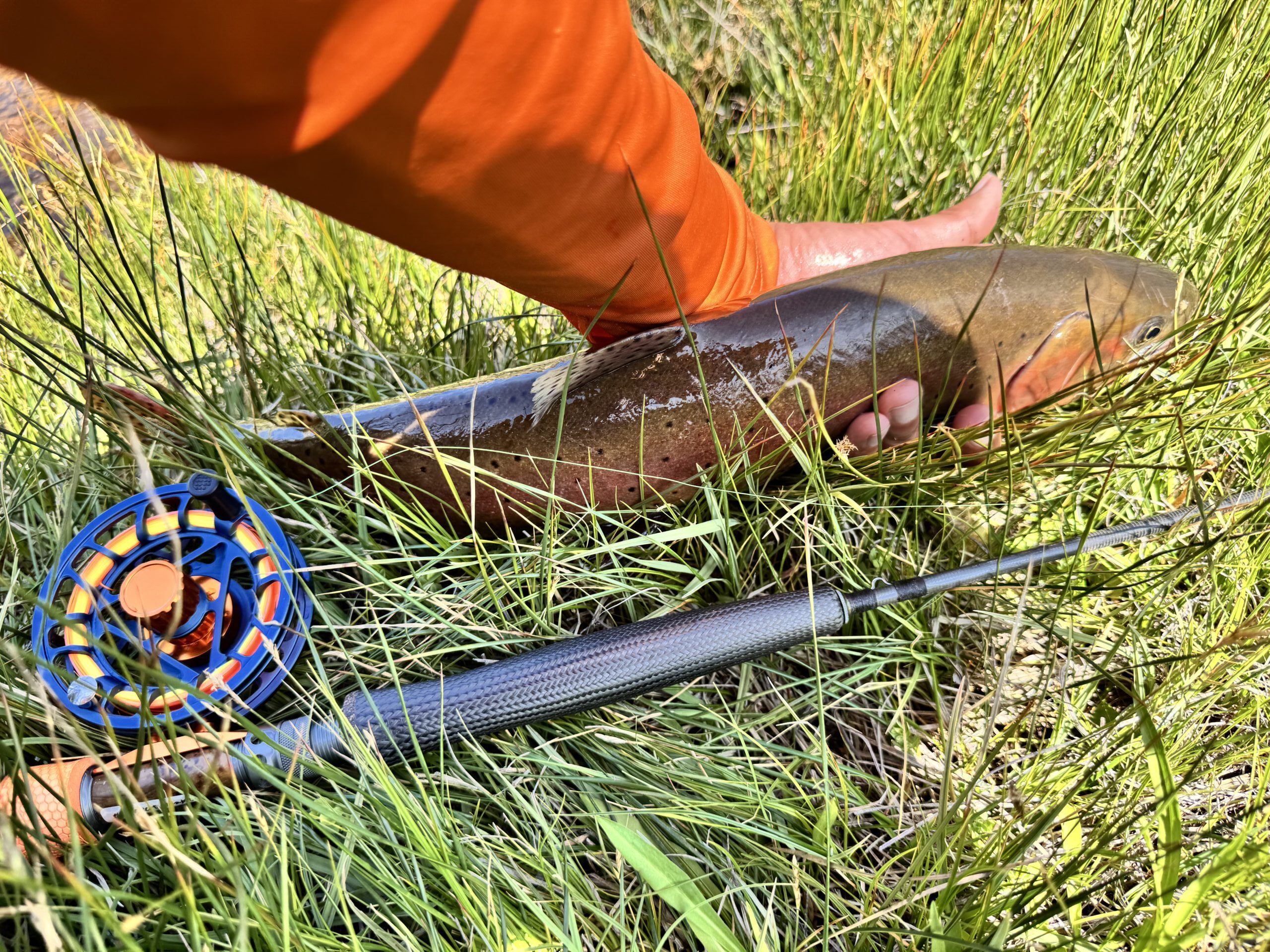
After about an hour, I caught my first brown trout, around 11 inches. Then I hooked an 18-inch cutthroat.
Momentum was on my side.
But fishing a Euro nymphing rod on a small stream is challenging. A Euro rod is not built for the same kind of precise casting I am used to with a tenkara rod. With tenkara, I can place the fly exactly where I want. With the Euro rod, I had to slow down and adjust.
Big fish like to hide under cut banks. Placing the nymph just a few inches from the bank was tricky because grass blocked the casting lane.
Finally, I figured out a method.
I cast as close to the bank as I could. If the nymph landed on the grass, I slowly and gently retrieved the line until the nymph dropped into the water. About 90% of the time, it worked.
That small adjustment made a big difference.
I also remembered something Gianluca told me when I was fishing in Slovenia:
“Slow down. The fish is always there. Take your time.”
That advice came back to me on this stream.
I am used to casting a tenkara rod with a faster, sharper stroke. With Euro nymphing, the cast needed to be slower. The more I slowed down, the more my accuracy improved, and the more control I felt.
On a small stream, I could not always use the current to keep line tension. If I poked my head too far over the water, the fish would see me and spook. Everything had to be slower, quieter, and more deliberate.
Then — bang.
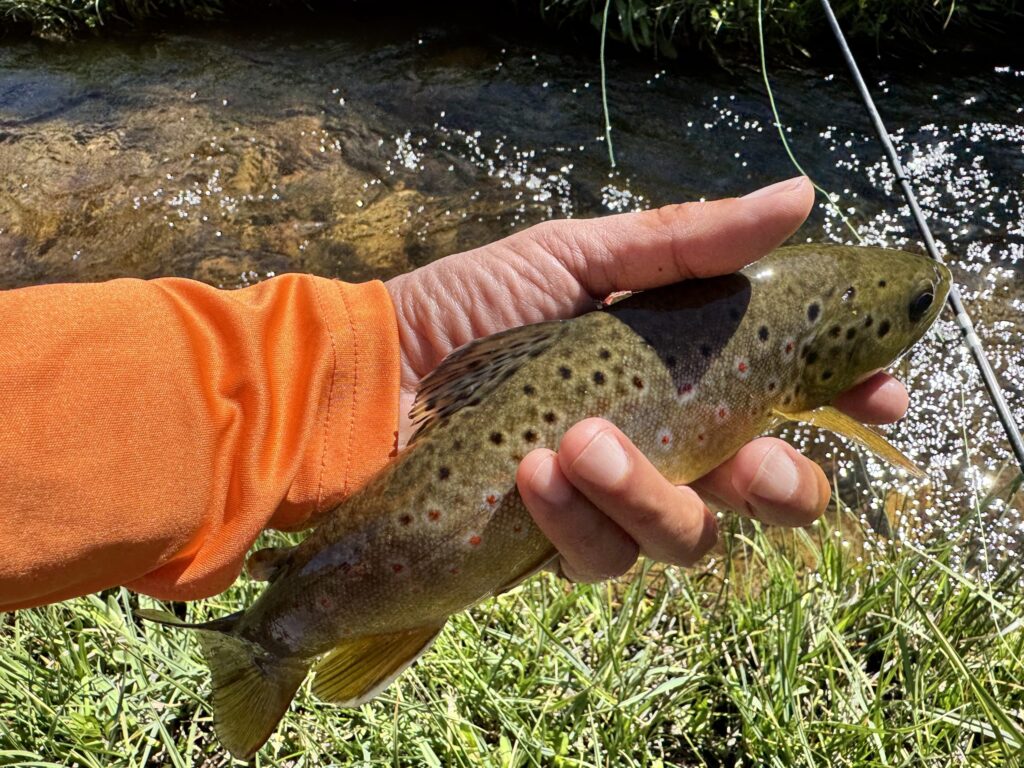
I hooked a cutthroat around 20 inches.
The fish rocketed downstream. I followed it for about 30 seconds, but the line caught on a hanging tree root along the bank and broke off the tippet.
I re-rigged with a bigger fly.
Ten minutes later, I hooked another fish — at least 24 inches.
It made a strong run downstream. I was able to get close, but it broke off my 5X tippet. I had the fish’s nose out of the water, and I really wished I had a big net with a long handle.
That was the lesson.
I changed to 3X tippet.
That was the right decision.
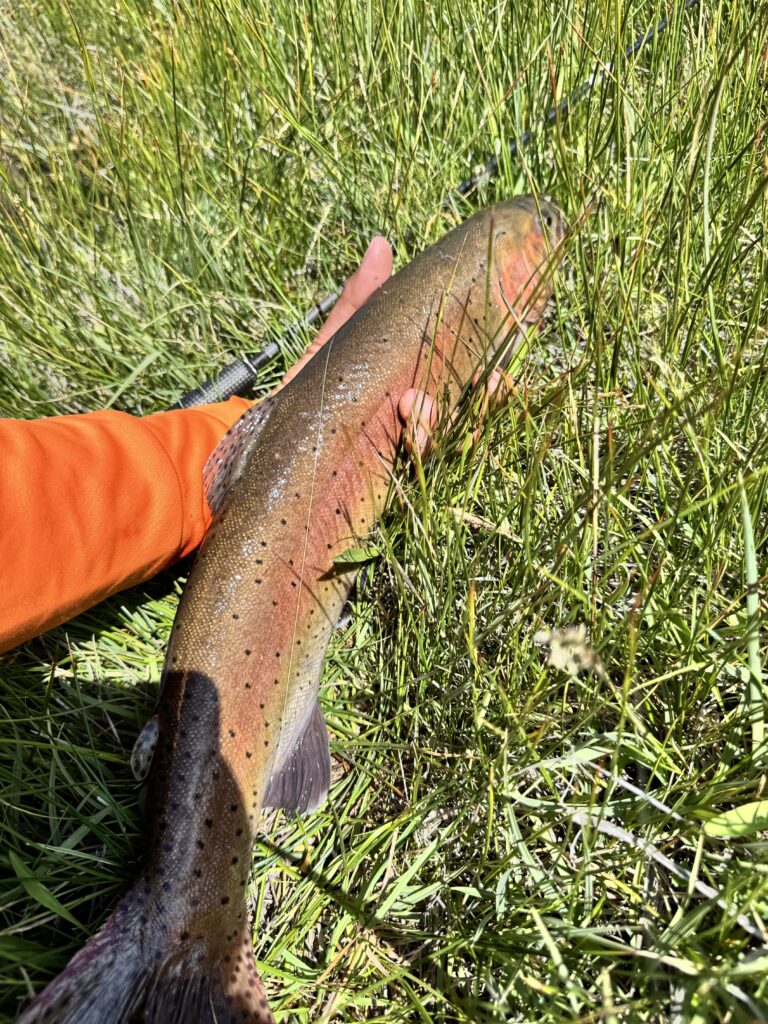
About ten minutes later, I hooked another big fish. This time, after a long run downstream, I landed it.
That was the moment I came for.
No Indicator, No Sighter — Just Feel
It was time to get back on the road, so I headed up and over the pass.
Once again, the fish were still there waiting for me. But this time, the place looked like a zoo, full of fly anglers.
I still managed to land about 10 fish in one hour.
The other anglers, fishing indicators, landed about two fish combined.
I showed them how effective it can be to fish without an indicator and without a sighter — just feeling the take through the rod, line, and hand.
For me, this is one of the most important parts of Euro nymphing.
The rod must transmit information.
The line must stay connected.
The hand must learn to read small changes in tension, pressure, vibration, and movement.
This is where rod sensitivity matters.
Tuolumne Brookies
Back on the road again, I saw the Tuolumne River and thought:
“Why not?”
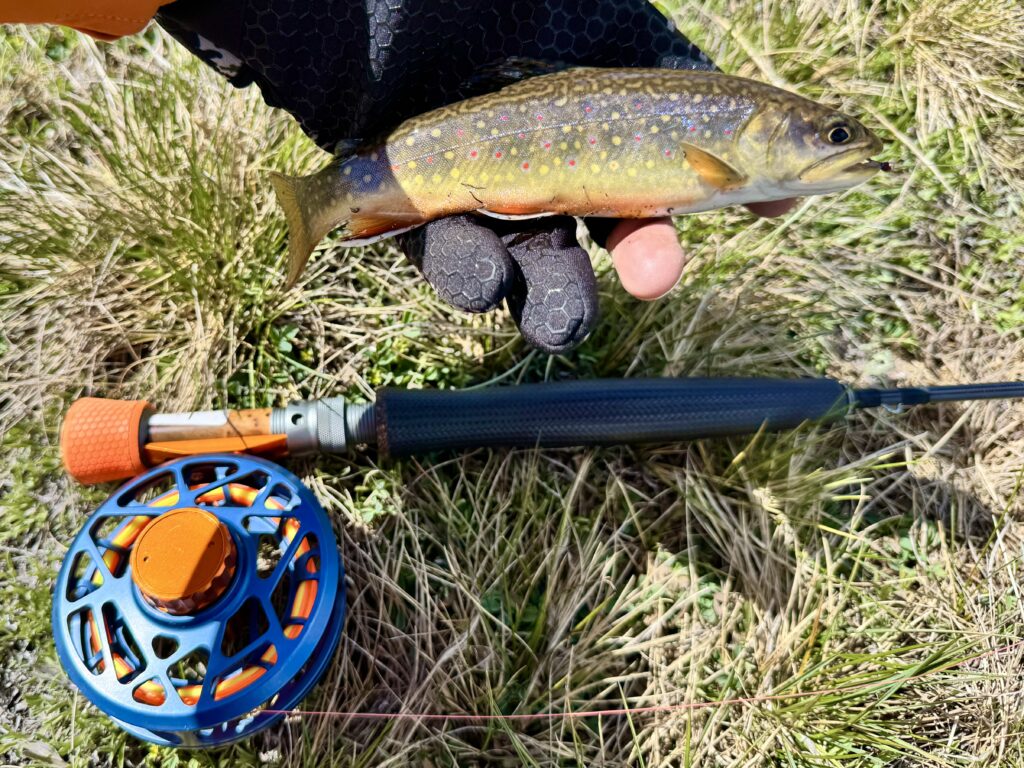
There are many brookies there, and sure enough, they were there — beautiful, spooky little brook trout.
Fishing them with a Euro nymphing rod was not easy. Any movement and they were gone.
I was lucky enough to land three.
But honestly, if I had used a long tenkara rod, that probably would have been thirty fish instead. 😂
What I Learned
I learned so much on this trip.
I am now more confident heading to Slovenia to chase monster marble trout with a Euro nymphing rod. Landing a big fish with fine tippet is not just about rod strength. Like tenkara, the key is not to horse the fish. Let the rod work. Let the fish calm down. Control the angle. Follow the fish when needed. Use the current instead of fighting it.
Reel Setting, Rod Tip, and Hook-Set Control
The reel is very important for protecting the tippet, especially when a fish suddenly turns into a turbo-charged rocket.
Before making the first cast, I always test the drag setting. The reel must release smoothly against sudden shock. If the drag is too tight, a hard run can break the tippet, or worse, overload the rod tip.
A Euro nymphing rod tip is hollow and sensitive. That sensitivity is what helps transmit small bites, but it also means I do not want to shock-load the tip with an aggressive hook set.
For Euro nymphing, I am learning to set the hook lighter. At the same time, I use my other hand to strip the line in. This gives me a safer and more controlled hook set.
If I miss the fish, the nymph does not come flying straight back at my face — or into a tree behind me. 😂
This trip taught me that landing bigger fish is not only about rod strength. It is about rod angle, pressure, footwork, current, reel control, and patience. Sometimes the best move is not to fight harder, but to follow the fish and let it run.
This trip gave me exactly what I needed: fish, wind, broken tippet, long runs, small-stream challenges, and real feedback from the rod.
The Tanuki Euro nymphing rod passed the test.
And so did the RAV4.