Tag: tanuki rod

  • How a Simple Rod Changed My Journey

    How a Simple Rod Changed My Journey

    From Curiosity to a Twelve-Year Journey of Learning, Testing, and Writing

    Around 2014, I picked up a tenkara rod for the first time and landed my first fish. What began as simple curiosity about this traditional Japanese style of fly fishing quickly became something much deeper. I wanted to understand why such a minimal setup—a rod, line, and fly—could be so effective.

    I had no idea that one fish would change the direction of my life.

    Curiosity gradually turned into obsession. It wasn’t enough to simply fish tenkara—I wanted to understand every aspect of it. That curiosity eventually led me to begin designing and building my own rods, and before long, I found myself becoming a tenkara rod maker.

    In March 2017, I met Dave Hughes at the Northwest Fly Tying Expo in Oregon. Dave, the author of more than twenty fly-fishing books, encouraged me during our conversation to write a book about tenkara.
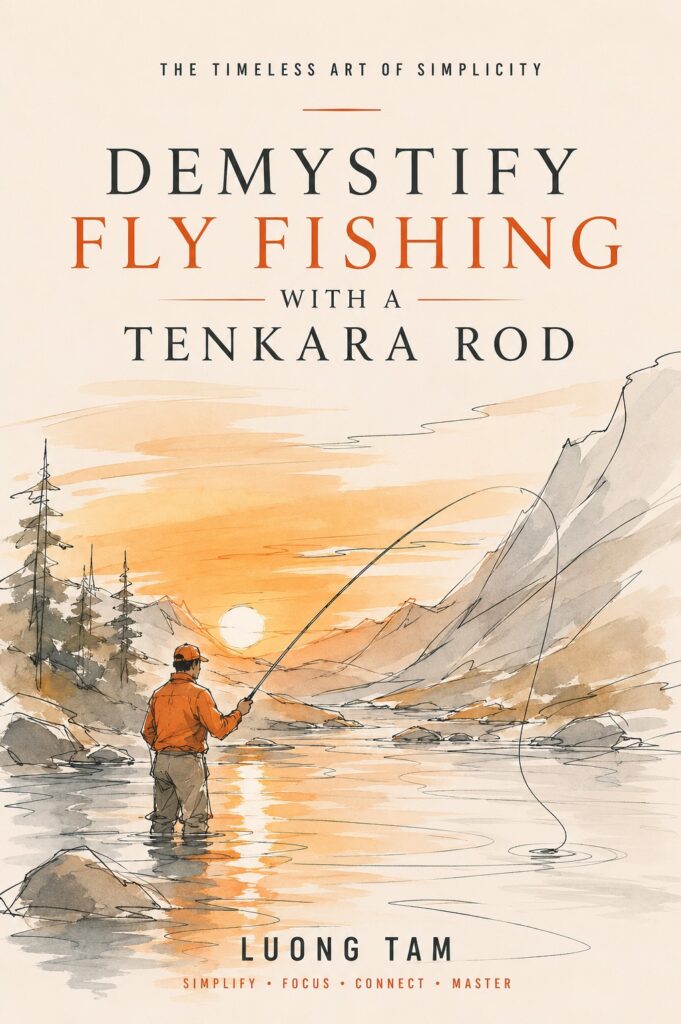
    Cover concept for the upcoming book, Demystifying Fly Fishing with a Tenkara Rod, featuring a tenkara angler casting at sunset in a mountain stream.
    An early cover concept for my upcoming book, Demystifying Fly Fishing with a Tenkara Rod. The illustration reflects the book’s central idea: simplifying fly fishing through experience, observation, engineering, and a lifelong journey of learning.

    I laughed it off.

    I told him I wasn’t ready.

    But every time I saw Dave after that, he asked the same question:

    “How’s the book coming along?”

    He never pressured me, but he never stopped encouraging me. Every time we met, he reminded me that I had something worth sharing. He even offered to help whenever I felt ready.

    His confidence meant a great deal to me, but I still believed there was more to learn before I could write the book I envisioned.

    At that time, most discussions about tenkara centered on simplicity and preserving traditional Japanese methods. I respected those traditions, but my own background naturally led me to ask different questions.

    How could I combine decades of Western fly fishing and fly-casting experience with the elegance and simplicity of tenkara?

    Could engineering help explain why fish, rods, and techniques behave the way they do?

    Could careful testing replace assumptions?

    Could complex ideas be simplified without losing their depth?

    Those questions became the foundation of my journey.

    Over the years, I learned from many generous anglers who willingly shared their knowledge and experience. I fished with people like Ken Reinard, whose practical approach to fly fishing broadened my perspective. I studied with Japanese tenkara master Masami Sakakibara, one of Japan’s living legends of tenkara, learning techniques refined through decades on the water.

    Each person influenced me in different ways.

    At the same time, I realized something important: I wasn’t trying to become a copy of anyone else. I wanted to develop an approach that reflected my own experiences—as a fly angler, a rod designer, and an engineer. I wanted to understand not only how to fish, but why certain methods worked and how they could be explained more clearly.

    That journey led me to experiment with countless rod designs, spend thousands of hours on rivers, lakes, mountain streams, and casting ponds, and test every idea I could imagine.

    Some ideas worked.

    Many didn’t.

    Every successful day on the water—and every broken prototype—taught me something valuable.

    Looking back, I’m grateful I didn’t write the book in 2017.

    I wasn’t ready then.
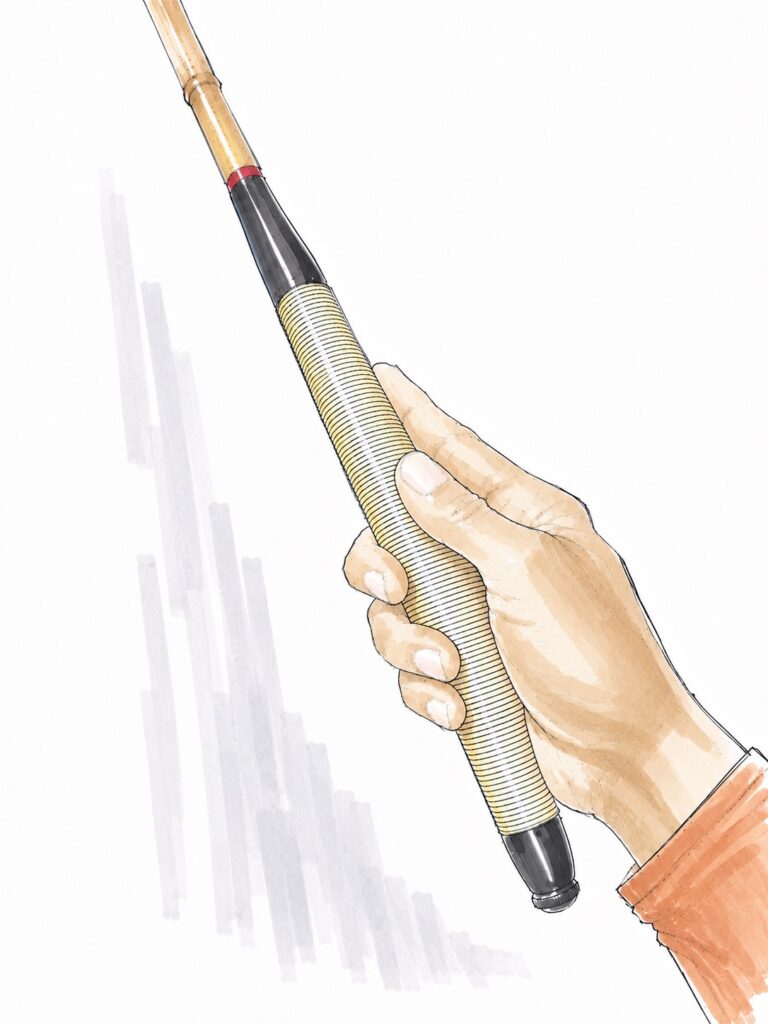
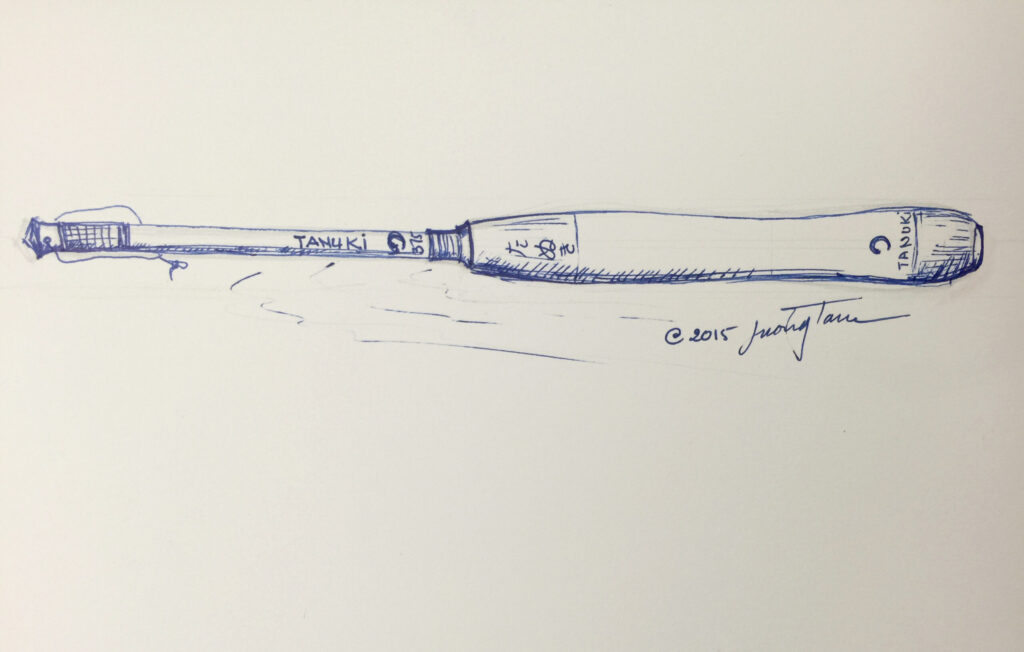
    Illustration demonstrating the correct grip on a tenkara rod handle, showing relaxed hand placement for improved casting control and comfort.

    The book I wanted to write wasn’t simply another guide explaining how to fish with a tenkara rod. I wanted to understand—and explain—why things work.

    Why do trout choose one holding lie over another?

    Why does one presentation consistently outperform another?

    Why does one casting stroke feel effortless while another doesn’t?

    Why do some rods simply feel “right” in your hand?

    What really happens when a large trout surges at the net, and why do so many rods fail at that moment?

    Those questions led me far beyond simply catching fish. They led me into engineering, observation, experimentation, and thousands of hours on the water searching for answers.

    Over the past twelve years, I’ve had the opportunity to present more than 200 seminars and clinics and answer thousands of questions about tenkara. Teaching others taught me just as much as fishing did. Every question challenged me to think more deeply about why something worked, not just how to do it.

    More importantly, I kept searching for ways to simplify every part of fly fishing—from casting and presentation to reading water, understanding trout behavior, selecting flies, fighting fish, and landing larger trout. The simpler an idea became, the easier it was for anglers to understand and apply on the water.

    Over time, I realized that many parts of fly fishing only seem mysterious because no one has explained them in a simple, practical way. That realization eventually inspired the title of the book I’ve been quietly working on over the past several years: Demystifying Fly Fishing with a Tenkara Rod.

    Writing the manuscript has become much more than organizing chapters. It has been an opportunity to revisit the people who influenced me, the mistakes that taught me the most, the prototypes that broke, the theories that survived years of testing, and the lessons that slowly came together through experience.
    It isn’t a book built around one philosophy or one style of fishing.

    It is a collection of lessons learned from fly-fishing authors like Dave Hughes, Japanese masters like Masami Sakakibara, friends who generously shared their knowledge, years of designing rods, my engineering background, and countless hours spent fishing, experimenting, teaching, and learning.

    Every chapter began with a simple question.

    Why?

    Why does this work?

    Can it be explained more simply?

    Can it help another angler enjoy fly fishing a little more?

    Over the coming months, I’d like to share some of those stories here—not as previews of the book, but as the experiences that shaped it. Some posts will be about rod design. Others will explore trout behavior, casting, reading water, fly selection, engineering concepts, or the lessons learned from success, failure, and years of experimentation.

    If you enjoy following the process behind creating a book, I hope you’ll come along for the journey. Over the coming months, I’ll be sharing the stories, experiments, successes, failures, and lessons that have shaped Demystifying Fly Fishing with a Tenkara Rod.

    If you’d like to follow the book’s development and be the first to hear about new journal posts and future updates, I invite you to subscribe to the newsletter. I’d love to have you along as this project continues to evolve.

    When Demystifying Fly Fishing with a Tenkara Rod is finally published, I hope it feels less like the release of a new book and more like the next chapter in a journey we’ve been exploring together.
  • R-Ranch: A Warmwater Fishing Getaway in the Sequoia Forest

    R-Ranch: A Warmwater Fishing Getaway in the Sequoia Forest

    R-Ranch is one of those places that feels like a true getaway.

    June 11-14, 2026

    The ranch is about 45 miles from Kernville. The road winds through Kern River Canyon, following the Kern River most of the way. For anglers,If you are interested, please RSVP as soon as you can through the Tanuki website. Payment should be made to Thomas Paulson so he can book the cabin.

    The cost is $120 per person, which covers the shared cabin for 4 days and 3 nights.

    The ranch is about 45 miles from Kernville. The road winds through Kern River Canyon, following the Kern River most of the way. For anglers, even the drive becomes part of the experience. Along the route, there are many fishing access points where you can stop, walk down to the river, and look for beautiful Kern River rainbow trout.

    even the drive is part of the experience. There are many fishing access points along the road where you can stop the car, walk down to the river, and look for beautiful Kern River rainbow trout.

    The area around the ranch is also full of hiking trails. For hikers, it is a chance to explore the quiet beauty of the forest, the river, and the mountains. It is the kind of place where you can fish in the morning, hike during the day, and sit by the lake in the evening.

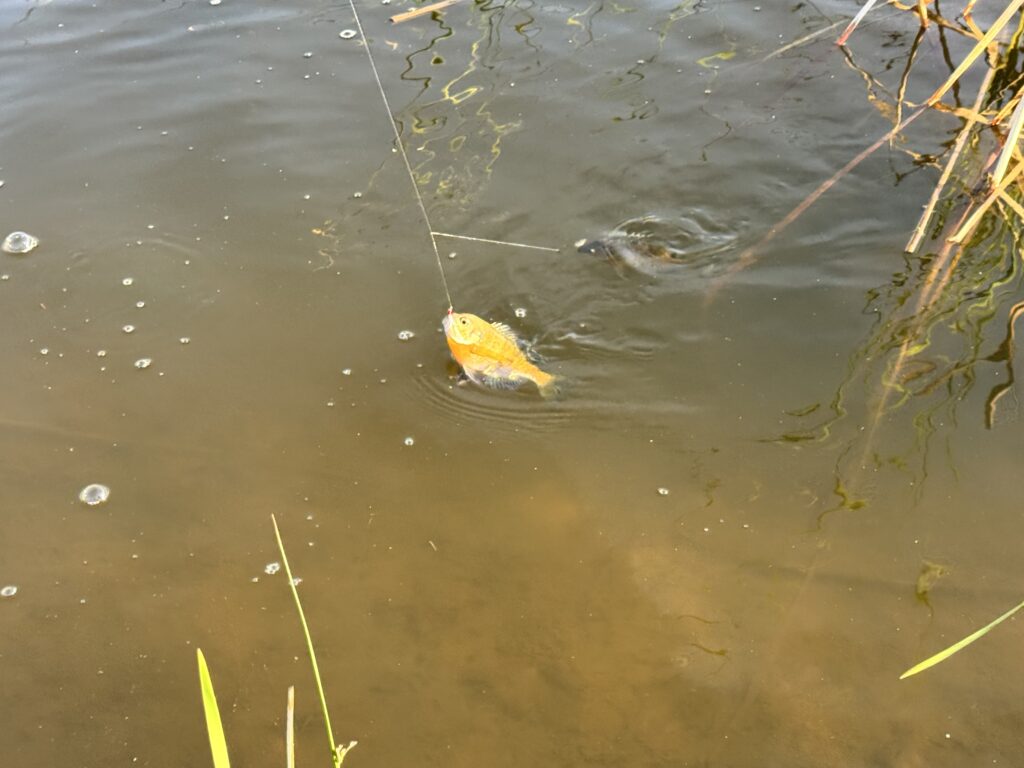
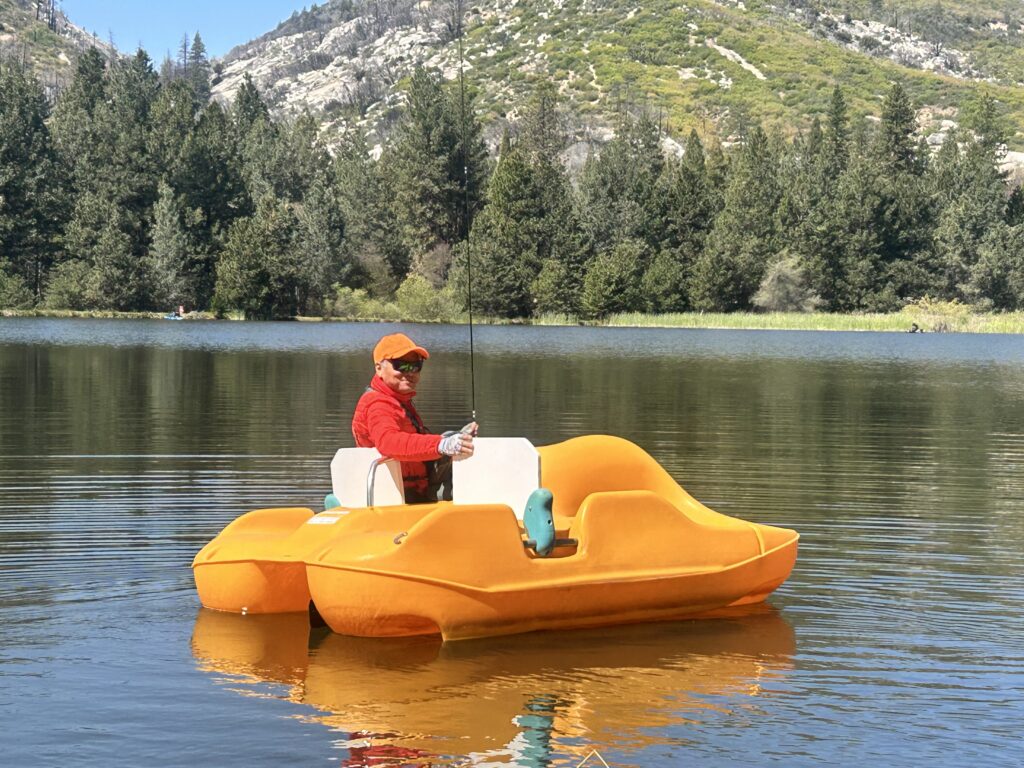
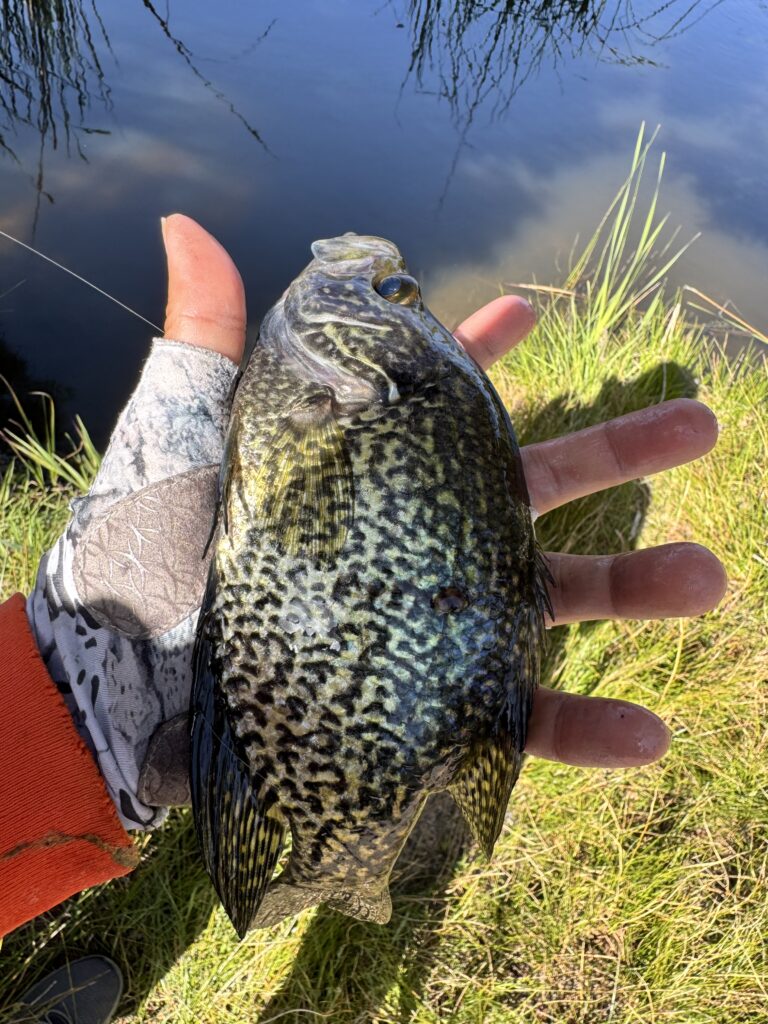
    At the heart of the ranch is a quiet 10-acre alpine lake. The lake is full of bass, bluegill, and crappie. For warmwater fishing, it is a lot of fun. On a good day, an angler fishing with a tenkara rod can catch a surprising number of fish. Thomas told me that catching 250 fish in a day is possible. When fishing two flies, catching two fish at the same time is also common.

    two fish on double fly rig

    I have been to R-Ranch several times. My friend Thomas Paulson is one of the ranch owners, and he has kindly invited me to stay and hang out whenever I have an event nearby. Last year, Thomas and I organized a Tanuki warmwater event there. Unfortunately, I missed the event because of a family schedule conflict. But the idea stayed with me.

    On my last trip, I finally had more time to fish the lake. I caught several double hookups. Some were double bluegill. Some were bluegill and bass. Some were bluegill and crappie. I have caught almost every combination except a double bass. Maybe that will be the next challenge.

    For me, it was a thrilling experience. Warmwater fish are not the same as trout. Bluegill hit hard and fast. Crappie can be subtle. Bass make you slow down and wait before setting the hook. Each fish has a different character, and each one teaches something through the rod.

    But R-Ranch is not only about catching fish.

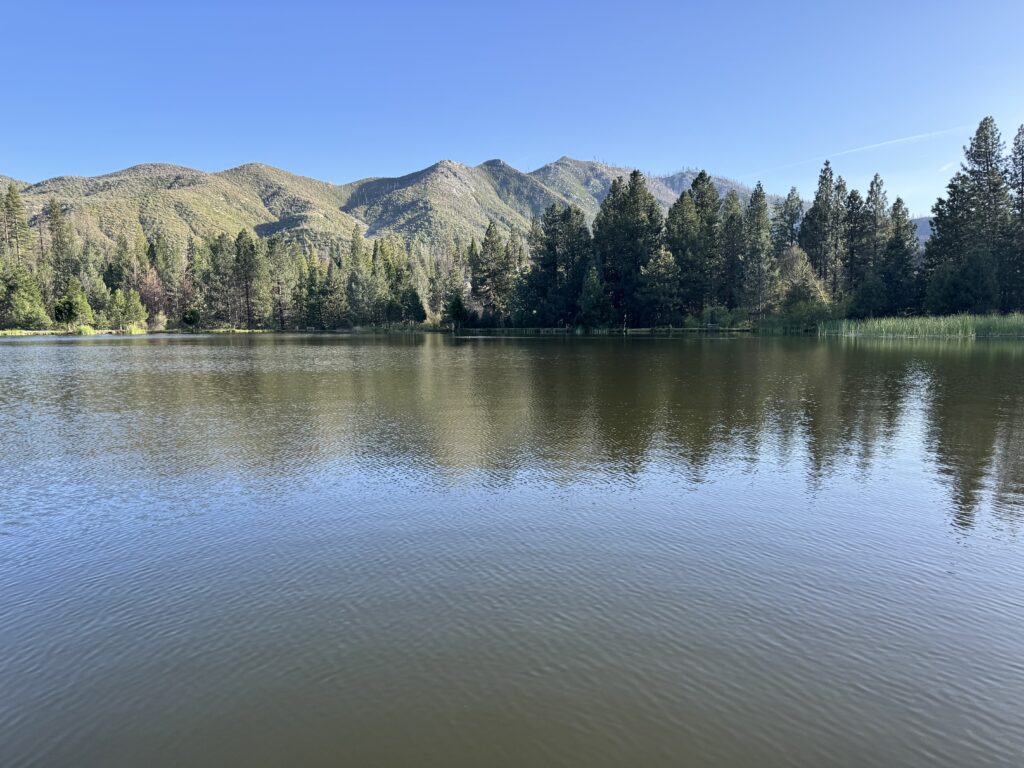
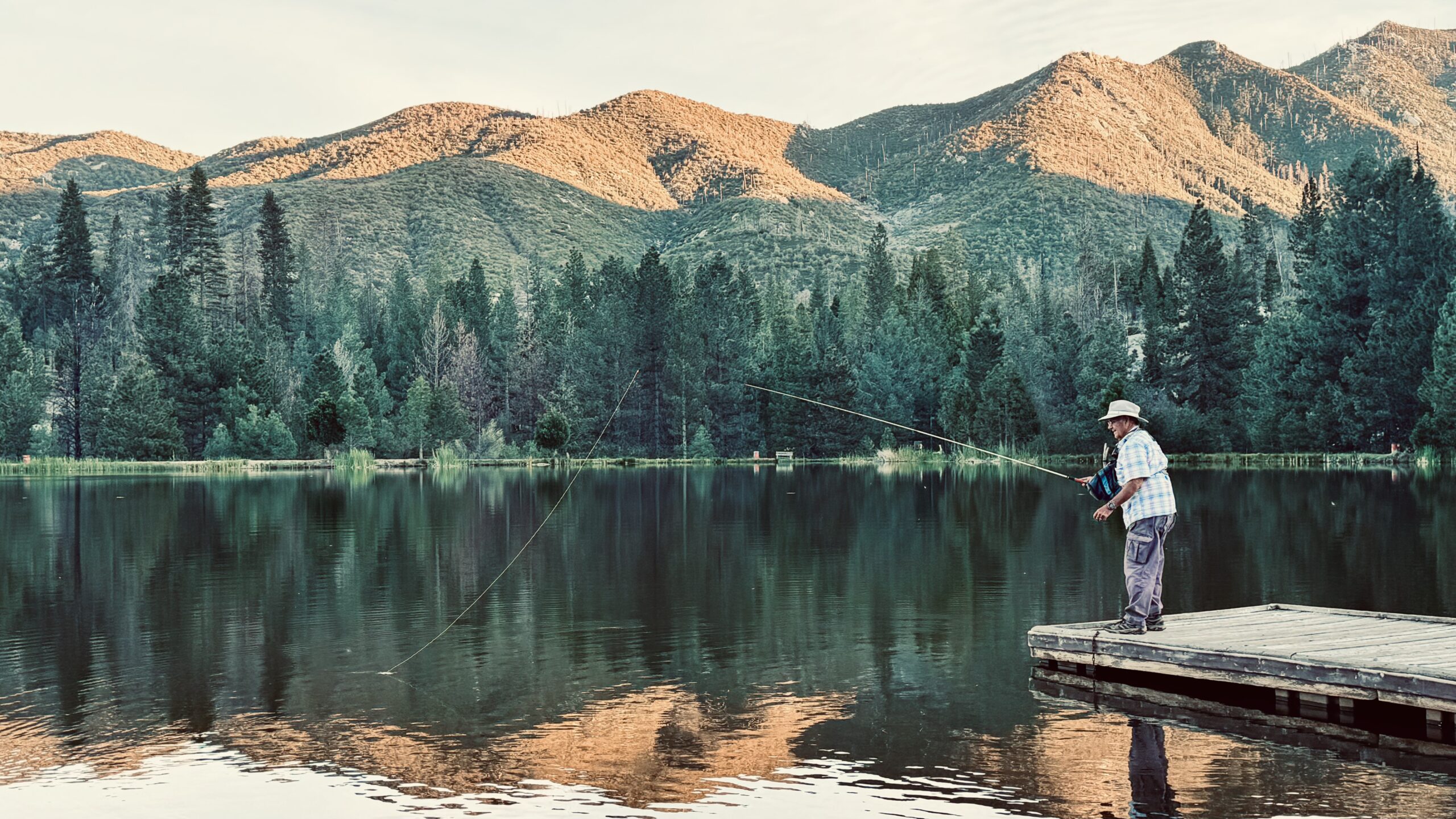
    Some of my favorite moments were in the early morning and evening. In the morning, before the wind picked up, the lake was smooth like a mirror. The mountains reflected on the surface. In the evening, the golden sunlight touched the water and the surrounding hills. It was quiet, calm, and beautiful.

    For photographers, it is one of the best times to take pictures. For fly fishers, it is also the perfect moment to make a long, romantic cast in the air, with the lake, mountains, and warm evening light behind them.

    Staying at the Ranch

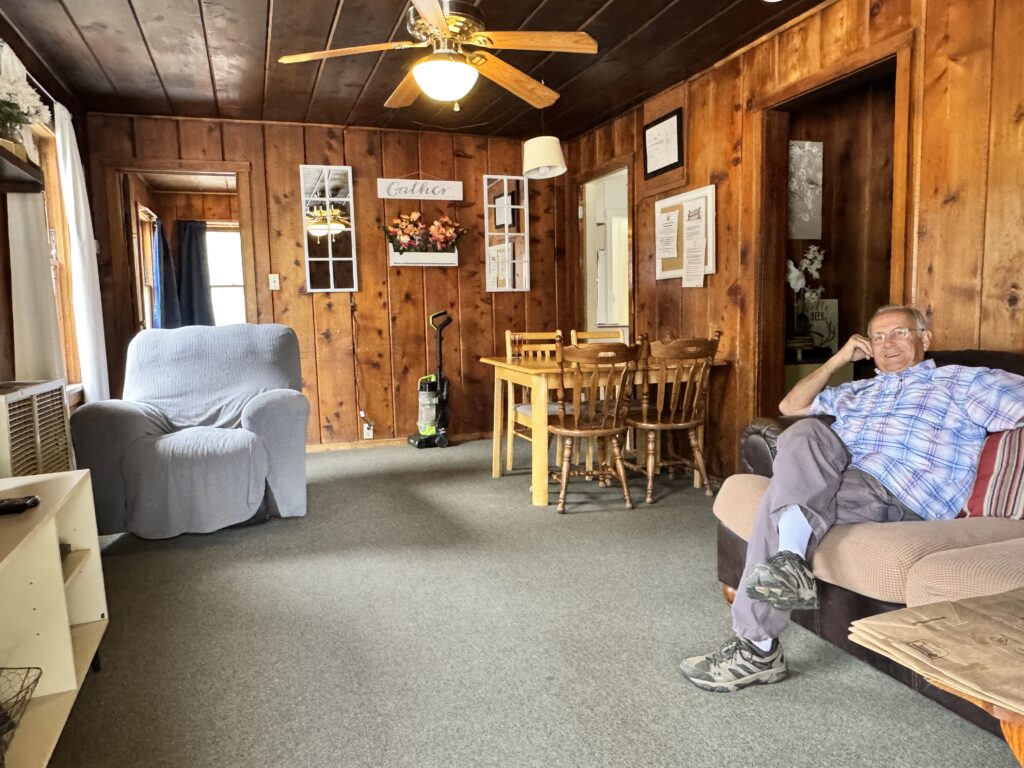
    R-Ranch has a number of cabins owned by different ranch owners. Each cabin is a little different, but most have a kitchen, living rom bed rooms, and bed and bunk beds. Some cabins can sleep more than 10 people, which gives the ranch a friendly group-getaway feeling.

    three bedroom cabin with a flush toilet and shower.

    The ranch also has shared spaces, including a lecture hall, bar, and other gathering areas. It feels more like a small mountain community than a regular campground.

    During my last stay, I stayed in a three-bedroom cabin. We drove down to Kernville to restock food and, for convenience, picked up ready-made meals from the Kernville market. After long days of fishing, that simple choice made life much easier.

    I also liked having Kernville about 45 minutes away. The drive itself became part of the experience—a quiet break, a scenic ride along the river, and a chance to pick up supplies before heading back to the ranch.

    That rhythm felt just right. Fish during the day. Return to the cabin. Share food. Talk about the fishing. Tie flies in the evening. Then wake up early and fish the lake again.

    R-Ranch has fishing, boating, hiking, warmwater fish, nearby trout water, and beautiful scenery all in one place. You can chase numbers on the lake, explore the Kern River for native rainbows, or simply slow down and enjoy the ranch.

    For anglers who want a few days away from daily life, R-Ranch offers something simple and memorable: good water, good fish, quiet mornings, golden evenings, and the kind of place that makes you want to come back.

  • How the Tanuki 375 Began to Take Shape

    How the Tanuki 375 Began to Take Shape

    I felt good about my first rod. It was labeled Fatmonk 360—360 cm in length. The name Fat Monk symbolized something simple and joyful, which felt right for where I was in my journey.

    tanuki 375 concept

    I took the rod to Utah, where I met Eric Ostrader of Tenkara Guides LLC in Salt Lake City. We headed up to Little Cottonwood Canyon, and in just one day on the river I learned a tremendous amount from Eric.

    About half an hour into fishing, Eric suddenly picked up his phone and called John Vetterli. John showed up roughly an hour later. The two of them spent a long time talking on the riverbank, then John took the rod and fished with it. He landed several fish—around six to eight inches—before returning to the bank. More discussion followed.

    The whole stretch of river was essentially mine.

    “Just keep fishing,” they told me.

    By the end of the day, we had become good friends.

    Before John headed out, both Eric and John said something that caught me off guard:

    “This is the rod. You should make more of these for the Tenkara community.”

    At first, we all wondered if it might simply be another “me-too” rod.

    “What’s a me-too rod?” I asked.

    Eric explained that when Tenkara was first introduced to the U.S. by Tenkara USA, many people jumped on the bandwagon—buying generic OEM rods from Alibaba, relabeling them, and selling them as their own. Those became known as me-too rods.

    That conversation stayed with me.

    From my background producing CD-ROM games, I already knew that making something for the market is difficult—but selling it is a hundred times harder. It takes time, energy, and a completely different mindset. I wasn’t ready to turn this into a business. I still saw it as a hobby—but I was willing to test the water.

    Eric also invited me to attend the first Oni Tenkara School that June. I was thrilled. It would be my first opportunity to meet the Japanese rod maker Masami Sakakibara—a living master whose influence on modern Tenkara is second to none.

    Around that time, I posted about my fishing experience with Eric on Facebook. We were nymphing—the weather was cold, there was no hatch, and at that point I was still transitioning from traditional fly fishing, where I mostly fished dries or nymphs rather than kebari.

    The response surprised me.

    A storm of comments followed:

    “Tenkara rods are not for nymphing.”

    “Tenkara is only for kebari.”

    I was confused.

    I kept asking myself a simple question:

    What does the rod have to do with it?

    To me, a rod is just a tool—an extension of the angler’s arm. The goal is simple: present a fly, connect with a fish, and enjoy the moment on the water.

    Still, fishing with kebari began to spark my curiosity. At the same time, I wondered what I was supposed to do with the thousands of flies I had tied over the past twenty years. Even so, I was happy to explore this almost mythical approach to fishing.

    After watching countless Tenkara videos online, one thing became clear: kebari demanded a softer, more responsive tip. Building a completely new rod would be expensive and would mean starting from scratch. Instead, I decided to experiment.

    I began by extending the first few tip sections of the rod. But changing length alone risked throwing the rod out of balance. The challenge was to keep the lower sections stable for casting and fish control, while allowing energy to flow through the rod smoothly.

    After many trials, the best solution I found was to extend the first three sections by about five centimeters each and subtly adjust the taper of sections four and five.

    I temporarily kept the original 360 label, covered it with Tanuki, and treated it as a prototype. The result was a 375 cm rod.

    I took the Tanuki 375 prototype to Oni Tenkara School to learn kebari fishing in the traditional Japanese style—and to receive feedback directly from Sakakibara-san and the community. It was the first time the rod was tested beyond my own hands.

    That experience became the turning point.

    The feedback I received—on the water and in conversation—was unexpectedly affirming. The rod had moved beyond experimentation and into something real. That moment marked the official birth of the Tanuki 375 and the beginning of the Tanuki rod journey.