

I felt good about my first rod. It was labeled Fatmonk 360—360 cm in length. The name Fat Monk symbolized something simple and joyful, which felt right for where I was in my journey.
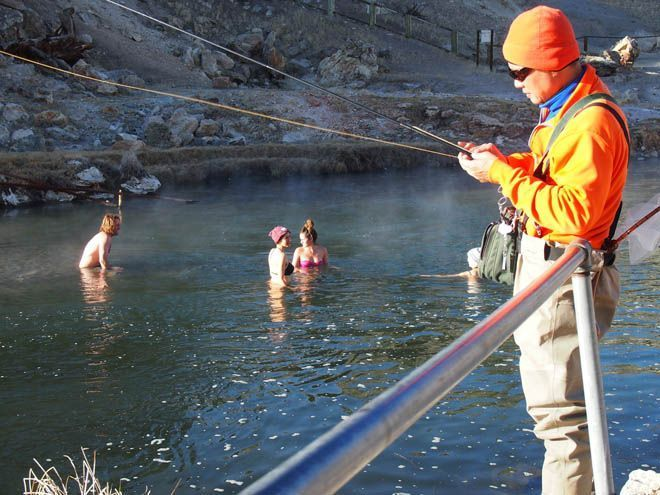
I took the rod to Utah, where I met Eric Ostrader of Tenkara Guides LLC in Salt Lake City. We headed up to Little Cottonwood Canyon, and in just one day on the river I learned a tremendous amount from Eric.
About half an hour into fishing, Eric suddenly picked up his phone and called John Vetterli. John showed up roughly an hour later. The two of them spent a long time talking on the riverbank, then John took the rod and fished with it. He landed several fish—around six to eight inches—before returning to the bank. More discussion followed.
The whole stretch of river was essentially mine.
“Just keep fishing,” they told me.
By the end of the day, we had become good friends.
Before John headed out, both Eric and John said something that caught me off guard:
“This is the rod. You should make more of these for the Tenkara community.”
At first, we all wondered if it might simply be another “me-too” rod.
“What’s a me-too rod?” I asked.
Eric explained that when Tenkara was first introduced to the U.S. by Tenkara USA, many people jumped on the bandwagon—buying generic OEM rods from Alibaba, relabeling them, and selling them as their own. Those became known as me-too rods.
That conversation stayed with me.
From my background producing CD-ROM games, I already knew that making something for the market is difficult—but selling it is a hundred times harder. It takes time, energy, and a completely different mindset. I wasn’t ready to turn this into a business. I still saw it as a hobby—but I was willing to test the water.
Eric also invited me to attend the first Oni Tenkara School that June. I was thrilled. It would be my first opportunity to meet the Japanese rod maker Masami Sakakibara—a living master whose influence on modern Tenkara is second to none.
Around that time, I posted about my fishing experience with Eric on Facebook. We were nymphing—the weather was cold, there was no hatch, and at that point I was still transitioning from traditional fly fishing, where I mostly fished dries or nymphs rather than kebari.
The response surprised me.
A storm of comments followed:
“Tenkara rods are not for nymphing.”
“Tenkara is only for kebari.”
I was confused.
I kept asking myself a simple question:
What does the rod have to do with it?
To me, a rod is just a tool—an extension of the angler’s arm. The goal is simple: present a fly, connect with a fish, and enjoy the moment on the water.
Still, fishing with kebari began to spark my curiosity. At the same time, I wondered what I was supposed to do with the thousands of flies I had tied over the past twenty years. Even so, I was happy to explore this almost mythical approach to fishing.
After watching countless Tenkara videos online, one thing became clear: kebari demanded a softer, more responsive tip. Building a completely new rod would be expensive and would mean starting from scratch. Instead, I decided to experiment.

I began by extending the first few tip sections of the rod. But changing length alone risked throwing the rod out of balance. The challenge was to keep the lower sections stable for casting and fish control, while allowing energy to flow through the rod smoothly.
After many trials, the best solution I found was to extend the first three sections by about five centimeters each and subtly adjust the taper of sections four and five.
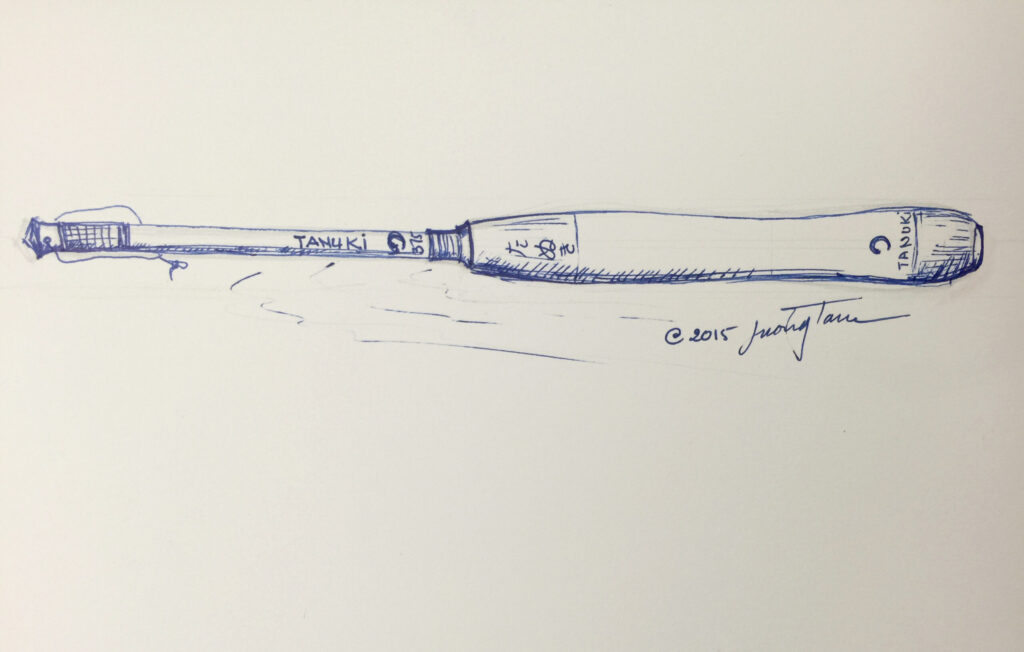
I temporarily kept the original 360 label, covered it with Tanuki, and treated it as a prototype. The result was a 375 cm rod.
I took the Tanuki 375 prototype to Oni Tenkara School to learn kebari fishing in the traditional Japanese style—and to receive feedback directly from Sakakibara-san and the community. It was the first time the rod was tested beyond my own hands.
That experience became the turning point.
The feedback I received—on the water and in conversation—was unexpectedly affirming. The rod had moved beyond experimentation and into something real. That moment marked the official birth of the Tanuki 375 and the beginning of the Tanuki rod journey.