
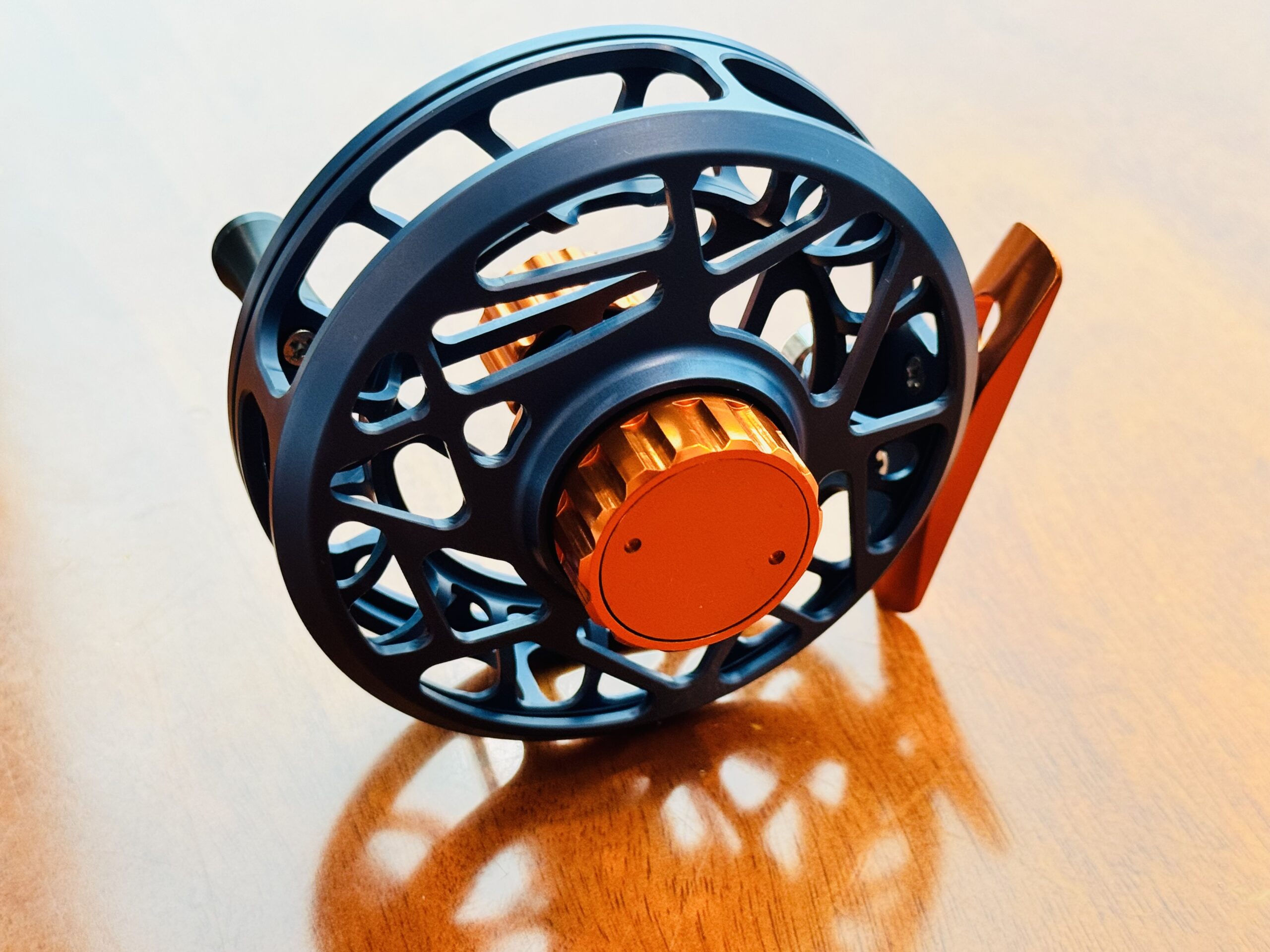
As I spent more time developing the euro nymphing reel, I began to see that the frame system already reveals a lot about what a reel is meant to do. At first glance, a fly reel and a euro nymphing reel may seem closely related. Both hold line. Both balance the rod. Both can have a smooth drag. But the deeper I looked, the more I realized they are built around different priorities.
A standard fly reel is usually designed as a more general-purpose tool. It often needs to carry a full fly line, backing, and handle a wider range of situations. Because of that, the frame and spool are designed with versatility in mind. Many fly reels use a more open cage or half-frame design. They feel light, clean, and simple, and for standard fly line systems that often works very well.
A euro nymphing reel follows a different path.
In euro nymphing, the reel is not really built around storing a bulky fly line or fighting fish on long runs off the reel. Instead, it is built around a narrower purpose: balancing a long rod, managing very thin line, picking up line quickly, and protecting fine tippet. Once I understood that, the frame design began to make much more sense.
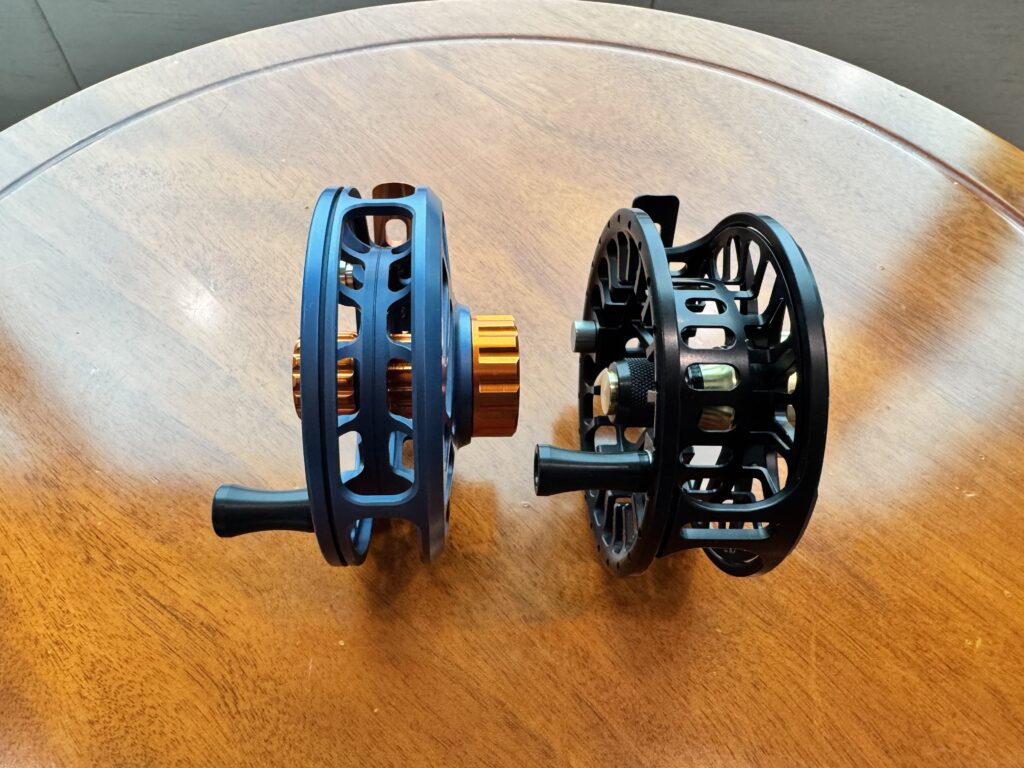
Left: Tanuki Euro Nymphing Reel with narrow spool and large arbor. Right: standard fly reel with wider spool for traditional fly line and backing
One of the first things that stood out to me was the full frame. Compared to a more open fly reel, a euro reel often feels more enclosed. That is not just a style choice. It serves a very practical purpose. Euro nymphing often uses very thin leaders, mono rigs, or thin running lines, and those can slip through wider frame gaps more easily than standard fly line. A full frame helps prevent that. It keeps the line contained and makes the reel better suited to the method.
Then there is the spool shape.
A standard fly reel often has a wider spool because it needs room for a full fly line and backing. A euro nymphing reel usually does not need that kind of line capacity. Because of that, the spool can be made narrower. The narrow spool keeps the reel more compact and helps line stack in a cleaner, more controlled way. The more I looked at it, the more I saw that this was not about making the reel different just for the sake of being different. It was about removing unnecessary bulk and shaping the reel around what euro nymphing actually needs.
At the same time, many euro reels use a large arbor and a wider overall diameter. That also follows the logic of the method. A large arbor helps pick up line faster, reduces coiling in thin line systems, and supports the reel’s role in balancing longer rods. In euro nymphing, balance matters a great deal. The reel is not simply a storage device. It becomes part of the handling character of the entire setup.
That is where I really began to see the difference.
A standard fly reel is often designed to do many things reasonably well. A euro nymphing reel is designed to do fewer things, but do them with greater focus. The full frame, narrow spool, and large arbor are all part of that specialized design language. They are not just visual features. They are practical responses to thin lines, light tippet, long rods, and the contact-driven nature of euro nymphing.
The more I studied reels, the more I came to appreciate that the frame system is not just about appearance. It is the outer expression of the reel’s purpose. And in euro nymphing, that purpose is different enough from standard fly fishing that the reel begins to take on a very different form of its own.
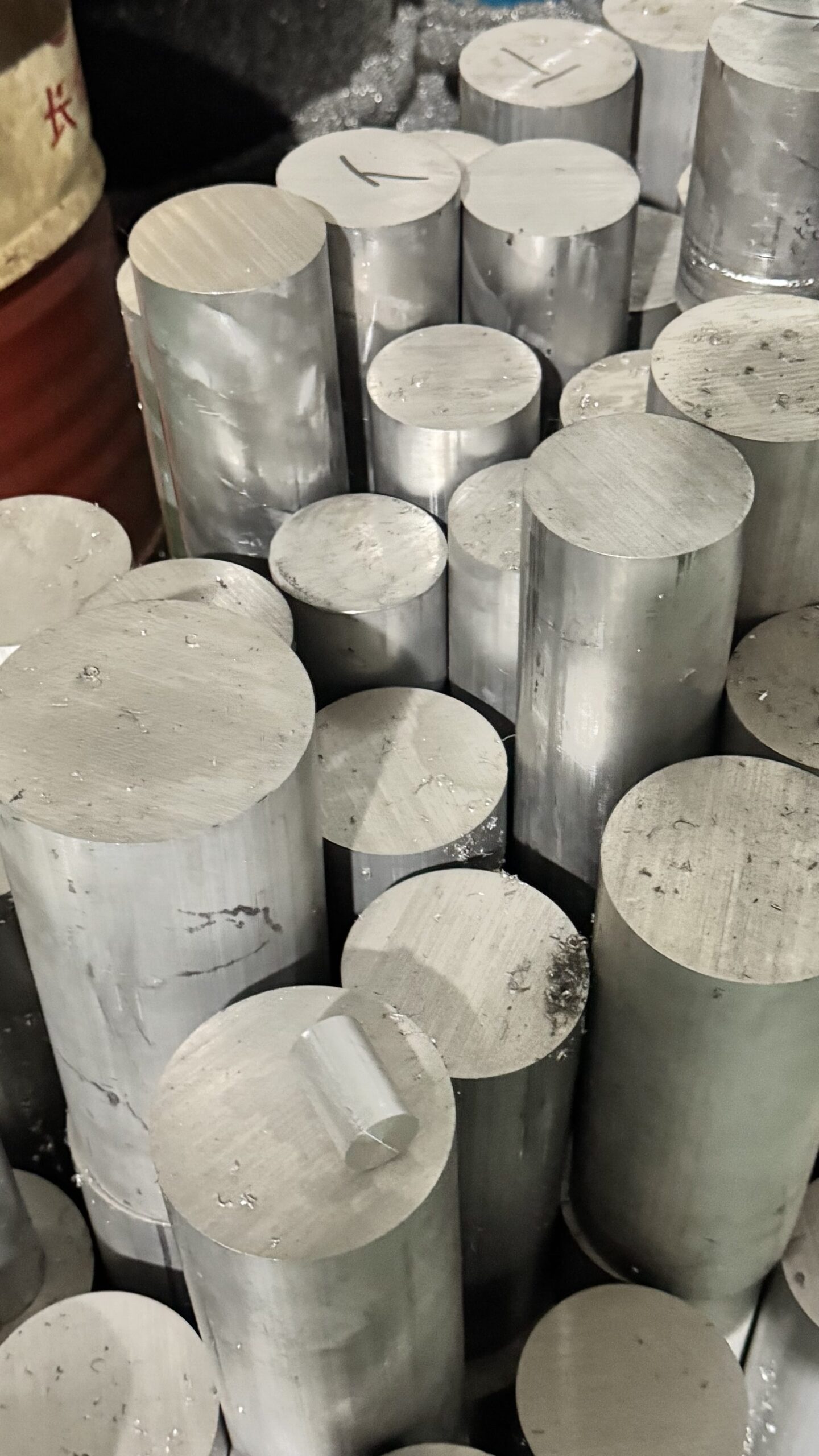
Today, the frame is typically machined from solid bar-stock aluminum using high-end, high-precision CNC milling. During my visit, I was told that each of these machines can cost around half a million U.S. dollars. That gave me a better sense of the level of investment behind modern reel manufacturing. In the early days, many Chinese manufacturers handled Type I anodizing in-house. Today, because of stricter environmental regulations, that process is often outsourced to specialized facilities.
At first, I wanted to use a Type III anodized finish because it gives the reel a harder and more durable outer skin. But for the first version of the Tanuki reel, the manufacturer recommended Type II anodizing, since it remains the most common and practical finish for this style of reel. For that first version, I also chose 6061-T6 aluminum and a carbon fiber disc drag.
Some anglers still prefer cork drag systems over carbon fiber, and that opens up a different conversation altogether. In the next post, I will take a deeper look at reel drag systems and the differences between cork and carbon fiber.