A Euro-Nymphing Rod Development Update from the Eastern Sierra
I can’t believe it — I broke my latest Euro-nymphing rod prototype on a three-foot-wide stream in the Eastern Sierra.
Actually, I broke it twice.
And both times, it happened on stocked fish.
At first, that sounds almost embarrassing. This same prototype had already handled larger rivers, strong fish, open water, and technical Euro-nymphing situations with confidence. How could it break on a tiny stream filled with stocked trout?
But that little stream turned out to be one of the hardest tests I had given the rod.
Thomas Paulson and Jon Gift took me to one of his secret fishing spots in the high country. After driving along a dirt road in the middle of nowhere, we pulled over on the side of the road.

“We’re here,” Tom said.
I thought we were just taking a break after a long drive.
I jumped out of the car and looked around. The view was breathtaking — high mountains, pine trees, open air, and that quiet Eastern Sierra feeling. Then I turned around and saw Tom getting the fishing gear out of the car.
“Are we fishing here?” I asked. “How far do we need to hike?”
“Right here,” Tom answered. “About ten feet.”
Then he looked at me and said, “I want to see how your Euro-nymphing rod handles a small, covered stream.”
“No problem,” I replied confidently. “This is where a Euro-nymphing rod has an advantage over a tenkara rod. I can shorten the line, and if a fish runs, I can release line from the reel.”
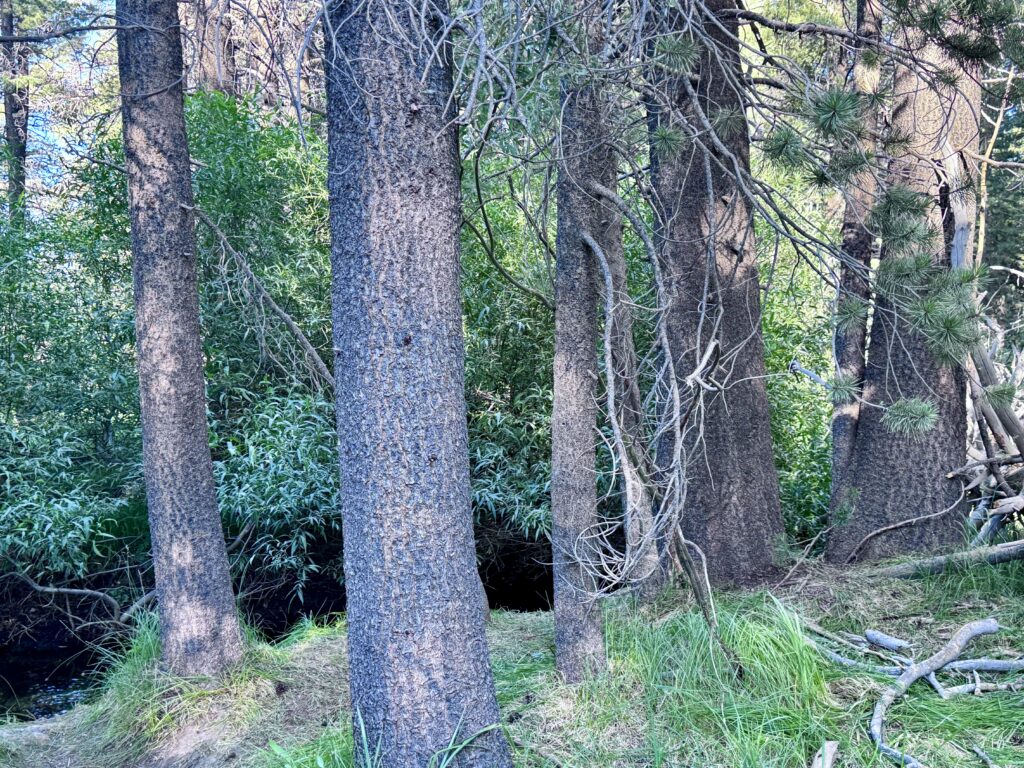
Tom led me across the dirt road and around a group of pine trees about thirty feet away. At first, I did not see any water.
I laughed and joked, “Are we trying to catch fish or trees?”
We both chuckled.
Then Tom pointed down through the branches.
“Look down there,” he said.
I looked, and there it was.
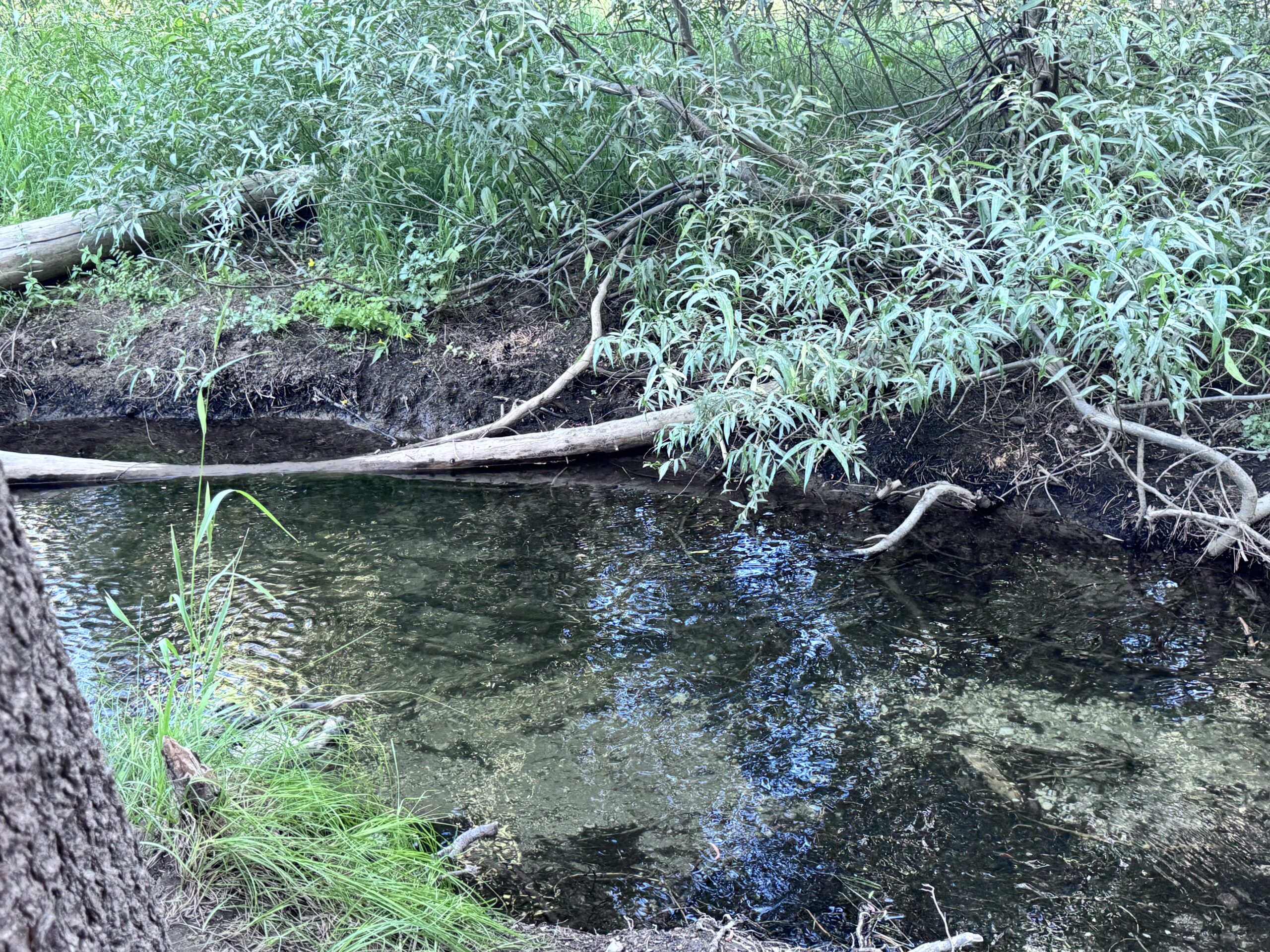
Hidden under the bushes was a small outlet stream flowing out of a larger pool above it. The stream was so well covered by pine branches and brush that it was hard to see even from a short distance away.
Tom turned to me with a grin.
“You want to test your rod here?” he asked. “These fish are strong. They can give you a good run.”
The stream was barely three feet wide and about two feet deep. It was boxed in by brush, branches, and pine trees, but the water was packed with fish — like Bay Bridge toll plaza traffic during rush hour.
I was shocked.
But the real challenge was not catching the fish.
The real challenge was getting the nymph into the water.
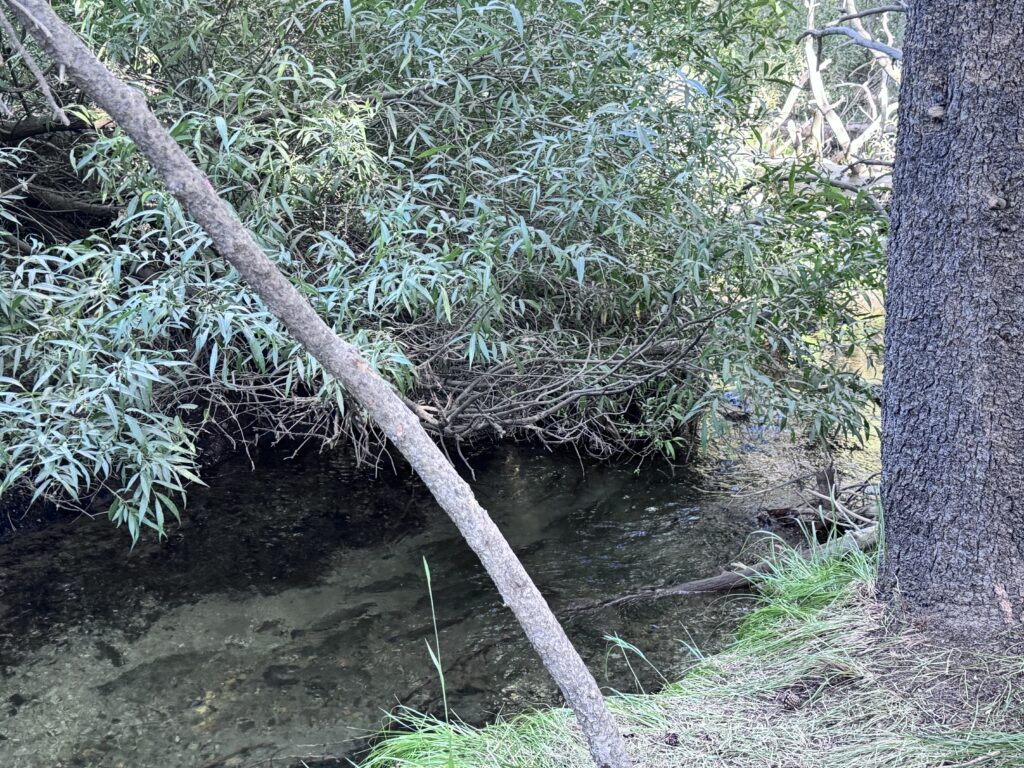
There was no room to cast. There was no room to move if a fish ran downstream. There was no room to move upstream either, because the stream was covered with branches. I had to stand right on the bank, squeezed between the pine trees, and carefully work around the brush.
To deliver the nymph to the fish, I shortened the line until I had only about two or three feet of tippet extending from the rod tip. Then I slowly guided the nymph between the leaves and small branches, trying not to snag anything, and gently dropped it onto the water.
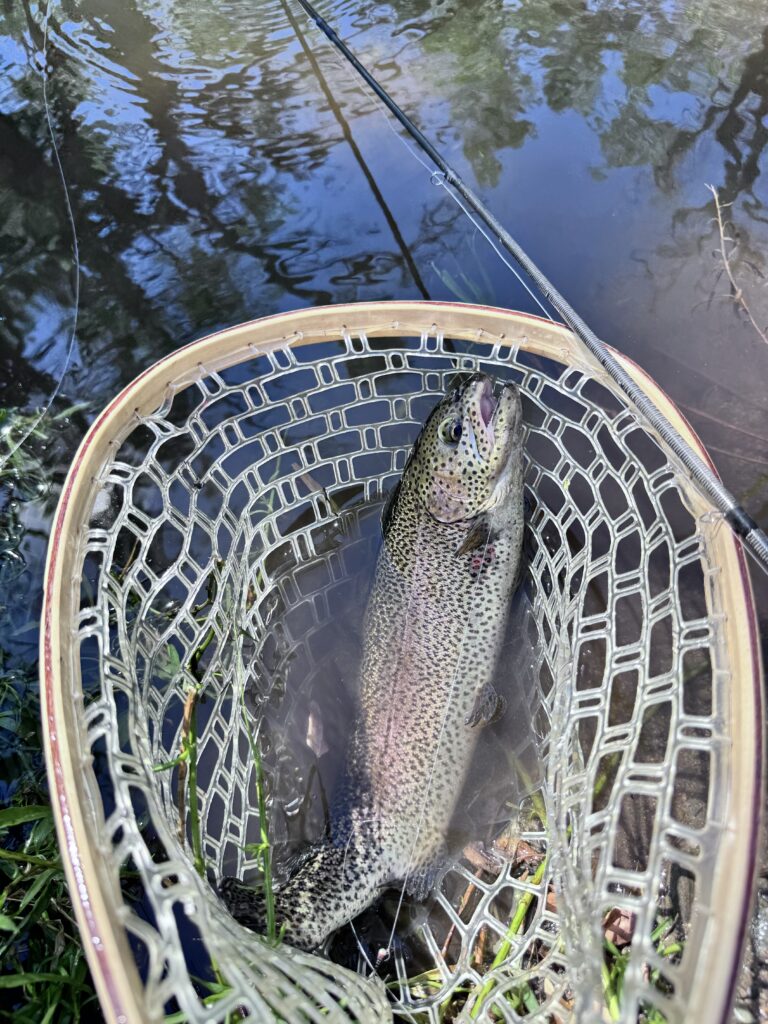
These were freshly stocked fish, and I quickly found that a small bead-head nymph was more effective than most other fly patterns. Catching fish in that pool was not the hard part. Once I figured out the right fly and presentation, hooking them was almost a no-brainer.
Landing them was a completely different story.
The moment these fish felt the hook, they exploded in every direction — upstream, downstream, then suddenly back toward the group. Too much tension and they went wild. Too little tension and they could shake free from the barbless hook. Keeping steady pressure in such tight quarters was difficult.
Wild trout behave differently in this kind of environment. A wild fish usually knows where to go. It may tuck under an undercut bank, slide beneath a root, hide behind a rock, or move into cover with purpose.
These stocked fish were different. They had power, but not much strategy. They simply reacted with full force.
For rod testing, that made them very useful.
Every fish pulled differently. One ran downstream. Another shot upstream. Another turned sideways and tried to dive back into the group. In such a confined space, every movement happened close to me, and every mistake became dangerous for the rod.
That was when I realized this little three-foot-wide stream was not a small test at all.
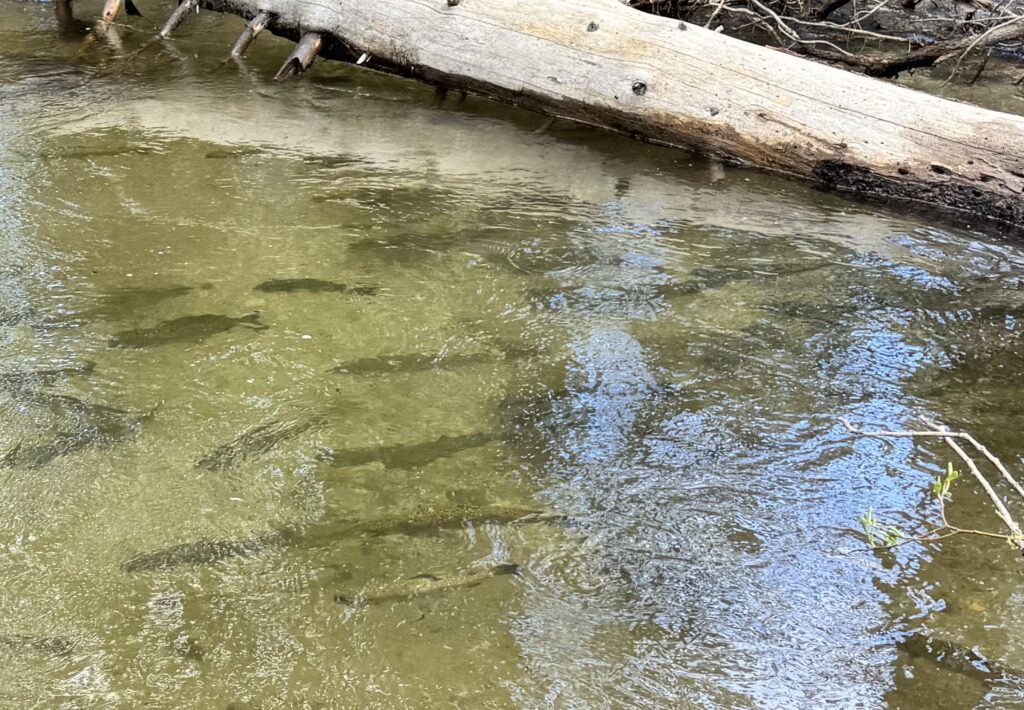
It was one of the hardest tests I had given the prototype.
Then it happened.
A fat fourteen-inch rainbow bolted downstream. I kept light tension to protect the 5X tippet as the fish neared a log about twenty feet below me. It was about to slip under the log and cross to the other side, so I tightened the line by hand to stop it.
The fish instantly reversed direction and shot upstream toward the group.
I stripped line and raised the rod to maintain tension, but the fish was too fast. It passed me before I had enough time to reposition the rod.
Pop.
The rod suddenly felt light and out of control.
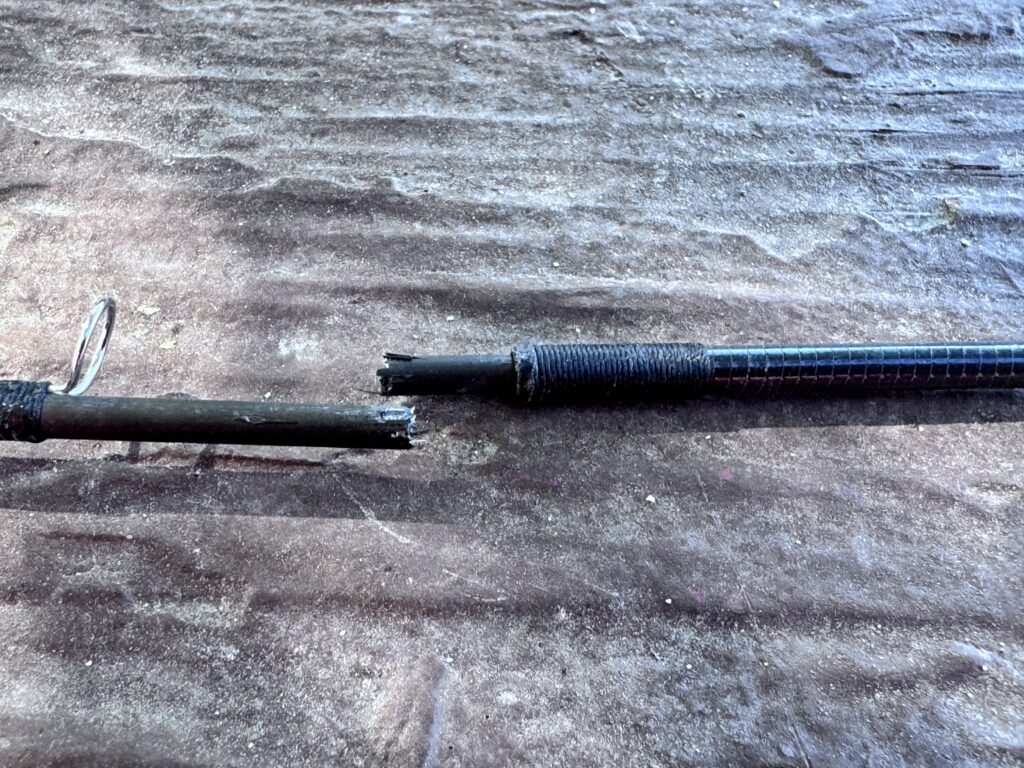
I looked up and saw the tip section had snapped. It slid down the line and hung there, tangled above the water.
For a few seconds, I just stood there, staring.
I had tested this rod on bigger water and strong fish, but this tiny stream exposed something different: short line, no casting room, no space to fight, sudden direction changes, and extreme rod angles.
That combination broke it.
After the first break, I began paying much closer attention to my position, the rod angle, and how each fish moved. The first break felt like a mystery because everything happened so quickly. But the second time, I was fully aware of what was happening.
Fortunately, both prototypes broke in the same section and in the same location. That helped me narrow down the problem.
It does not mean the solution will be simple.
This failure happened under a very specific condition: tight cover, short line, strong fish, sudden direction changes, and an extreme rod angle. Strengthening one area of a rod can sometimes move the stress to another area. It can also sacrifice performance. More strength may add weight, reduce sensitivity, change the flex, or make the rod feel less refined in the hand.
This is the difficult part of rod development.
Before designing fishing rods, I worked as an industrial designer. In product design, strength testing is not optional. It is part of the process before a product is submitted for certification, including UL testing. A product cannot only look good or feel good. It has to survive real use, misuse, and unexpected stress.
Rod development is the same way.
A rod can feel wonderful in normal conditions, but a strange fishing situation can reveal a weakness that would otherwise stay hidden. That is why field testing matters. The water does not care about design theory. The fish does not care about prototype notes. The rod either handles the situation, or it teaches you something.
On the way back, Jon made an important suggestion. Instead of modifying the current rod too much, he said I should consider developing a specific rod for this kind of tight-cover stream.
That made a lot of sense.
The current prototype was already performing very well in the conditions it was originally designed for. It is good for most common stream sizes and technical Euro-nymphing situations. Strengthening the rod too much could reduce sensitivity, add weight, and take away some of the fun of playing a fish.
Last year, this rod handled fish well in open water and gave me confidence in the direction of the design. If I change too much just to solve one extreme situation, I may lose the feel and performance that already make the rod good.
It reminded me of an important lesson from design: sometimes the best design decision is knowing what not to change.
A good example is the Coca-Cola logo. It has been refined over time, but the core identity has remained recognizable because the original design works.
Rod design can be the same way.
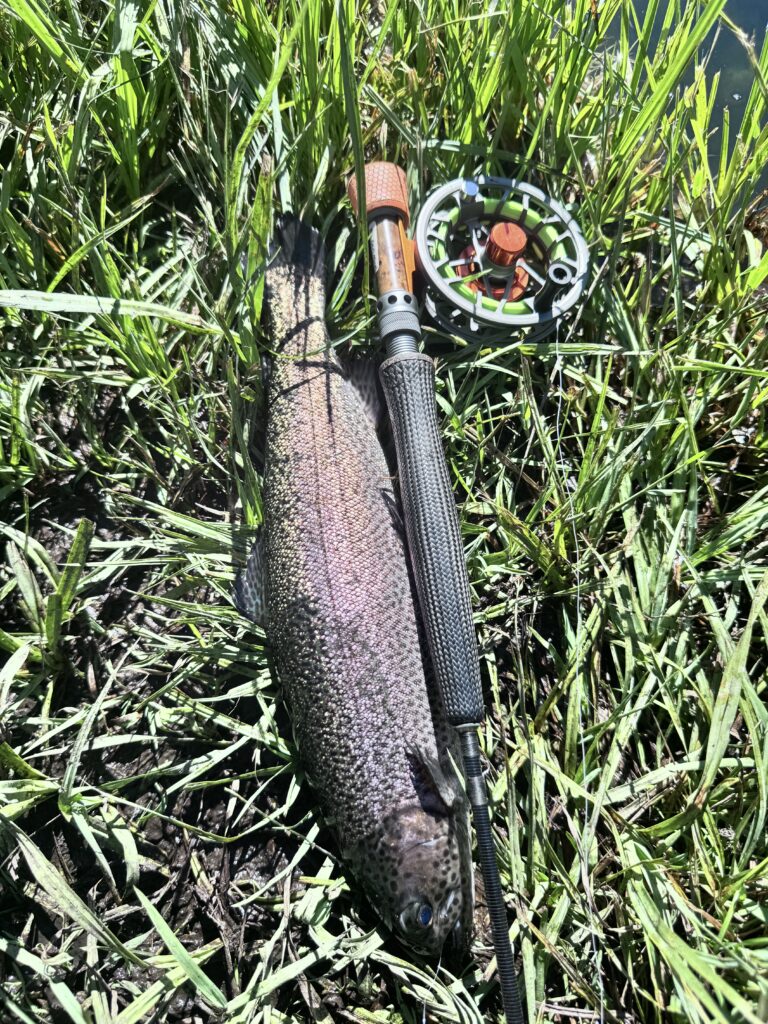
If the current E#2 rod is already strong in its intended purpose, maybe the answer is not to force it to become everything. Maybe the better answer is to keep refining it carefully while also considering a separate, shorter, stronger rod designed specifically for tight-cover streams, short-line control, and powerful fish in confined spaces.
In the end, breaking the prototype was painful, but it was also useful.
That little stream gave me exactly what a good test should give: a clear weakness, a clear question, and a new direction to think about.
Every broken prototype teaches me something. I often think back to something my professor, Howard Freeman, used to say: “If you don’t burn your fingers, you’ll never become a good cook.” Developing a fishing rod is much the same. You have to push a design to its limits before you truly understand it. Every lesson learned brings this Euro-nymphing rod one step closer to production.