
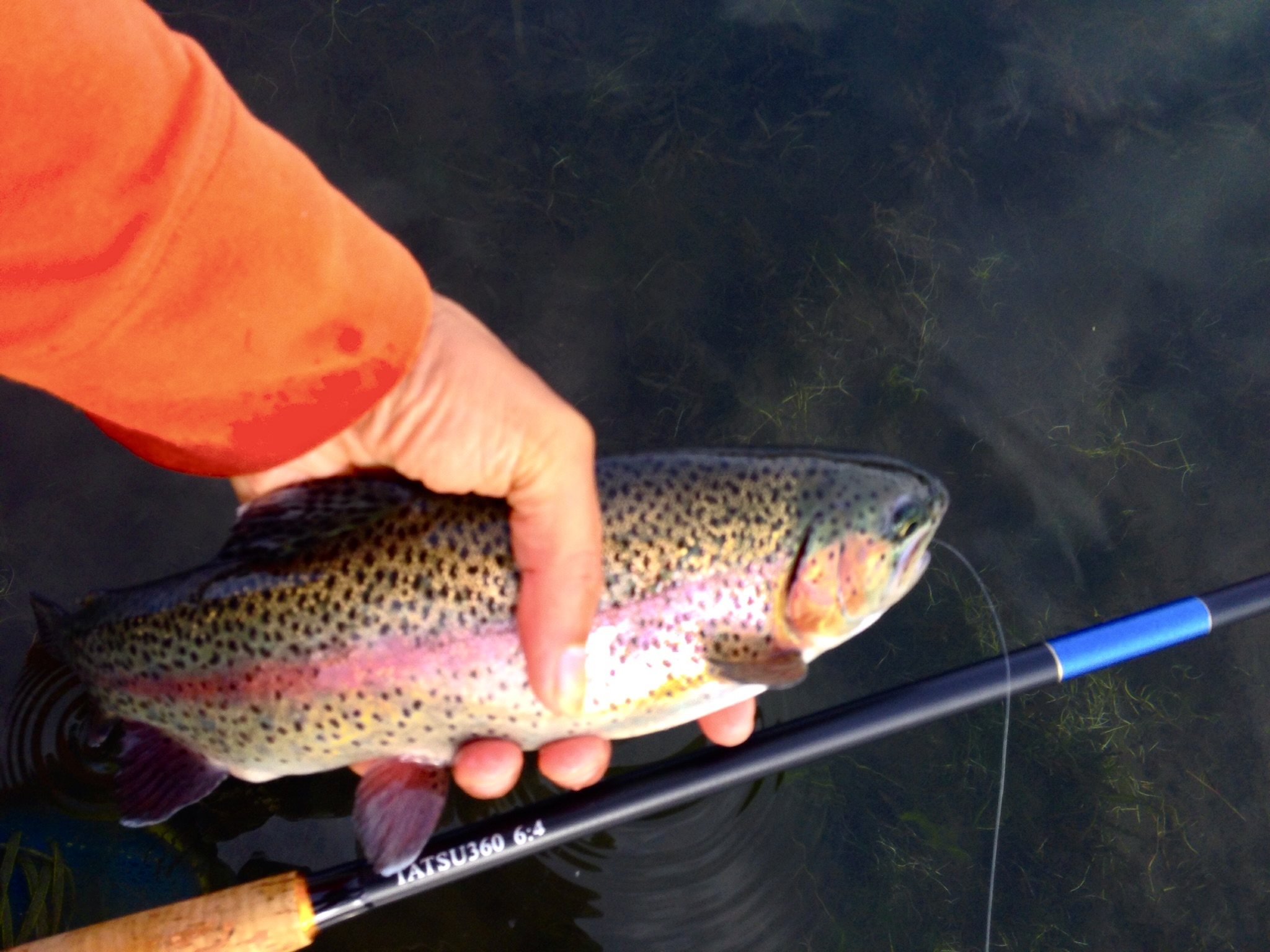

After finally fishing with a Tenkara rod, I did what I always do when something truly captures my curiosity. As soon as I got home, I shut myself in a room and spent endless hours researching—reading, comparing, and trying to understand what actually made a Tenkara rod work.
Choosing my first rod wasn’t easy. Nearly every rod I came across was well regarded and highly praised by Tenkara anglers. But I quickly noticed a pattern: most praise depended on who owned the rod. Everyone loved what they already had.
Because rod building had been my hobby since I was nine years old—and because I had built my own split bamboo fly rods during the dot-com bust around 2000—I approached the search differently. I wasn’t looking for hype. I was looking at materials, construction, and taper. As both an engineer and a bamboo rod builder, taper mattered to me far more than brand names.
At the same time, I kept my expectations grounded. A Tenkara rod cost about the same as two tanks of gas for a fishing trip. I decided to start simple.
I bought a Dragontail rod for about $65. At the time, many people dismissed Tenkara as a fad, and I didn’t want to overcommit before I truly understood it.
I quickly grew attached to that Dragontail rod. I fished it constantly, using it to prepare for the Tenkara Summit in September 2014, held in Boulder and hosted by Tenkara USA.
That trip changed everything.
At the summit, I learned directly from Dr. Hisao Ishigaki, a Japanese Tenkara master. Watching him manipulate the fly and control the drift opened my eyes—not just to Tenkara, but to fly fishing as a whole. It was the simplest form of fly fishing I had ever seen, yet also the most intentional.
By the end of the summit, my thinking had shifted. I wanted the longest rod Tenkara USA offered—but it was sold out. I was told to order it online.
On the drive back to California, I was completely energized. I stopped whenever I saw water along the roadside and practiced the fly-manipulation techniques I had just learned. By the time I got home, I felt ready to step up.
After more research, I found myself on the website of Tenkara no Oni—which roughly translates to “The Devil of Tenkara.” I purchased what I considered the most beautiful rod I had ever seen: a 13-foot Oni Type I with a bamboo handle, for about $400 including accessories.
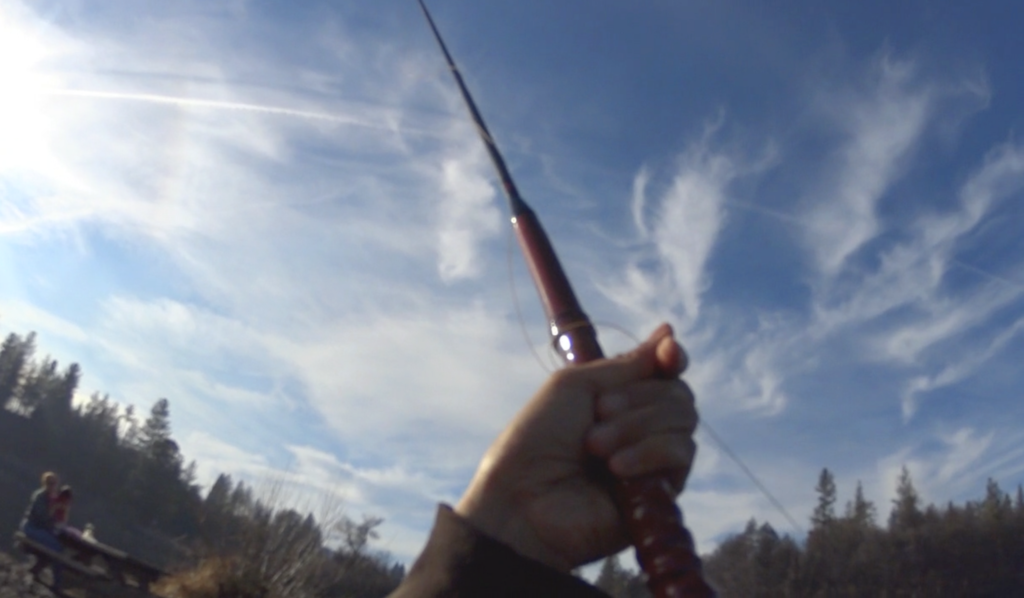
The Oni rod was remarkable. Although it was longer than the Dragontail, it felt lighter, better balanced, and significantly easier to cast. From the first few casts, it felt as if the rod had been made specifically for me.
I couldn’t wait to test it properly, so I loaded the car and took a short trip to Baum Lake in California. Baum Lake is famous for steady fish activity on cloudy autumn days, when trout rise consistently for midges. With its slow-moving water, it’s an ideal place for dead-drift presentations.
On a good day, landing 30 to 50 fish is normal there; landing more than 100 is not uncommon.
My first day with the Oni rod was humbling. I broke off five fish out of ten and landed only three out of five solid hookups. But within a few hours, something clicked. My hook-up rate improved, and landing fish became more controlled and deliberate.
Fishing both the Dragontail and the Oni made me aware of what each offered me on the water. The Dragontail gave me confidence when controlling fish, especially in fast current. The Oni felt effortless in casting—light, balanced, beautifully crafted, and deeply connected to the fish.
Over time, I found myself wishing there were a rod that combined what I valued in both. Most of the trout I catch are wild fish in high-mountain Sierra streams, where a 12-inch trout is a trophy and strong current is the norm. But in some waters near larger lakes—like the Upper Owens River, Robinson Creek, and the East Walker River—20-inch fish are not uncommon.
In those conditions, I wanted the lightness, casting fluidity, and sensitivity of the Oni, paired with the control and confidence the Dragontail gave me in fast water. Maybe I was asking too much—but I wanted a rod that treated a 10-inch fish in the Owens Gorge like a trophy, while still offering the control to handle a 22-inch fish when it mattered.
For me, choosing the rod mattered deeply. Rod making is my craft. A good Tenkara rod costs only a fraction of a fly rod, yet its impact on feel and performance is enormous. For a serious angler, choosing the right Tenkara rod is not trivial—it shapes the entire experience.