The Oregon Tenkara Bug Out
For the past several years, Jim Vandgrift has successfully hosted the Oregon Tenkara Bug Out in Oakridge, Oregon. Every summer, anglers gathered there to camp, fish, and spend a weekend with friends who shared the same passion for tenkara. Thanks to Jim’s dedication, organizational skills, and the support of many volunteers, the Bug Out has continued to grow, getting better every year.
As the event grew, I began receiving more and more requests to bring a Tenkara Boot Camp to central Oregon, especially around Bend. With its beautiful rivers, mountain scenery, and active fly-fishing community, it seemed like the perfect place. One afternoon, Jim, Amanda Hoffner, and I began talking about a simple idea.
What if we combined the Tenkara Boot Camp with the Bug Out?
The idea sounded exciting, but it also meant leaving behind something familiar. Oakridge had become home for the Bug Out. Moving to La Pine meant starting over in completely new territory, and none of us knew whether anglers would embrace the change.
Amanda embraced the challenge from the very beginning. Despite working full-time and settling into her new home after moving from South Carolina to Oregon, she somehow found the time to promote the event, connect with anglers, and work alongside Jim on countless details behind the scenes. Meanwhile, Evan, a local angler from Bend, generously shared his knowledge of the area and suggested several possible locations. One by one, we visited each site, only to discover that they were either beyond our budget or simply too small for what we hoped the Bug Out could become.
Then came the breakthrough.
After weeks of searching, Jim found Rosland Campground in La Pine—a place with a spacious group campground, a nearby community center, and enough room for the Bug Out to grow. Suddenly our idea no longer felt like a dream. It felt real.
The reservations were made.
There was no turning back.
For the first time, the Oregon Tenkara Bug Out (Tenkara Bug Out on FaceBook) was leaving familiar ground and heading into the unknown.
Thursday — The Journey Begins
My plan sounded simple.
Leave early Thursday morning, arrive in La Pine by late afternoon, help Jim finish setting up camp, and maybe even sneak away for a little fishing before dinner.
Reality had other plans.
Every time I thought I was ready to leave, I remembered something else I needed to pack. One more rod. One more display. One more box. Like many fishing trips, I had overprepared for some things while forgetting others, and before I knew it the morning had disappeared.
I finally backed out of my driveway just before two o’clock in the afternoon.
Almost immediately my phone started buzzing.
“Where are you?”
“We’re catching fish!”
“You’d better get up here!”
Every message made me smile, but it also made the drive feel longer. Originally I had planned to stop somewhere along the way, spend the night, and fish a few rivers before continuing north. Under normal circumstances I never pass trout water without making a few casts.
But this trip wasn’t about the rivers along the way.
It was about getting there.
So I kept driving.
More than seven hours and roughly 450 miles later, I finally rolled into Rosland Campground around 8:30 Thursday evening. Every restaurant in town had already closed.
Jim saw me pull in, smiled, and handed me one of those freeze-dried backpacking meals.
“Don’t worry,” he laughed. “Dinner will be ready in ten minutes.”
After seven hours behind the wheel, I don’t think a five-star restaurant could have served me a better meal.
While waiting for dinner, Amanda returned from fishing with Victoria Smith, who had flown in from North Carolina. Victoria and I had met and fished together the year before, so I was curious to hear her first impressions of the West.
She couldn’t stop smiling.
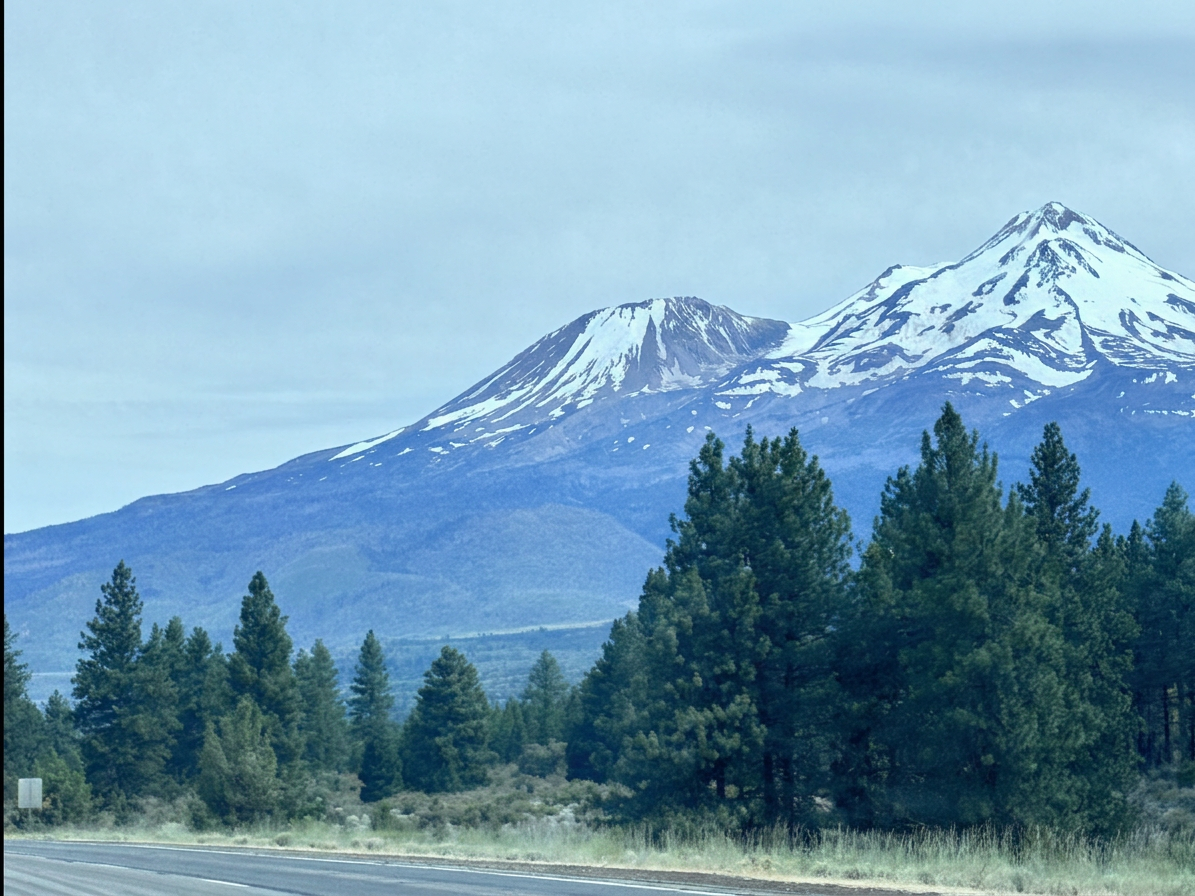
“It’s completely different,” she said. “Back home everything feels greener and enclosed by trees. Out here the mountains seem endless, the air is dry, and every turn in the road reveals another beautiful river.”
She talked about the clear water, the faster currents, and the incredible scenery. Listening to her reminded me how easy it is to take these places for granted. Sometimes it takes seeing your home waters through someone else’s eyes to appreciate them all over again.
Thanks to Michael Lee video:
As darkness settled over camp, more familiar faces continued arriving. Conrad Easton, Michael Lee, Peter Veasey, David McDonald, who rode his motorcycle all the way to Oregon, and many others slowly gathered around the campfire. Some I had known for years, while others I was meeting for the first time, but within an hour it hardly mattered.
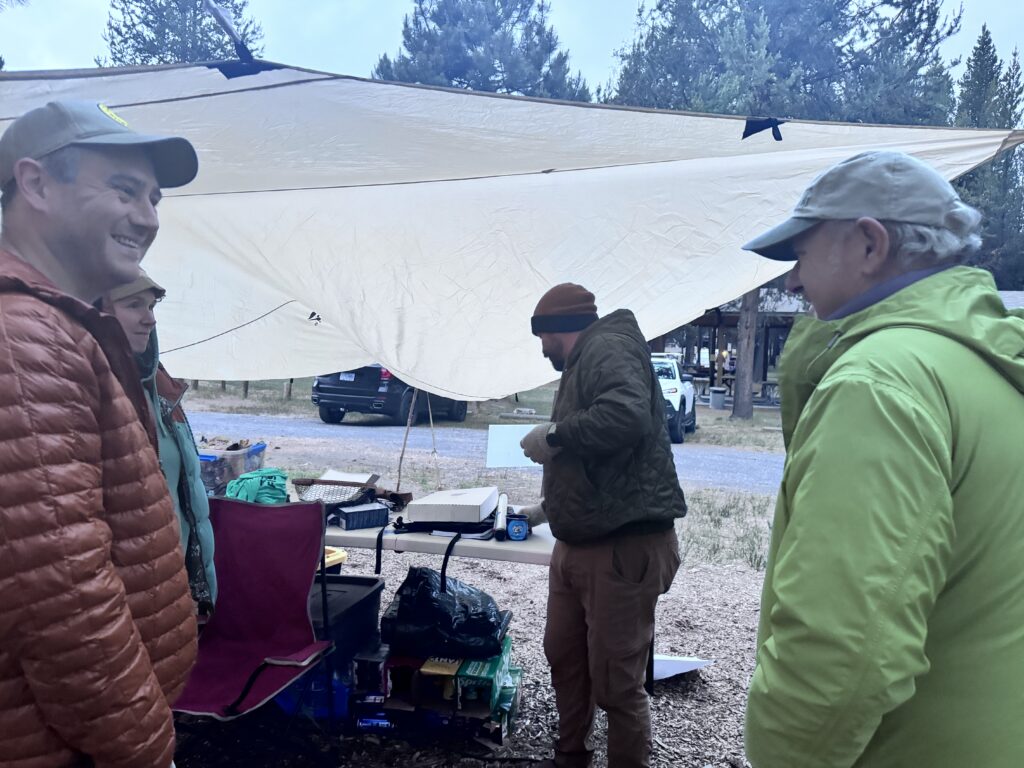
The conversations drifted from favorite rivers to memorable fish, from fly patterns to tomorrow’s fishing plans. Looking around the circle, I realized this was exactly what we had hoped for months earlier when we first started planning the move to La Pine.
The weekend had only just begun.
Yet somehow, the uncertainty was already beginning to disappear.
We had stepped into the unknown.
And it was already beginning to feel like home.
Friday — Discovering Oregon
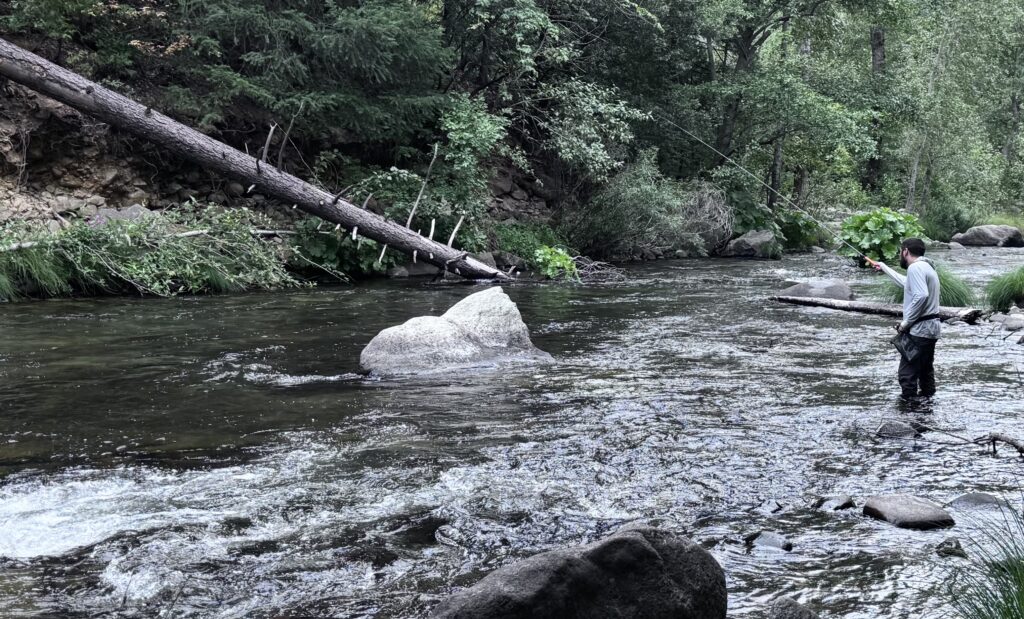
Friday morning, Peter Veasey offered to drive Martin and me to the Crooked River, about an hour and a half from camp. The drive itself was part of the adventure, winding through the high desert and reminding me why so many anglers eventually settle in central Oregon.
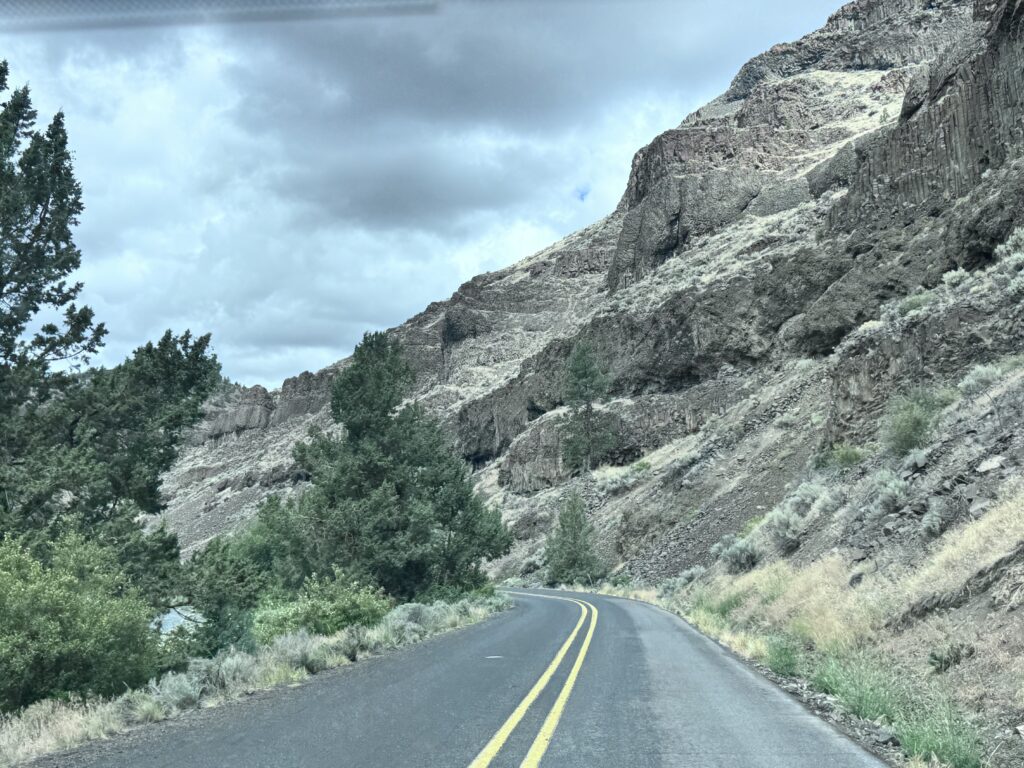
One of my goals for the weekend was to continue testing the latest prototype of my Euro Nymphing rod under real fishing conditions. Product development doesn’t happen in the workshop alone. Every river teaches something different.
The fishing exceeded every expectation.
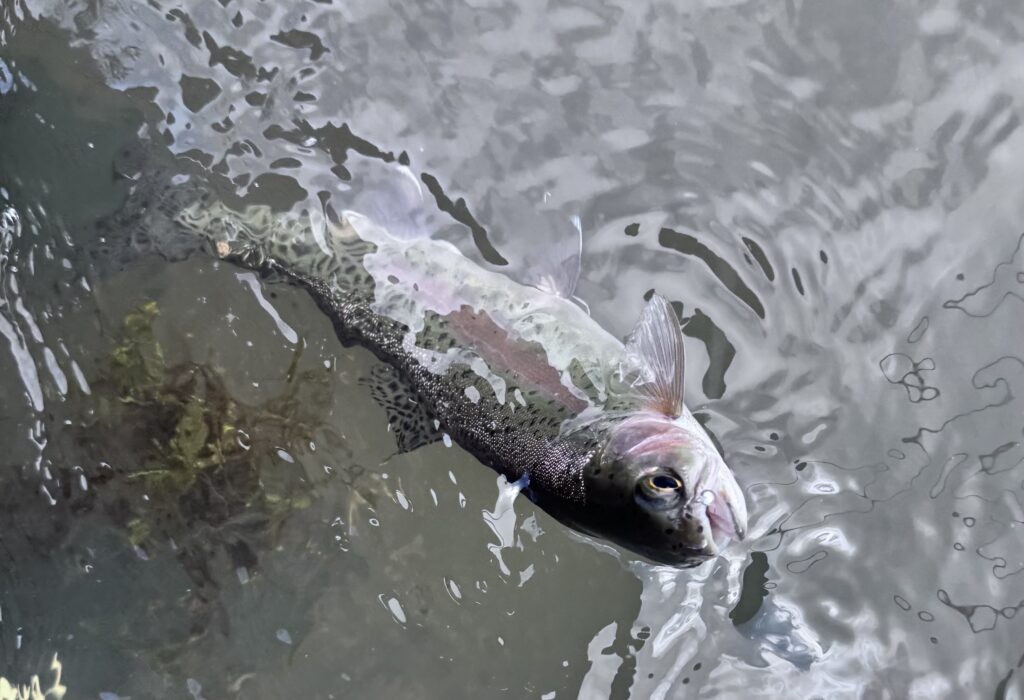
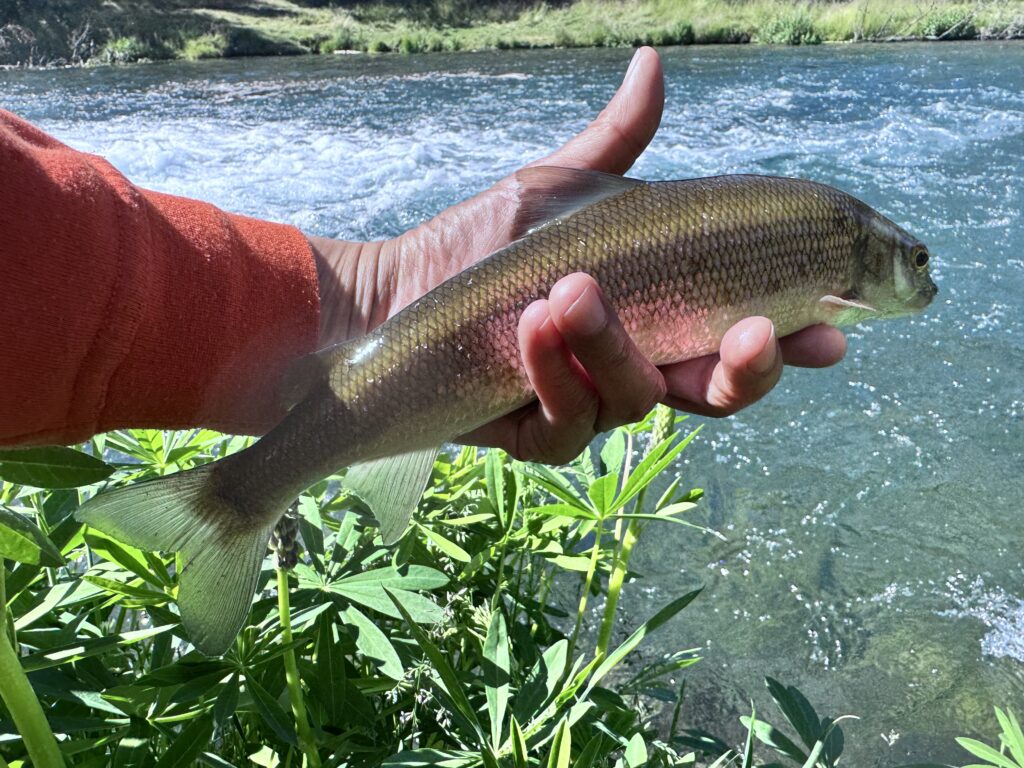
By the end of the day I had landed twenty-two fish, including several beautiful rainbow trout and five mountain whitefish. More importantly, the prototype performed exactly as I had hoped. Every fish added another piece to the puzzle, giving me more confidence that the rod was moving in the right direction.
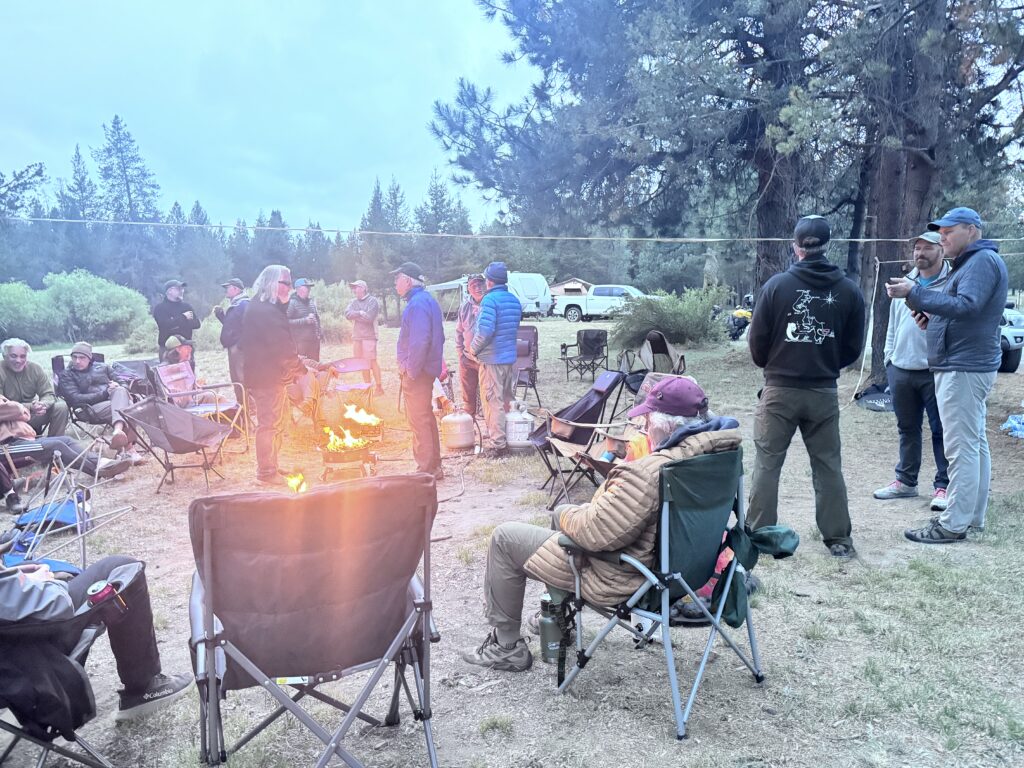
Back at camp, more anglers continued arriving throughout the afternoon. By evening, nearly sixty people had gathered from across the country. As another cold evening settled over La Pine, the campfire once again became the center of the campground. Stories flowed as easily as the coffee, old friendships were renewed, and new ones were formed.
I realized the Bug Out wasn’t simply about fishing.
It was about the people who loved it.
Saturday — A Day of Learning
Saturday morning greeted us with cold temperatures, rain, and wind. Under normal circumstances it would have been a disappointing day for fishing, but instead it became the perfect day to gather indoors.
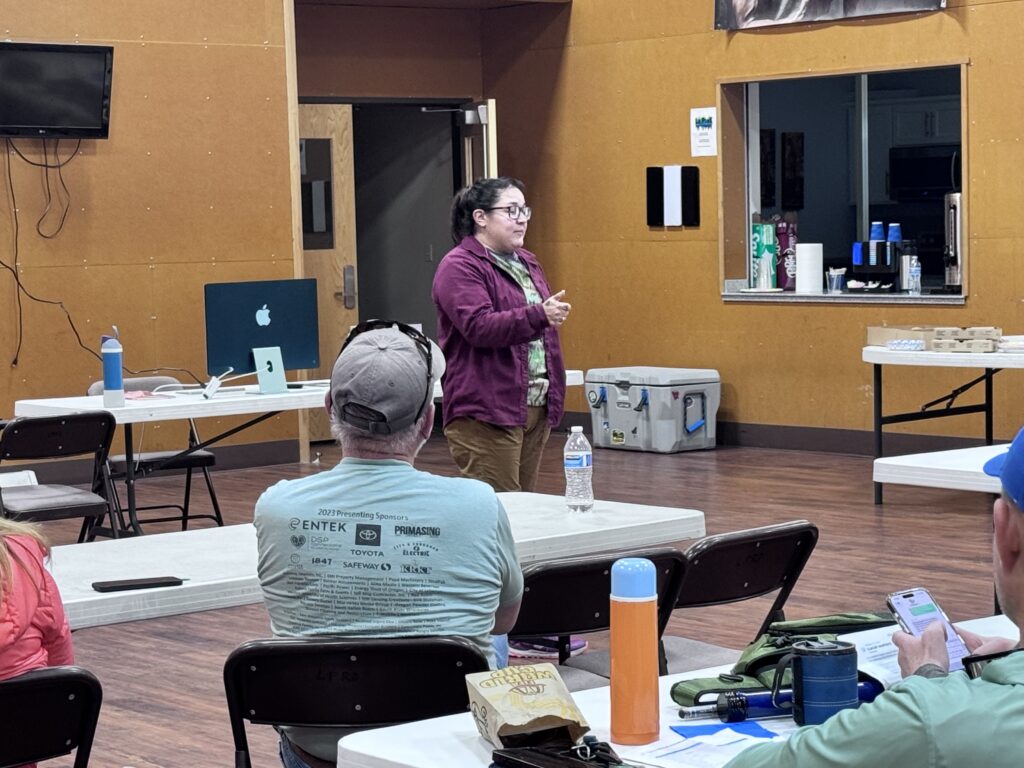
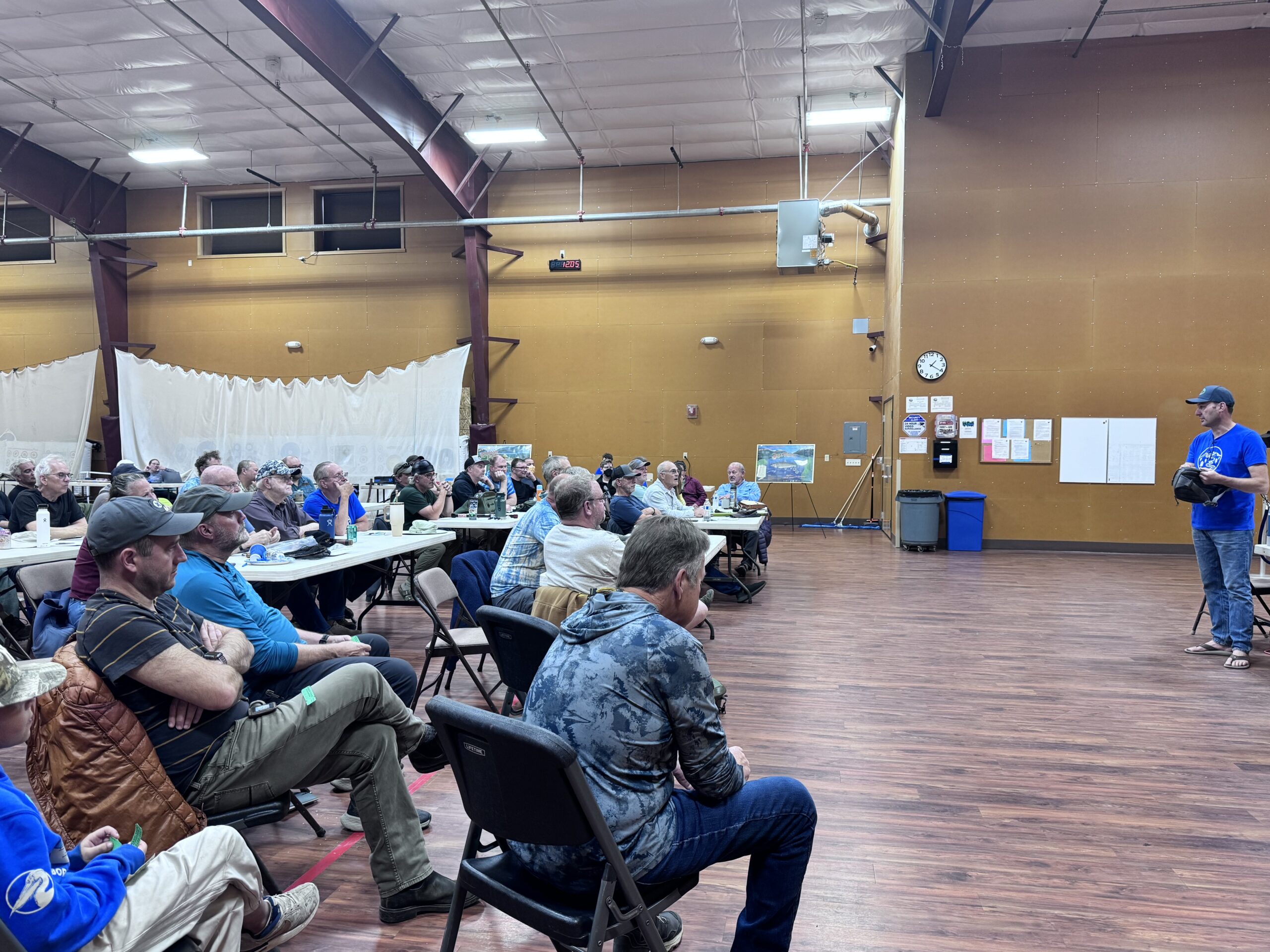
The La Pine Community Center quickly filled with anglers eager to learn and share ideas.
The morning began with a raffle, something I hadn’t expected. As names were called, people laughed, relaxed, and immediately started talking with one another. It was the perfect way to break the ice before the first presentation.
Throughout the day Jim skillfully alternated presentations with raffles, auctions, and breaks. Rather than sitting through hours of nonstop lectures, everyone had opportunities to browse gear, visit vendors, catch up with friends, and simply enjoy being together. The day never felt rushed. It flowed naturally from one activity to another.
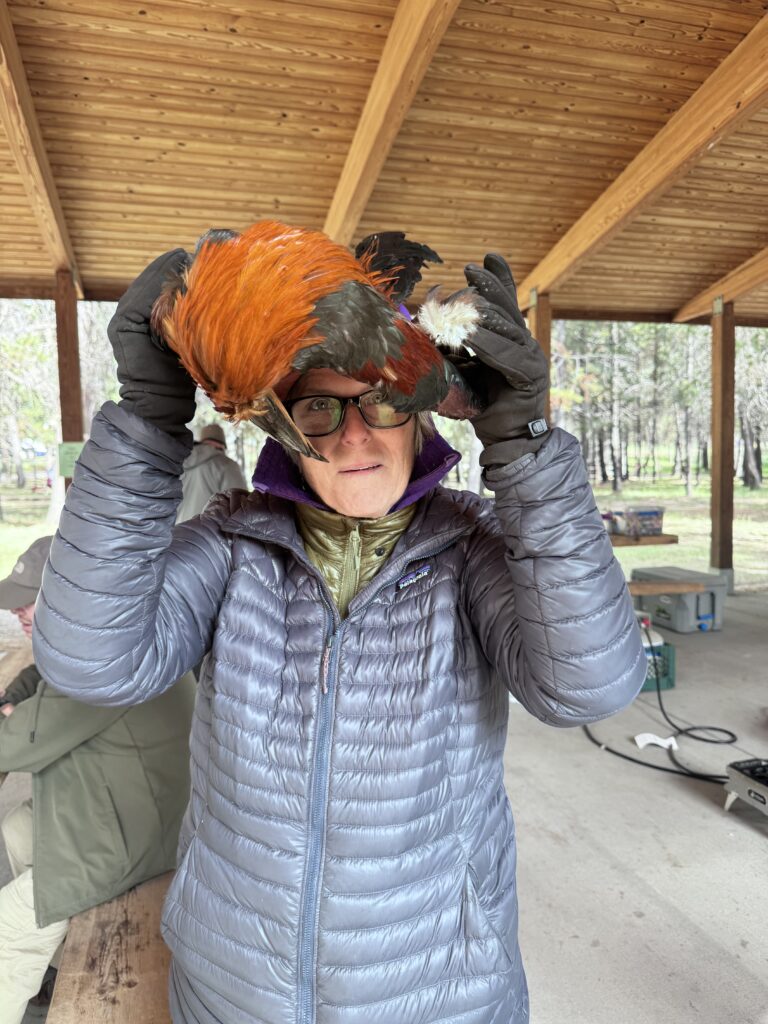
The presentations covered casting, fly presentation, fish behavior, conservation, equipment, and much more. Every speaker brought a different perspective, and every presentation seemed to spark another conversation.
We wrapped up the afternoon with a lively question-and-answer panel. What I enjoyed most wasn’t simply answering questions—it was listening to experienced anglers share ideas with one another. By the end of the day it no longer felt like a seminar.
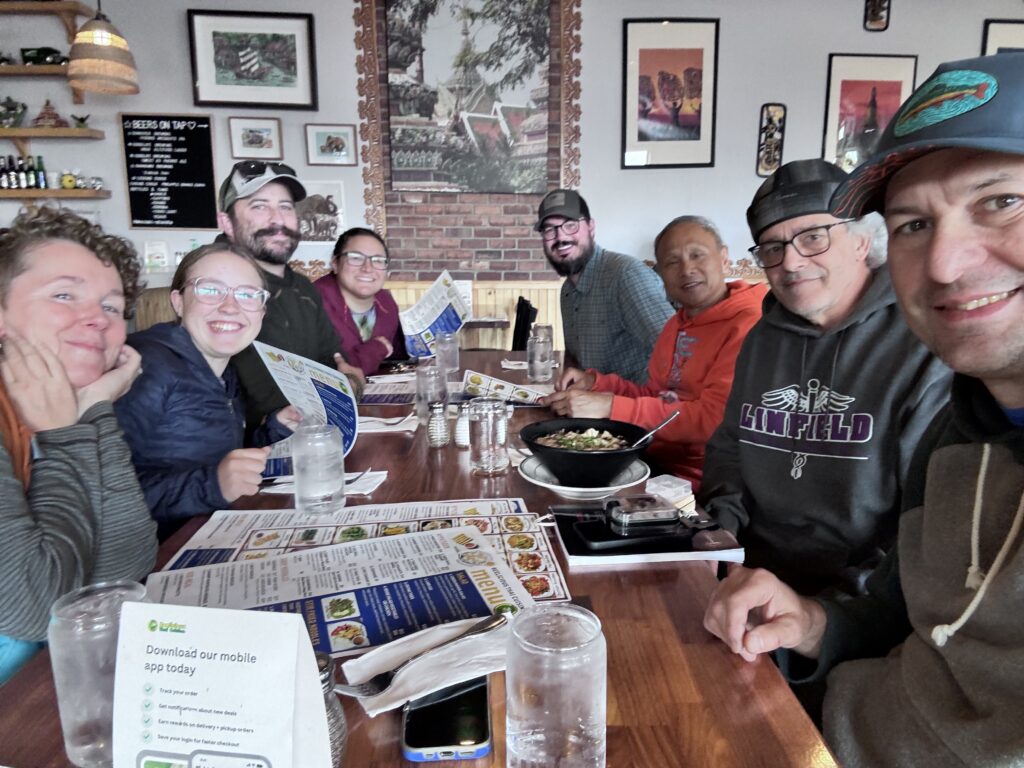
It felt like a room full of friends exchanging knowledge.
As everyone walked back to camp, the rain and cold no longer seemed to matter.
The Bug Out had become much more than a fishing event.
It had become a community.
Sunday — Beside the Water
Sunday morning brought everyone back outside.
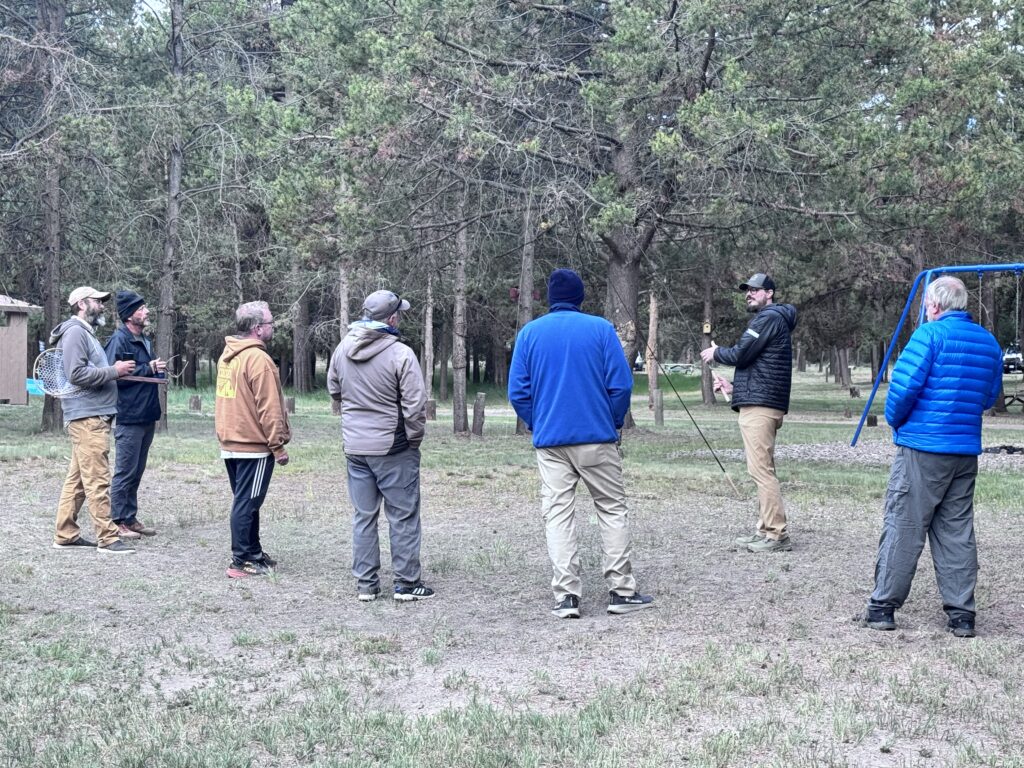
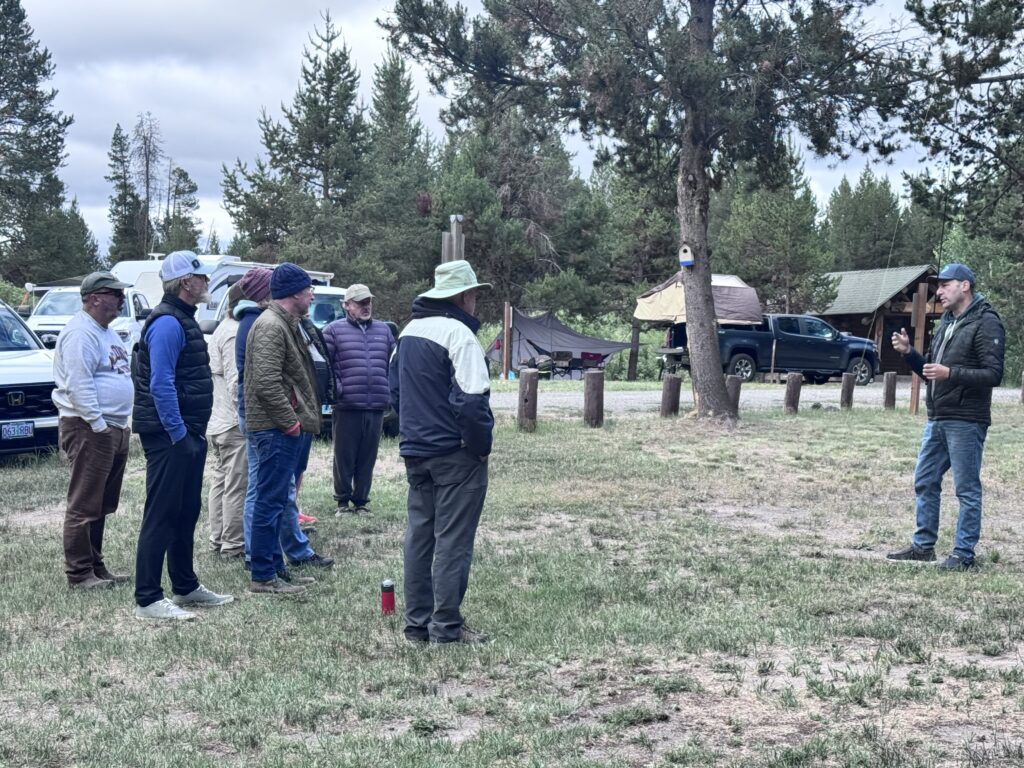
Instead of one large seminar, we divided into smaller hands-on groups. Amanda Hoffner and Matthew Peters worked with one group on fly tying, Jim led another group through casting techniques, while Brent Auger, founder of Dragontail Tenkara, demonstrated his approach to fighting and landing larger fish.
Watching people move from one group to another was one of my favorite moments of the weekend. There was no classroom atmosphere. Beginners asked questions. Experienced anglers shared ideas. Everyone seemed eager to help someone else improve.
One question especially stayed with me.
An angler asked,
“Sometimes I see trout holding in front of a boulder instead of behind it. Why?”
It opened the door to one of my favorite discussions about reading water.
I explained the stagnation zone—the small triangular cushion of water where the current first meets a boulder before splitting around both sides. I told everyone to imagine a toll booth on a busy highway. Every drifting insect must eventually pass around one side of the rock or the other. By holding in that stagnation zone, a trout can watch both feeding lanes while resting comfortably with surprisingly little effort.
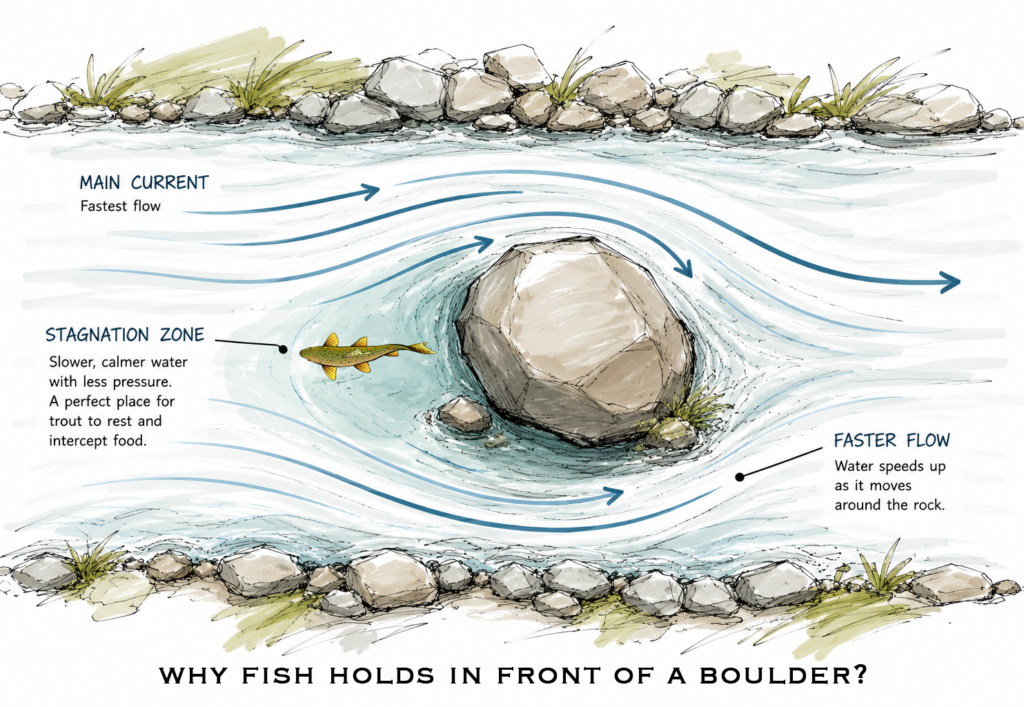
As I was explaining the concept, I couldn’t help but think about one of the illustrations in the upcoming Understanding Water chapter of my book, Demystifying Fly Fishing with a Tenkara Rod. That simple sketch was created to make this exact concept easy to visualize. Seeing everyone nod in understanding reminded me why I’ve spent so much time creating these illustrations—to turn complex ideas into something anglers can immediately recognize and apply on the water.
Sometimes the best lesson isn’t the answer itself.
It’s watching someone begin to see a river differently.
We wrapped up the weekend with the casting tournament, followed by plenty of laughter, congratulations, and goodbyes. As tents came down and people headed home, Martin, Peter, and I decided to stay one more night before driving back to California. The extra day gave me one last opportunity to test the Euro Nymphing rod on the Fall River before beginning the journey home.
The Journey Home
The next morning we packed our gear and headed south.
A few hours later, traffic came to a complete stop. An accident had closed the freeway, leaving us sitting there for nearly four hours.
Normally it would have been frustrating.
Instead, it gave me time to reflect.
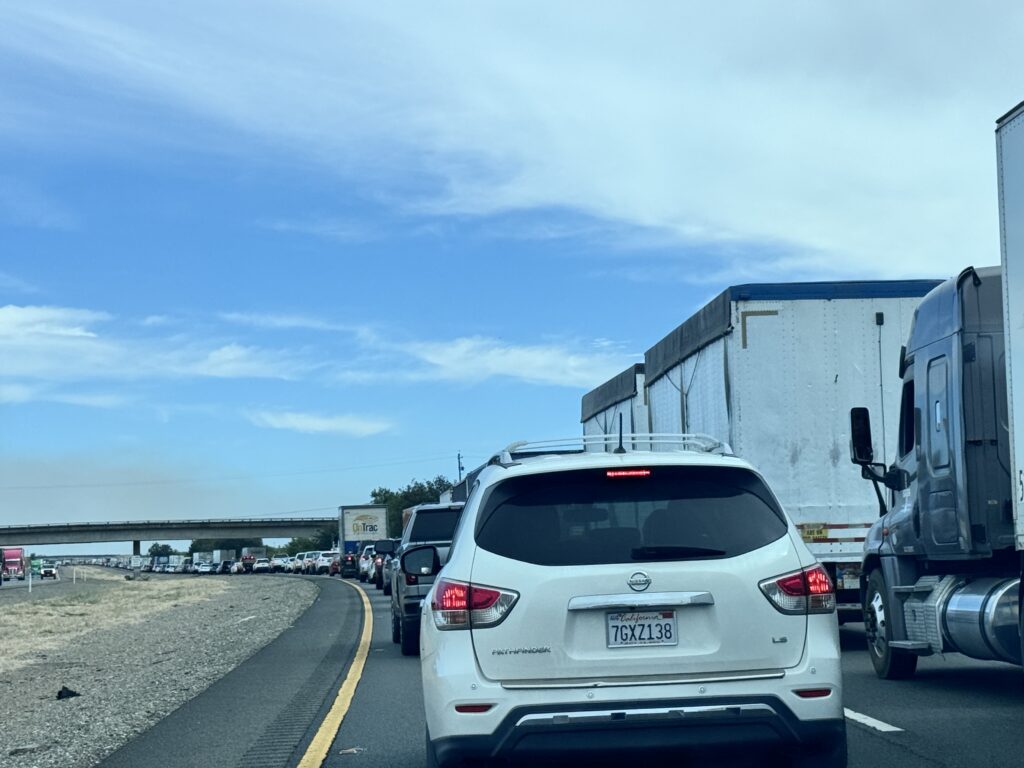
As I watched the endless line of cars stretching toward the horizon, I found myself replaying the entire weekend. I thought about the months of planning, the campfire conversations, Victoria’s excitement about the West, the laughter during the raffles, the thoughtful questions during the seminars, and the smiles on everyone’s faces as they learned together beside the water.
My thoughts also turned toward next year.
We had learned what worked well, discovered a few things we could improve, and realized that La Pine had tremendous potential as the future home of the Oregon Tenkara Bug Out.
Looking back, the 450-mile drive was never really about getting to Oregon.
It was about trusting an idea.
It was about stepping into unfamiliar territory with good friends.
Most of all, it reminded me that the success of a fishing event isn’t measured by the number of presentations, the number of fish caught, or even the number of people who attend.
It’s measured by the friendships that are strengthened, the knowledge that is shared, and the excitement everyone carries home.
As traffic finally began moving again, so did I.