

Designing a Long Tenkara Rod, Lessons from Oni School, and the Origins of the Tanuki 425
During my research and development of my first tenkara rod, one suggestion kept appearing online. That suggestion was: “Get the longest rod you can.” At the time, that usually meant rods around 15 feet long—the longest one-hand casting tenkara rods available then.
I tried one. It was heavy, and within five minutes of casting in the Japanese style, my wrist hurt. A little later, I realized that placing the index finger on top of the grip felt unnatural. Initially, I followed this style. More importantly, it wasn’t wabi. It didn’t feel calm, balanced, or honest.
I was honestly surprised when the Tanuki 375 later received such overwhelmingly positive feedback. Anglers described it as light, sensitive, and responsive—and, importantly, not a me-too rod. To me, a me-too rod is an off-the-shelf OEM design with a new label. The Tanuki 375 wasn’t that, and people felt it immediately on the water.
That response gave me confidence—and the motivation to explore other rod lengths.
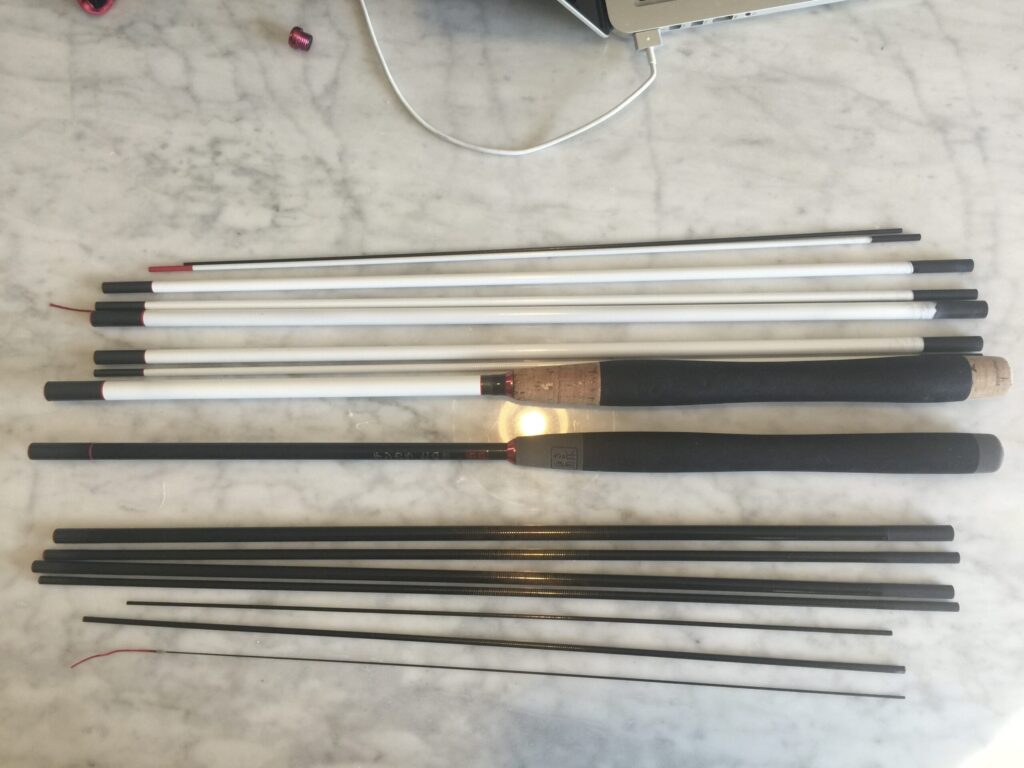
At Oni School in 2015, Dr. Robert Worthing, who guided me early in my tenkara journey, encouraged me to bring the Tanuki 425 prototype to life. After fishing it, Rob told me something that stayed with me. He said the rod felt like it was built specifically for his fishing style.
When Rob described the rod as responsive, he wasn’t talking about speed or stiffness. He meant it was easy to cast with accuracy. It was easy to place the fly exactly where he wanted it, without effort or correction.
Then he said, simply:
“I just want it as it is—no change.”
I took that seriously.
I respect Rob not only as a fisherman, but as a teacher. In my mind, he is second to none as a tenkara angler and instructor outside of Japan. I relied on his experience and feel. I decided to bring a small quantity of the Tanuki 425 into production. I made no adjustments to the blank.
The Tanuki 425 was never meant to be a mass-market rod, and it was never meant to replace the 375. It was a rod that worked as is, for a specific style of fishing.
Surprisingly, the Tanuki 425 drew strong interest from Italy—and it still does, even more than a decade later.
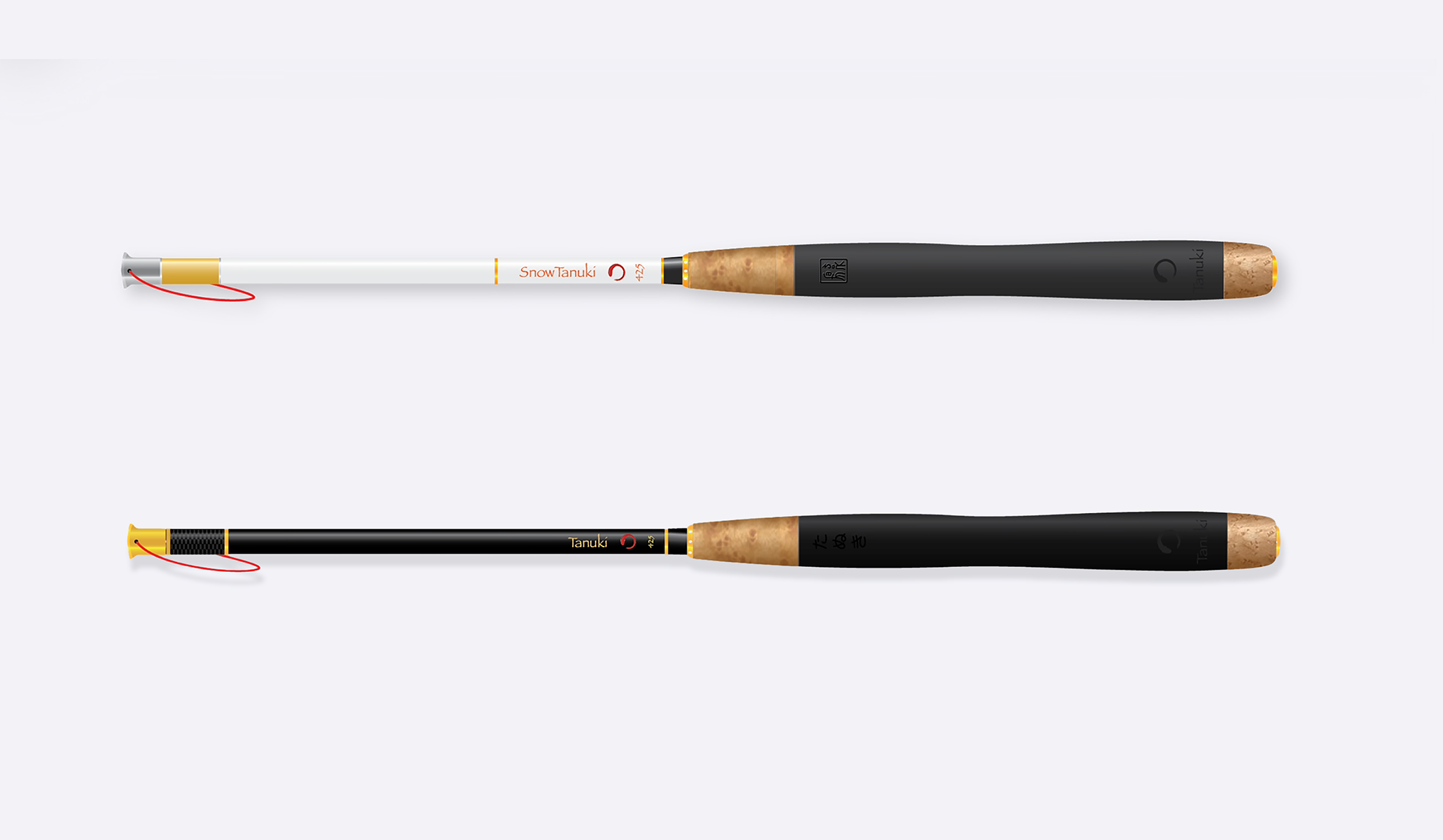
That same day at Oni School, one of the Tanuki 425 prototypes was painted white. It drew a lot of attention at Oni School in Utah. Later that year, it also caught many eyes at the Tenkara Summit in Colorado. When I asked people, “Which one do you like, and which one would you buy?” the answer was interesting: 100% liked the white, and 100% said they would buy the black.
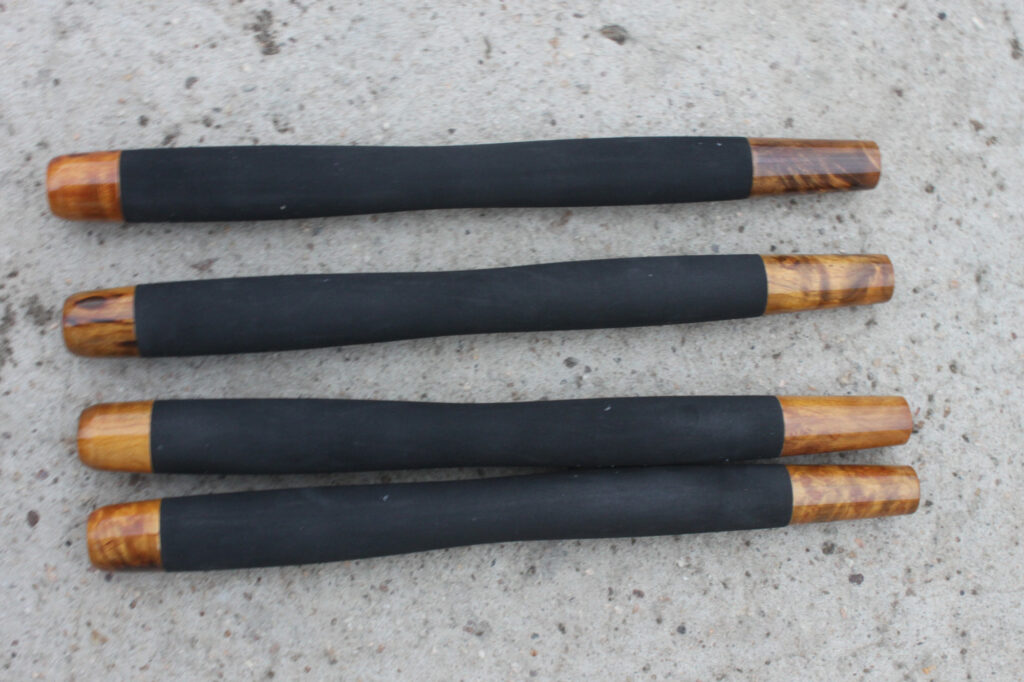
At the Summit, everyone preferred a cork handle. At Oni School, everyone preferred EVA. Those small differences mattered.
So why not make a white version? But white felt too plain. I named it Snow Tanuki.
Today, the Snow Tanuki is hard to find. The first small batch of the Tanuki 425 sold out in just 30 minutes. With this, a new branch of the Tanuki story quietly began. There was a lot of debate on Facebook and at fly fishing shows: Would the white color spook fish? Does white blend with clouds in the sky? Egrets use white feathers—maybe that’s why it works.
That discussion helps explain why the Snow Tanuki received so much attention. From a production and inventory standpoint, nevertheless, achieving a true Snow Tanuki white finish proved extremely challenging. Keeping a 100% white surface was expensive. These challenges led me to scale back the Snow Tanuki model.
Handling a pure white finish requires extraordinary care. Dust control is critical, and every step must be kept perfectly clean. In the early days, Tanuki rods were mostly finished by hand. Even today, with improved facilities, equipment, and fewer but more experienced workers, producing a flawless white finish remains difficult.
What remained fascinating was perception. Despite using the same blank, the white-finished rod feels lighter and softer to many anglers. Ironically, the white finish is actually heavier. It requires a multi-stage process. This includes a primer coat, paint coat, and final finishing coat. This multi-stage process is compared to the single finishing coat used on the black version. It’s a clear example of how visual cues can influence feel just as much as material reality.
The Tanuki 425 remains, to me, the most beautiful rod over 13 feet long. It is not the longest rod. Still, it feels right. And best of all, it never needed to be changed.
Looking back, the Tanuki 425 was a lucky shot. I wasn’t overthinking it. In other words, I didn’t spend nearly as much time developing it as I do with rods today. At that time, I didn’t understand the difficulty of designing a truly good tenkara rod. A rod longer than 12 feet presents unique challenges.
For example, the Nissin Air Stage 380 (about 12’5”) honryu, “main river”, rod is very light. Its swing weight is low because it uses a collapsed length of more than 3.5 feet. Back then, I didn’t fully grasp what those takeoffs meant.
The Tanuki 425 taught me that lesson quietly—through feel, not theory.