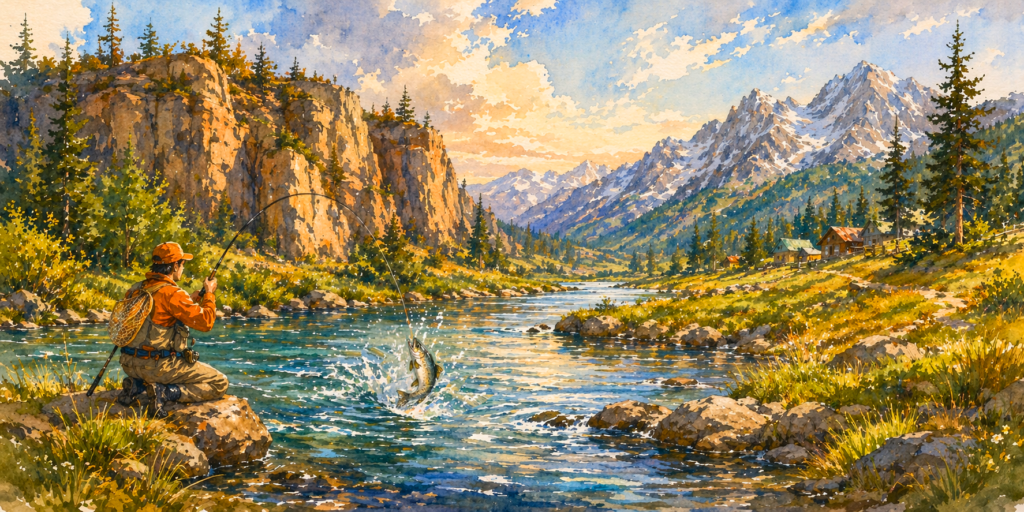

Fishing the Oni rod was both wonderful—and frustrating.
The casting was beautiful. The rod loaded smoothly, the line unfurled cleanly, and everything felt effortless in the air. But once a fish was hooked, I began to struggle. The deep, wide arc of the rod bend made it difficult for me to reach the line, and with a long line out, controlling a good-sized fish became challenging.
I realized quickly that this wasn’t a flaw in the rod—it was a mismatch between my skill and what the rod was asking of me.
For the next few weeks, I practiced long-line casting at the Oakland Casting Pond. Through repetition, something became clear to me: casting a Tenkara rod is not about distance. It’s about presentation.
I wanted the fly to land first, followed by the tippet gently laying down on the water—quietly, naturally—so the fish wouldn’t be spooked. But as the line grew longer, it also grew heavier, and too often the line landed before the fly. I hadn’t mastered the cast yet, but I felt confident enough to test what I’d learned on the water.
So I took the Oni rod back to Baum Lake.
Baum Lake is famous for its baetis hatches on cloudy days. The conditions were perfect—steady rises, calm water, and plenty of opportunities. My friends Collin and David met me there. While much of the country was glued to TVs for the final weekend of football, we were standing beside a lake, watching trout feed.
Collin and David sat on the bank eating lunch and watching me fish. Every time I hooked a fish, laughter echoed across the water.
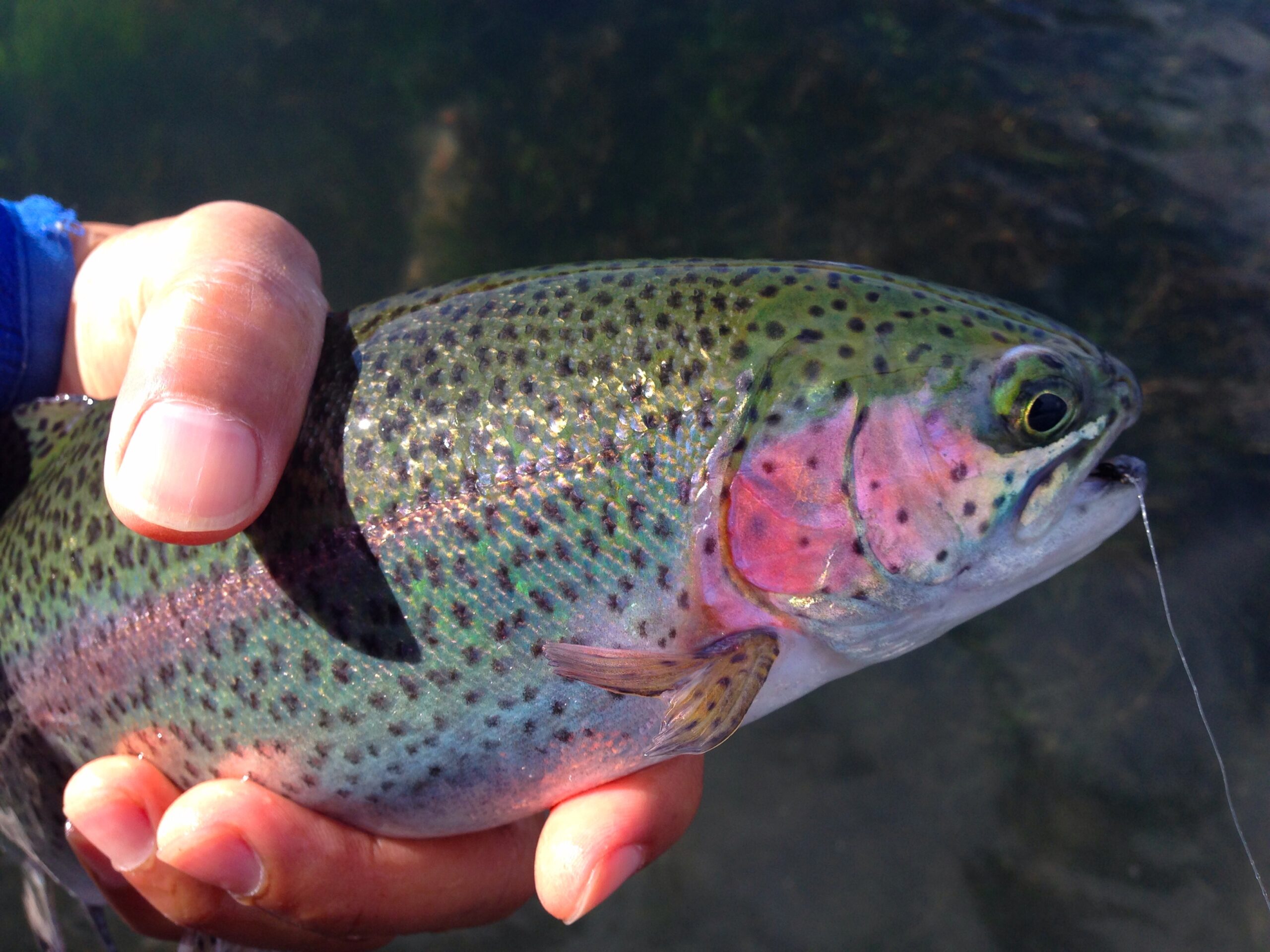
In a lake, a hooked fish usually dives deep—it’s safer down there. But Baum Lake is frequently stocked for the holidays, and freshly stocked fish panic. Instead of diving, they run wildly in every direction.
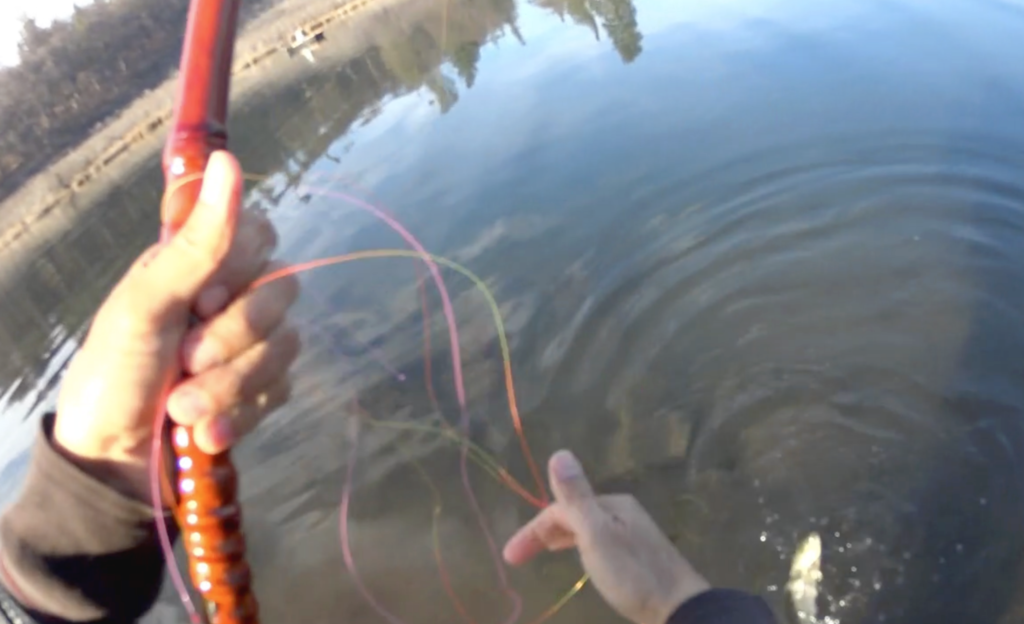
With the Oni rod bent into a deep horseshoe and a long line extended, I struggled to control the fish. Tenkara rods don’t have reels, so I turned my upper body sideways to bring the line closer to me.
I was the reel.
More than once, a hooked fish swam around my legs, wrapping the line. One fish darted between my feet as I tried to net it—and in that moment, I accidentally broke the rod tip.
I walked back to the bank to join Collin and David for lunch. But watching fish continue to rise, I couldn’t sit still. I grabbed my Dragontail rod and went back out.
A few casts later—fish on. Then the 6X tippet snapped. Again and again, I broke fish off. Over time, the break-offs became less frequent.
Looking back, the lesson was clear: it was all about adjustment.
With the Oni rod, I needed a firmer hook set than I used with the Dragontail. The rods asked for different inputs—different timing, different control.
That night over dinner, Collin and David were still laughing.
“Bro,” one of them said, “after watching your fish-landing performance today, we realized we paid way too much for Cirque du Soleil last month in Las Vegas.”
We all laughed.
Fishing was over.
The next morning, I stayed behind to fish while they headed out early for the holiday. The weather was perfect—cold, overcast, and the fish were hungry. For two straight days, I stayed on the water nearly eight hours at a time, grabbing a quick PowerBar for lunch to take full advantage of the conditions.
By the end of the second day, the fish finally slowed down—and my body did too. My right wrist was sore, then painful. By the time I left, I could barely turn the steering wheel with my right hand.
The drive down the mountain toward Redding was tense—snow and rain reducing visibility, my wrist throbbing with every turn. Once I reached Redding, the road flattened and my thoughts settled.
I started replaying the last few days.
The Oni rod was beautiful to cast but demanding when landing strong fish with a long line. The Dragontail was heavier and less refined in balance, but much easier to control fish—especially with a shorter line on faster water like the Merced River. Yet when casting long lines, fatigue crept in quickly.
I kept wondering—what if there were a rod in between?
Not better. Not ultimate.
Just a rod that fit me.
Later, I realized the fatigue came from several factors: unfamiliar wrist angles, Japanese grip habits my body wasn’t accustomed to, hours of repetitive casting without adequate rest for muscle recovery, and the increased torque created by the rod’s length acting as leverage while landing fish.
That’s when the idea began to take shape.
What if I built a rod that matched my body, my casting style, and the way I fish?
A rod that was light, balanced, and effortless to cast—because casting mattered to me. After all, I spent as much time at the casting pond as I did on the river.
The idea of building a custom rod wasn’t sudden.
It was inevitable.