
Before I Knew the Name
This year marks ten years since I first released a Tanuki rod.
It feels natural to celebrate, but celebration doesn’t quite feel right. What feels more honest is reflection.
Before there were rods, designs, or names, there was a trip to Yellowstone National Park — a trip that quietly redirected my path. I didn’t know it at the time, but that experience would shape how I fish, how I build, and how I think about simplicity and restraint.
This journal begins there.
⸻
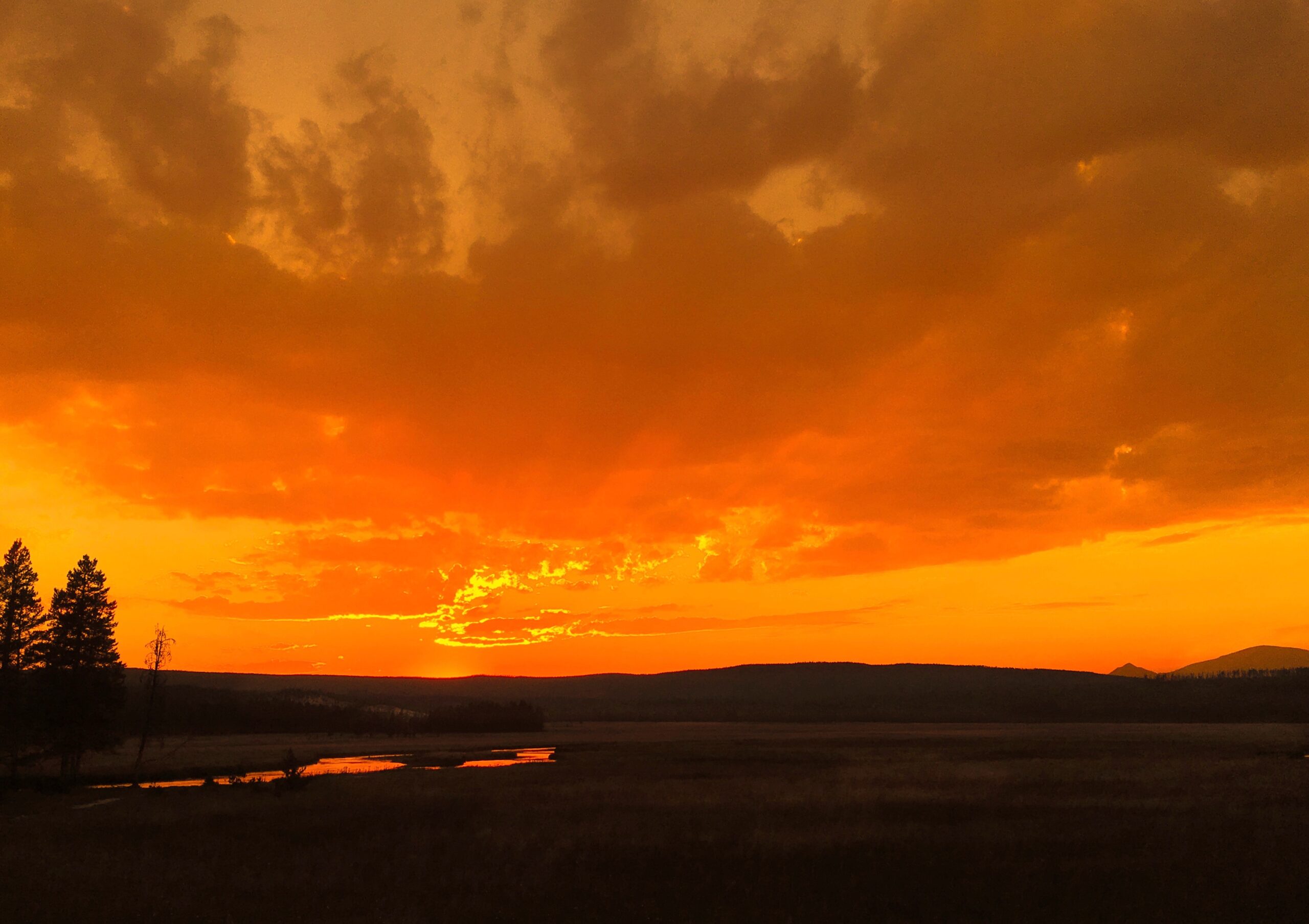
Back in the early 2000s, on one of my fishing trips to the Yuba River in California, I arrived at one of my favorite fishing spots. To my surprise, there was already another angler there — an Asian fly fisherman quietly sitting on a boulder, watching the sunset.
Instead of rushing to fish, I took the opportunity to talk with him. We chatted as the sun slowly disappeared beyond the horizon. His name was Taka, a student from Japan studying in California. As the light faded, caddisflies began to rise, and soon the river came alive — fish breaking the surface, almost as if the water were boiling.
We fished together, unhurried and fully present. Each of us landed three to five fish. There was no rush, no competition — just the river, the evening, and the moment.
On the hike back to the parking lot, Taka casually said something that stayed with me. He mentioned that he would have had even more fun if he had brought his 14-foot Tenkara rod from Japan.
“Wow,” I said, surprised. “That must be heavy — and hard to cast. What’s a Tenkara rod?”
He smiled and replied simply,
“It’s very light, easy, and effective.”
“Really?” I asked, doubtful.
“Oh yes,” he continued. “It fits the American style very well — easy, fun, and efficient.”
That word — Tenkara — lodged itself in my mind. At the time, I didn’t really know what it meant. My thoughts were elsewhere. I was deeply interested in building my own split bamboo rods. Rod building had been my passion since I was nine years old.
But that quiet evening on the Yuba planted a seed.
⸻
About ten years later, while fishing with Kevin Chan, the word surfaced again. Kevin mentioned that he had worked and lived in Japan for a while.
“What is Tenkara fly fishing?” I asked.
He answered without hesitation,
“The highest form of fly fishing.”
“How so?” I pressed.
“It’s simple and easy to learn,” he said. “Tenkara fly fishing is really about presenting a fly — or manipulating it. It’s like Go, the Japanese board game — easy to learn, but hard to master.”
That phrase — the highest form of fly fishing — planted the seed deeper.

Discovering Tenkara
Years later, in 2014, during a Memorial Day weekend trip to the Firehole River in Yellowstone, I finally experienced Tenkara firsthand. A fellow angler from Denver was fishing a 330 cm (10’6”) Tenkara rod and was consistently out-fishing me.
He noticed my curiosity, handed me the rod, and showed me how to use it.
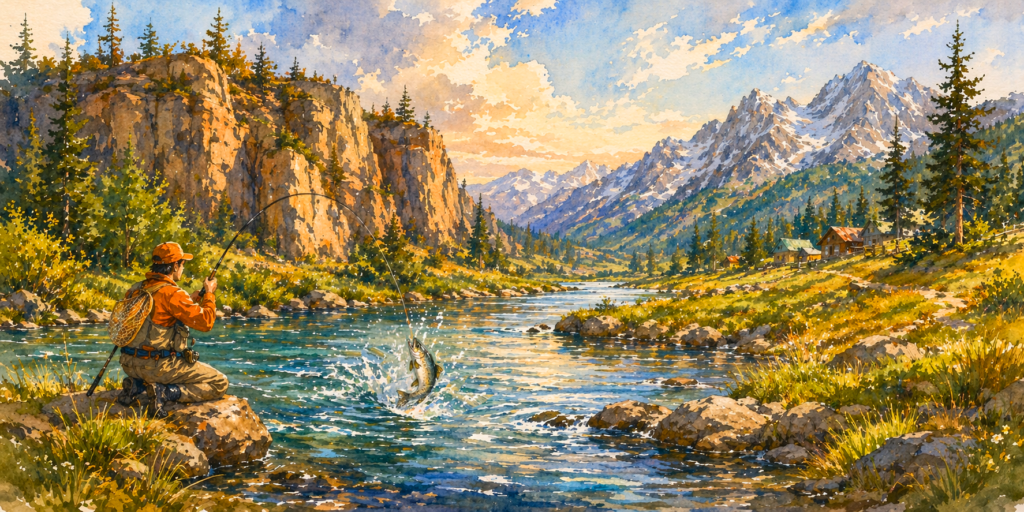
The rod felt incredibly delicate compared to my 2-weight Sage fly rod. I was cautious, making a gentle cast. On the very first drift — bang — a 10-inch brown trout grabbed the fly and charged downstream. It felt like a monster.
The rod bent deeply, almost into a horseshoe. Instinctively, I reached for the reel — then realized there was none. Panic set in. Afraid I would break the rod, I lowered the rod tip the way I would with a fly rod. The line straightened, and the fish broke off.
The angler laughed.
“I did the same thing my first time,” he said.
I handed the rod back to him.
“Isn’t it fun?” he asked.
I was stunned by how natural it felt — how light, how direct, and how alive the experience was. In that moment, the seed that had been quietly resting for years finally sprouted.
When I returned home, I rushed to the computer and spent endless hours researching Tenkara rods. What began as a quiet curiosity turned into a deep pull.
That was the beginning of a journey I didn’t yet understand.